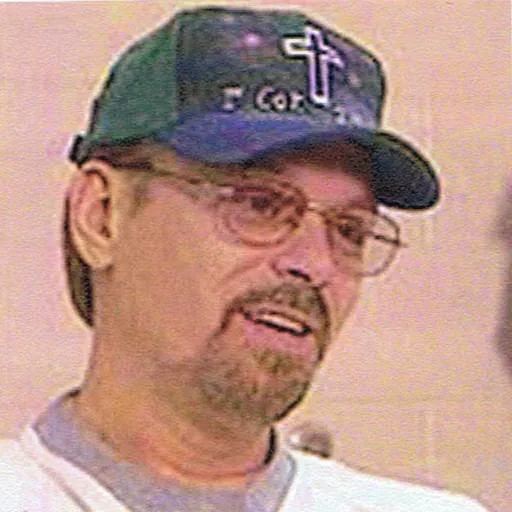
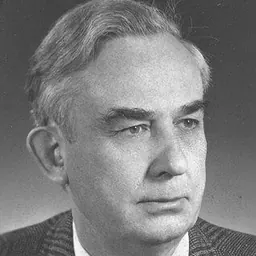
Philip Workman
American murderer
About Philip Workman
Lived 1953 – 2007 (aged 53).
Philip Ray Workman (June 1, 1953 – May 9, 2007) was a death row inmate executed in Tennessee on May 9, 2007. He was convicted in 1982 for the murder of a police officer following a robbery of a Wendy's restaurant in Memphis, Tennessee, and sentenced to death by lethal injection.
Early life Born on June 1, 1953, at Fort Campbell, Kentucky, Workman grew up in a military family on various Army bases. He later joined the Army. Shortly after his 1973 discharge, Workman was sentenced to 5 years in prison in Georgia for burglary and drug possession. He served 25 months. Workman also had a prior conviction for aggravated assault.
1981 armed robbery and murder of Lieutenant Oliver In 1981, at 28 years old, Workman was living with his wife and 8-year-old daughter in Columbus, Georgia, and was heavily addicted to cocaine. Three Memphis police officers, Ronald Oliver, Aubrey Stoddard, and Steven Parker, responded to the alarm. Upon their arrival, Workman attempted to flee across a nearby parking lot, where Lieutenant Ronald Oliver was then shot and killed. Workman shot another police officer in the arm and fired at a third police officer before being shot himself. Both Workman and the second officer recovered from their injuries.
The prosecution presented testimony from an alleged eyewitness, Harold Davis, who stated that he had parked his car in the restaurant parking lot and was 10 feet away when he saw Workman shoot Oliver. The defense lawyers accepted the police version, conducted no forensic or ballistics analysis and did not investigate Davis. At the sentencing phase of the trial, they presented no mitigating evidence, for example, of the physical abuse Workman had suffered as a child, and his drug addiction as an adult. Several other eyewitnesses have testified that they did not see Davis at the scene and the police report on the crime scene never noted Davis's presence. Steve Craig, an eyewitness to the shooting who did not testify at the trial due to illness, signed a statement in 1995 that he had a clear view of the parking lot and that he had not seen Davis.
Subsequent appellate proceedings, however, failed to establish the falsity of Harold Davis's original testimony. According to the Tennessee Court of Criminal Appeals, Davis's testimony at a 2002 hearing can be "best summarized" by the following exchange:
Prosecutor: You're not saying you lied, right?
Davis: Right.
Prosecutor: Ok. In the trial, you're not saying-
Davis: Right.
Prosecutor: -You lied about that?
Davis: Right. I'm not saying that.
Prosecutor: You just don't know.
Davis: I just don't remember. I just don't know . . . .I didn't lie.
Ballistics evidence Ballistics experts have questioned whether the bullet which killed Lieutenant Oliver could have come from Workman's gun. Many years after the trial, Dr. Cyril Wecht, a board member of the American Board of Legal Medicine, has testified that, "t is my professional opinion, based upon a reasonable degree of medical certainty, that the gunshot wound to [Lt.] Ronald D. Oliver is not consistent with the type of ammunition used by Mr. Philip R. Workman. I do not believe that it was Mr. Workman's gun that fired the shot that fatally wounded [Lt.] Oliver." As Dr. Wecht was giving evidence many years subsequent to the death of Lt. Oliver, he did not examine the body in person. Rather, his professional opinion was given on the basis of studying photographs of the deceased.
Dr. Wecht based his opinion on the fact that Workman was using a .45 caliber gun and hollow point ammunition and that such bullets fired from such a gun more than 90% of the time do not pass through the body but remain within the shooting victim. Dr. Wecht's professional opinion was that when hollow point ammunition fired from a .45 caliber gun does pass through the body of the victim, the exit wound is almost always larger than the entry wound. According to medical examiner Dr. James Bell, the exit wound on Lt. Oliver's body was smaller than the entry wound. Such a wound is consistent with the .38 caliber weapons being fired by the police. Neither Officer Stoddard's nor Officer Parker's revolvers were examined in the course of the criminal investigation.
Doubts of jurors, prosecutors, judges, and the victim's family Five of the jurors, who convicted Workman in 1982, have since signed affidavits renouncing either the sentence or the verdict or both. Parks has said that he did not hear any ballistics evidence during the original trial and believed the testimony of eyewitness Harold Davis.
In 2000, two justices on the Tennessee Supreme Court, Justice Birch and Justice Drowata, expressed their concern, although they were powerless to consider new evidence which might overturn the original verdict. Justice Birch called on then Governor of Tennessee, Don Sundquist, to commute Workman's sentence. Justice Drowata remarked, "The circumstances of this case are by no means as egregious as most of the death penalty cases I have reviewed [and] are less egregious than many of the life sentences I have reviewed . . . The date set for execution . . . affords the Governor sufficient time to carefully consider any executive clemency application that may be filed."
Appellate proceedings On March 30, 2001, just 37 minutes before Workman was scheduled to be executed, the Tennessee Supreme Court overturned a decision by Judge John P. Colton Jr. of the Shelby County Criminal Court to deny a writ of error coram nobis. The Supreme Court order stated that "if (Workman) did not fire that shot, he is not guilty of the crime for which he is scheduled to be put to death. ... No court in this state has actually held a hearing to fully evaluate the strength of these claims."
With regard to the new ballistics information, Judge Colton found that "the jury essentially heard, through the testimony of [Federal Bureau of Investigation] Agent [Gerald] Wilkes, the same information provided by Dr. Wecht." Judge Colton noted that, while Dr. Wecht opined that the .45 caliber bullet fired from Workman's gun and recovered from the scene was not the bullet that killed Lieutenant Oliver and that it was unlikely that a .45 caliber aluminum-jacketed bullet would create an entrance wound considerably larger than the exit wound, he also admitted that "he could not conclusively exclude the possibility that a .45 caliber bullet caused the fatal wound," and "that it was possible for a .45 caliber, hollow-point bullet to create a smaller exit than entrance wound." Judge Colton found "no testimony, including that of Dr. Wecht, which affirmatively rules out the possibility that one of the other three to five bullets shot by Workman caused the fatal injuries," and that "the jury would have still heard the defendant's admission that he fired his weapon and that he indeed pointed the weapon at the victim."
Last meal request Workman had no last meal request for himself. Instead, he asked that a large vegetarian pizza be given to a homeless person. The prison officials denied his request, and Workman refused to eat anything.
On May 9, 2007, homeless shelters across Tennessee received massive numbers of pizzas of various toppings from people all over the country honoring Workman's last meal request. "Philip Workman was trying to do a good deed and no one would help him," said one woman who, together with friends, donated $1200 worth of pizzas to Nashville's Rescue Mission. People for the Ethical Treatment of Animals (PETA) President Ingrid Newkirk, who donated 15 vegetarian pizzas, commented that "Workman's act was selfless, and kindness to all living beings is a virtue." Marvin Champion, an employee of Nashville's Rescue Mission, remarked, "I used to be homeless, so I know how rough it gets. I seen some bad times – not having enough food, the cupboards are bare. But we got pizza to feed enough people for a while."
Execution At 10:00 p.m. central time, the Supreme Court refused to hear any appeals. At 12:15 a.m. on May 9, 2007, the Tennessee state Supreme Court refused to hear his final appeal, which requested more time for the defense attorneys to review the injection procedures. When asked by Warden Ricky Bell what his last words would be, he stated "I've prayed to the Lord Jesus Christ not to lay charge of my death to any man." Two minutes after the start of the injections, he said "I commend my spirit into your hands, Lord Jesus Christ." His head then drifted to the left as he fell unconscious.
Philip Workman died at 1:38 a.m. (CDT) after a 17-minute procedure.
Post-mortem controversy Although prior to his execution, Philip Workman was successful in obtaining a court order against autopsy, his demand that his body not be subjected to examination was still scheduled to be legally challenged in the days following his death. At issue was the legality of drawing blood and other bodily fluids from Workman's body. The position of state medical examiner Dr. Bruce Levy was that, "If the state is going to be executing people, as the medical examiner, it is my responsibility to ensure that the executions are carried out according to state law." At a hearing on the Monday following the execution, Philip's brother Terry testified that, "Philip was a Seventh-day Adventist at the time of his execution and strongly believed in non-desecration of the body after death." At the hearing, the court order barring autopsy was extended in order to give District Judge Todd J. Campbell time to issue an "opinion". On Friday, May 18, Judge Campbell allowed the state medical examiner to perform a "less-invasive autopsy".
In popular culture Workman is the subject of the songs "Not Innocent Enough" by Nanci Griffith and "Phillip Workman's Last Meal" by Shanghai River.
Don’t just read it —
keep it.
Full-length biographies made to live with: read them, listen on the way to work, watch them tonight.
- E-book
- Audio
- Video
Instant download · yours to keep · every purchase keeps this site free
Important facts
People in Philip Workman's life
Named in this biography and alive at the same time






Contemporaries
People whose lives overlapped Philip Workman's




Frequently asked questions
Who was Philip Workman?
American murderer (1953-2007)
When was Philip Workman born?
Philip Workman was born on 1 June 1953 in Fort Campbell, Kentucky.
When did Philip Workman die?
Philip Workman died on 9 May 2007 in Nashville, Tennessee, Riverbend Maximum Security Institution.
Sources & further reading
Cite this page
APA: Biography.guide. (2026). Philip Workman. https://biography.guide/philip-workman/
MLA: "Philip Workman." Biography.guide, https://biography.guide/philip-workman/.
Chicago: "Philip Workman." Biography.guide. https://biography.guide/philip-workman/.
Data last updated: 2026-09-21 · Spot an error? Report a correction.
Portrait: Wikimedia Commons · author & licence
Page generated 2026-09-27 04:58 UTC