
Philip, Prince of Eulenburg
German politician, diplomat, composer, and writer
About Philip, Prince of Eulenburg
Lived 1847 – 1921 (aged 74). Philip, Prince of Eulenburg was a German diplomat, politician, writer, jurist, military officer and composer.
Philipp, Prince of Eulenburg and Hertefeld, Count of Sandels (12 February 1847 – 17 September 1921) was a diplomat of the German Empire who achieved considerable influence as close friend of Wilhelm II, German Emperor. On 1 January 1900, the Emperor created the then count an hereditary prince (Fürst).
He was the central member of the , a group of artistically minded aristocrats within the entourage of Wilhelm II. Eulenburg played an important role in the rise of Bernhard von Bülow, but fell from power in 1907 due to a sexual scandal.
Early life and education Eulenburg was born at Königsberg, Province of Prussia, the eldest son of Philipp Konrad, Count zu Eulenburg (Königsberg, 24 April 1820 – Berlin, 5 March 1889) and his wife, Baroness Alexandrine von Rothkirch und Panthen (Glogau, 20 June 1824 – Meran, 11 April 1902). The Eulenburgs were a Junker family which belonged to Germany's Uradel (ancient nobility) class as they were first recorded as Ministeriales of Saxony in the service of the Margraves of Meissen in 1181, they acquired lordships in Meissen, Bohemia and Lusatia before migrating to Prussia in the 14th century, there being recognized as Barons in 1709 and Counts by 1786. For generations the family had served the House of Hohenzollern; Philipp's uncle Friedrich Albrecht zu Eulenburg served as Interior Minister of Prussia, as did his cousin Botho zu Eulenburg. The Eulenburgs, though "Junkers", were impoverished aristocracy and until 1867 depended entirely upon Philipp von Eulenburg's salary as a captain in the Prussian Army. In 1867 Baron Karl von Hertefeld died without any children or surviving siblings, and in his will left his entire fortune and two gigantic estates at Liebenberg and Hertefeld to his favorite grand niece, Eulenburg's mother. Cosima von Bülow in turn became first the mistress and then the wife of the composer Richard Wagner. Through this family connection, Eulenburg was close to the Wagner family and a member of the Bayreuth Circle that existed to further the Wagner cult. During the Franco-German War of 1870-1871 he served under the German military governor of Strasbourg and received the Iron Cross. Eulenburg, who was fluent in French, was deeply impressed by Gobineau's book An Essay on the Inequality of the Human Races, where Gobineau expounded the theory of an Aryan master-race and maintained that the people who had best preserved Aryan blood were the Germans. A snob who held commoners in contempt, Gobineau believed that French aristocrats like himself were descendants of the Germanic Franks who had conquered the Roman province of Gaul in the 5th century, whereas ordinary French people were descendants of Latin and Celtic peoples. Though domestic French political considerations led Gobineau to claim that the Germans were the best Aryans, this thesis ensured that the book had a favorable reception in Germany. Eulenburg sought out Gobineau to personally thank him for his book, and a friendship between the two men blossomed as a result. Eulenburg first met Gobineau in Stockholm in 1874, and the two immediately struck it off. Eulenburg was later to fondly recall how he and Gobineau had spent hours during their time in Sweden under the "Nordic sky, where the old world of the gods lived on in the customs and habits of the people as well in their hearts."
Eulenburg needed no encouragement and spent the rest of his life promoting racist and anti-Semitic views, writing in his 1906 book Eine Erinneruung an Graf Arthur de Gobineau (A Memoir of Count Arthur de Gobineau) that Gobineau was a prophet who showed Germany the way forward to national greatness in the 20th century. Later, Eulenburg was to complain that all of his letters to Gobineau had been destroyed because "They contain too much of an intimately personal nature". After only two years as a judge he transferred to the Auswärtiges Amt (Foreign Office). In January 1881, Eulenburg was appointed Third Secretary at the German embassy in Paris, serving under Second Secretary Bernhard von Bülow, who was to become another of Eulenburg's friends. Eulenburg—by all accounts an extremely sensitive man—was devastated by the death of his two-year-old daughter Astrid from diabetes on 23 March 1881, and asked to leave Paris, stating that he could not stand living in the city where his daughter had died.
During his time in Munich, Eulenburg become convinced that he was too sensitive for a career in politics, and increasingly become interested in the arts. In 1884, Eulenburg published an autobiographical story entitled "Aus der Art Eine märkische Geschichte", concerning a sensitive, artistic young man with a loving mother and a cold father who pushes the young man to pursue a military career when he really wants a career in the arts, something that his mother understands. Eulenburg was later to write that of his father: "He was suffused with the prosaic ethos of Prussia, and inevitably he sought to steer me in a similar direction, when so much inspiration lay dormant in my imagination." Of his mother, Eulenburg wrote: "My mother, whom I deeply adored, the ideal figure who filled my whole being with boundless love, fired my inspiration. Music, painting, poetry occupied her thoughts and she practised the arts with talent and with understanding, and they took full possession of me as well." Besides composing music, Eulenburg was also a playwright. His first play, Margot, was a success when it premiered in Munich in 1885, and his second play, Der Seestern (The Starfish), was an even bigger success when it premiered in Berlin in 1887. A friendship developed between the two, in which the count, with his worldly wisdom, was to offer the young, impetuous and nervous prince both emotional support and intellectual distraction. Eulenburg also offered him the spiritual warmth that the prince hadn't found with his parents or at the Prussian royal court. During this period, Eulenburg started to share his love of the occult with his new best friend. In August 1887, Eulenburg wrote to Prince Wilhelm about a séance he had recently organized, that "I was overjoyed that we find ourselves in agreement in this area as well, and it has shown me clearly yet again how very lucky I have been to meet Your Royal Highness! To be understood in all things so well, that is true happiness!" In the same letter, Eulenburg warned Wilhelm never to speak in public about their shared interest in the occult as most people would not understand it.
In 1888, the old Emperor Wilhelm I died. He was succeeded by his son Friedrich, who died of throat cancer just 99 days later, to be succeeded by Wilhelm II. As the Emperor Friedrich III lay in his bed dying, Wilhelm demanded that he be appointed regent, a request his mother the Empress Victoria refused. Wilhelm, who had always hated his parents, especially his British mother, wrote to Eulenburg that "the royal escutcheon had been besmirched and the Reich brought to ruin by the English princess who is my mother, that is the most horrible of all!" In 1888, Herbert von Bismarck wrote "that H.M. [His Majesty] loves Ph. Eulenburg more than any other living being." Despite liking Eulenburg to a certain extent, Bismarck wrote with contempt that: "Eulenburg's projects were those of an average dilettantism. His diplomatic activities were 'operetta politics' with the hastily changing plans of the romantic. What else can one expect from someone who sings?" Bismarck was referring to Eulenburg's love of Italianate bel canto singing; Eulenburg had by all accounts a fine singing voice, and he often entertained guests at the parties he hosted at Liebenberg with his singing.
Aside from the arts, Eulenburg's major interest was the occult. Eulenburg—while nominally Lutheran—genuinely believed in the reality of ghosts and spirits, and spent much of his time consulting clairvoyants, mediums, and spiritualists in attempts to contact the spirit world. After Eulenburg moved from Munich to Oldenburg in 1888, Count Kuno Rantzau wrote: "I wish Eulenburg all the best, but I am heartily glad that he can now play his spiritist mumbo-jumbo in a different settling." When Bismarck ignored the press statement, Holstein had Eulenburg send two telegrams to the Kaiser, who was visiting Constantinople, which led in turn to Wilhelm sending a telegram to Bismarck on 6 November 1889 saying that "under no circumstances and in no way whatsoever can and will His Imperial Majesty permit the return of the Redemptorists to Germany." In April 1891 Eulenburg returned to Munich, this time as Prussian ambassador to the Kingdom of Bavaria. On 15 February 1891, Baron Karl von Dörnberg, one of Eulenburg's friends, died. After his death, Count Kuno von Moltke wrote to Axel "Dachs" von Varnbüler on 31 March 1891: "My old Dachs! I am just getting ready for the journey to Stuttgart. I'm longing for old Philine...have to see her [Eulenburg; his homosexual gay friends always used the terms "her" and "she" to describe him] because of the feeling that now this gap [Dörnberg's death] has opened up in our beloved circle, we must hold on to each other doubly, more firmly...Then I'll move over to Munich with P. on the 8th -- the family will not follow till later". In December 1891, Eulenburg was delighted when a spiritist was apparently able to tell him of what Wilhelm had written to him in his last letter, which confirmed his belief in the power of the ghosts and spirits whose aid he sought. Eulenburg's role as the "backseat driver" of German politics led Caprivi to submit his resignation on 17 March 1892, complaining it was impossible to govern when the Kaiser's best friend had more influence on policy-making than did the Chancellor; Caprivi's resignation was refused. Wilhelm welcomed Bigelow's report, which led him to comment to Eulenburg on the correctness of Caprivi's policy of allowing German Poles to study in Polish-language schools, which he believed was winning opinion in Russian Poland towards Germany. In 1893, when the Zentrum threatened to vote against the Army Bill in the Reichstag, Holstein devised a plan where the German government would pay a bribe to Pope Leo XIII in exchange for which the Pope would order the Zentrum to vote for the Army Bill under the pain of excommunication. The poems were the work of two diplomats, Bothmer and Raschdau who did not belong to the dominant faction and were frustrated that their careers were going nowhere.
By early 1894, Eulenburg's power had grown to such an extent that he was no longer acting just as an ally to Holstein, but had sufficient power to start acting as a power broker on his own who could overrule Holstein when he felt fit. Eulenburg and Holstein had been allies in the intrigues against Bismarck in 1889–1890, had co-operated afterwards in the early 1890s, but by 1894 Eulenburg and Holstein were starting to disagree more and more. Eulenburg had one of his cousins, August zu Eulenburg, appointed High Marshal of the Court in 1890 and another cousin, Botho zu Eulenburg, appointed Prussian Minister-President in 1892. Finally, Eulenburg's old friend from his days in Paris in 1881, Bernhard von Bülow, was appointed ambassador to Italy. Eulenburg and Bülow developed a secret code for communicating with one another, so that those diplomats loyal to Holstein would not be able to read their correspondence. The differences in Eulenburg's relations between Bülow and Holstein were well illustrated by their tone; cold and formal in the Holstein-Eulenburg letters while warm and full of extravagant praise for each other in the Bülow-Eulenburg letters. For example, on 1 January 1894 Bülow wrote to Eulenburg that: "My innermost thoughts hasten towards you...We must surely have already known and loved each other somewhere in the endless stream of time, for in my soul there is only affinity and friendship for you". Bülow was widely regarded as a man who would say and do literally anything if he thought it would help his career.
Additionally, both Bülow and even more so Eulenburg were strong believers that the egoistical Wilhelm II was indeed correct in his self-estimation of himself as an almost godlike being chosen by fate to make Germany the greatest nation in the world. Bülow's letters to Eulenburg often contained statements such as "The leading ideas of Our Imperial Master are mostly undoubtedly correct; all that is needed is that they should in the future be defended and executed with greater tact" or "The grand aims of Our Most Gracious Master can only be attained if those who have the task of executing the Kaiser's plans possess the ability to do so". Eulenburg wrote about the Kaiser that his important character trait was that he was "the knightly -- reminiscent of the finest time of the Middle Ages, with all its piety and mysticism". Eulenburg added that the Kaiser was also a man of the 20th century, but with him, his modern values were fortunately subordinate to his medieval values.
Those attitudes promoted about the Emperor greatly offended Holstein. Holstein wrote that thanks to advisors like Eulenburg Wilhelm was behaving like an absolute monarch who at the current rate would be "far more of an autocrat" than the Russian emperor, and that if things continued on their current course Germany would to have become either a dictatorship or a republic because the current system was "an operetta government, but not one that a European people at the end of the nineteenth century will put up with". Eulenburg wanted his cousin Botho zu Eulenburg to be Caprivi's replacement, but Friedrich von Holstein was able to persuade Wilhelm not to appoint Eulenburg as chancellor. In the summer of 1896 on the annual summer cruise in the North Sea on board the royal yacht SMY Hohenzollern, Eulenburg and Wilhelm worked out what Röhl called "an astonishingly detailed plan" to assert the "personal rule" of the Kaiser.
The three ministers in the Reich and Prussian governments who offered the most resistance to Wilhelm's plans for "personal rule, namely General Walther Bronsart von Schellendorff, Karl Heinrich von Boetticher and Baron Adolf Marschall von Bieberstein should all be quietly fired while Hohenlohe could stay on as a 'shadow Chancellor'".
Byzantinism Eulenburg fronted the Liebenberg Circle. This was a group of aristocrats with an expensive taste for art. Most of the Liebenberg Circle had worked as diplomats and their opinions were heard by the Kaiser. Eulenburg's influence was the obstruction of preventative war and any kind of adventure on foreign soil. Eulenburg was in turn criticized by his contemporaries as effeminate. He was accused of being a pacifist. Maximilian Harden published accusations of homosexuality. This scandal would destroy Eulenburg's career in the civil service because the episode supported the preconception of aristocratic decadence among politicians that were socialist middle class.
"Aesthetic anti-semitism": art, race and politics in Eulenburg's worldview During his time as ambassador to Austria, Eulenburg who was a Wagnerite befriended one of the world's leading Wagnerites, Houston Stewart Chamberlain who was living in Vienna at the time. Besides their shared love of Richard Wagner, Eulenburg, who was an anti-Semite, Anglophobe and an opponent of democracy, found much to admire in Chamberlain's anti-Semitic, Anglophobic and anti-democratic writings. To his mother Eulenburg wrote about the Yellow Peril painting: "The Kaiser has given me a magnificent engraving of the wonderful allegorical picture executed by Prof. Knackfuss from His Imperial Majesty's sketch: the peoples of Europe, represented as female figures, are called upon by St. Michael to defend the cross against unbelief, heathenism, etc. You will like it...It is a beautiful idea in a beautiful form".
Much of Wilhelm's anti-Asian racism and warnings of the "Yellow Peril" very closely resembles Gobineau's writings on the Chinese, which is not surprising given that Eulenburg had introduced the Kaiser to Gobineau's theories. The American historian Gregory Blue wrote about the "Eulenburg connection", whereby Eulenburg played a key role in introducing the Kaiser to Gobineau's anti-Asian writings. Wilhelm was so interested in the arts and culture that on 18 December 1901 he gave the so-called "gutter art" speech in which he denounced French Impressionist painting, modernist architecture, German Expressionism and the Jugendstil as all "gutter art" dragging the world down, and called for Germany to assume cultural leadership of the world by producing the sort of art that he approved of to save humanity from the degrading cultural effects of "gutter art". Eulenburg's status as a cultured, artistic man meant he served as both a political and cultural adviser to the Kaiser. For Wilhelm, politics and culture were one and the same. For him, the popularity of Impressionist paintings was a sign of the "degeneracy" of the French while his paintings of warships were a sign of the spiritual strength of the Germans. Like many other völkisch nationalists, Eulenburg believed in the unity of race, language, religion, culture, ethnicity, and nationality. Thus for Eulenburg, art and politics were one and the same, both being expressions of one's "race". Domeier described Eulenburg as the chief promoter of "aesthetic anti-Semitism", a type of anti-Semitism concerned with glorying on one hand a romantic, reactionary and racist understanding of German national identity that expressly rejected the values of the Age of Enlightenment while on the other hand depicting Jews as a "racial other", the antithesis of the "Aryan race", a people who formed another "race" that simply did not belong in Germany and were the principal cause of Germany's problems.
Eulenburg's cultural works such as his songs and poems, in which he often expressed his "aesthetic anti-Semitism," were just another means of promoting his values, as was political work. Domeier argued that Eulenburg's cultural activities cannot be treated separately from his political activities, as both were concerned with "aesthetic anti-Semitism".
At the same time, he did his utmost to further anti-Semitism in classic political areas including diplomacy, foreign policy and culture. Aesthetic anti-Semitism can be understood as one of the many forms of aesthetic fundamentalism in the modern era as well as a cultural code used by hereditary and intellectual aristocrats at the end of the long nineteen century. As it spread throughout society by virtue of these groups' social prestige, it took on attributes of a paradigm. Aesthetic anti-Semitism found its way into the aristocracy and conservative bourgeoisie not through aggressive agitators such as Ahlwardt, Dühring, Fritsch or Stöcker, but rather in poetic shadings and nuances." Eulenburg let it be known that Wilhelm—who was also the King of Prussia—was willing to subsidize the Bayreuth festival; rather than see the Prussian king intervene in Bavarian affairs, the Bavarian government agreed to subsidize Bayreuth. Eulenburg saw the Bayreuth festival as the "cultural founding" of the empire that had failed to take place in 1871, and Eulenburg believed that in time the Bayreuth festival would become the "cultural center" of the "Germanic race". Eulenburg wrote that the Jews all paying their respects to a "Jewish greybeard" proved the old Jew "must have slaughtered and eaten many Christian children, since two dozen long yellow teeth protruded from his ghastly maw" (it is not clear in repeating the blood libel if Eulenburg was making an anti-Semitic joke or if he really believed in the blood libel). Rothschild, who possessed great wealth, was ostracized by the Austrian aristocracy because he was a Jew (also being gay contributed to his feeling like an outsider), and he often paid aristocrats to be his friends, which is how he met Eulenburg. His older brother tried his best to have the Kaiser stop the court-martial, but the Army was unwilling to do so. In 1900, Eulenburg wrote a long memo for the benefit of his social circle about the court-martial of his brother, writing that men like himself and his brother were always threatened with public disgrace, which ended:
"Farewell, my friend! Are you certain that you have understood the story correctly? Please read it once again I beg you! So that you understand completely that the path of our lives is crossed by terrible demons, and that we should raise our hands to God in supplication, begging him, begging him fervently to defend us from them, to defend our loved ones from them!". In 1898, scandal threatened Eulenburg when the wife of Kuno von Moltke in a sealed deposition filed for divorce on the grounds that her husband was more interested in having sex with Eulenburg than with her. Moltke promptly instructed his lawyer to settle the divorce in his wife's favor in exchange for her not making these accusations public. Axel "Dachs" von Varnbüler wrote to Moltke telling him not to worry about losing the favor of "the One" [Wilhelm II] saying: "I'm sure I am not mistaken in thinking that your pain is sharpened because you cannot hide, keep at bay, all this ugliness from him, from the Liebchen ["Darling"-Wilhelm II]. But do not torment yourself unnecessarily about this -- he is man enough to put a stop to nasty gossip -- and he knows and loves you too well in your peculiarity to allow even the shadow of blame to fall upon you". After learning of Moltke's divorce, Wilhelm confronted Varnbüler, and demanded to know what was happening. According to Varnbüler in a letter written on 4 June 1898 to Moltke: "The Liebchen accosted me in the Tiergarten the day before yesterday. After he duly admired my yellow boots and colour co-ordinated riding costume, he asked me "Don't you know anything about Kuno? I can't get anything out of either him or Philly"". Eulenburg himself happily wrote: "No more bomb-like despatches, no more wild letters from Holstein, no more lamentations from Marschall!!!". Eulenburg had a broader vision beyond helping Wilhelm establish his "personal regime". Eulenburg was a convinced opponent of democracy and was threatened by growing demand for democracy in Germany. Germany in the 1890s was nowhere close to a revolution, but Eulenburg could see that in the long run the demand for democracy would continue to grow. Eulenburg was opposed to proclaiming martial law and ruling via terror as he argued that a regime based only on fear could not command popular legitimacy or respect, and would not last in the long run. Instead Eulenburg argued for Wilhelm's personal regime" to be based upon the Roman formula of "bread and circus". The "bread" in this case would be a greatly expanded welfare state, while the "circus" would be Weltpolitik ("World politics"). In this respect, the German historian Michael Epkenhans wrote that it was no accident that in 1897 Admiral Alfred von Tirpitz was appointed naval state secretary. The charismatic Tirpitz was a born showman who quickly managed to convert much of the German public over to navalism, arguing for the formula that sea power equals world power—whoever rules the seas also rules the world. Even through Tirpitz saw his efforts as primarily directed towards making Germany the world's greater power, there was an element of domestic stabilization involved in his campaign for greater spending on the navy.
On 7 October 1898, Eulenburg summoned the leader of Zionism, the Hungarian journalist Theodor Herzl to Liebenberg to announce that his master Wilhelm II wanted to see a Jewish state established in Palestine (which would be a German protectorate) in order to "drain" the Jews away from Europe, and thus "purify the German race". Herzl recalled that Eulenburg was a "perfect gentleman" during his visit to Liebenberg, but he made no attempt to hide his anti-Semitism, saying to Herzl's face that he believed that the Jews did not belong in Europe and that he only supported Zionism as the best way of removing the Jews humanely from Europe. Eulenburg told Herzl that he had a special relationship with the Kaiser that allowed him to "speak freely" to Wilhelm in a way no-one else could. The plan for establishing a Jewish state in Palestine came to nought when the Ottoman Sultan Abdul Hamid II rejected the plan, saying that Palestine was Muslim land that he would never cede to the Jews and, more importantly, he had no intention of giving up any part of his empire. Eulenburg was with Wilhelm aboard the Hohenzollern on the annual North Sea summer cruise in 1900, and saw at first hand Wilhelm's viscerally hate-filled rage against the Chinese. Eulenburg wrote that Wilhelm regarded Kettler's murder as a "personal insult" and he was going to "send troops to take revenge!!!". At the height of the Boxer crisis, Eulenburg wrote to Bülow that he was utterly terrified of Wilhelm—whom Eulenburg said was not entirely sane—and that Bülow should be careful when reporting the news from China out of fear of what Wilhelm might do.
Eulenburg added that he had sent a doctor to try to calm Wilhelm down, as he was trapped in a seemingly permanent state of rage—spending every waking moment violently ranting and raving nonstop about his hatred of the Chinese and the bloody revenge he was planning to take on them—but to no avail. The Kaiserin also accused her husband of having an affair with Eulenburg.
In 1901, Eulenburg introduced Houston Stewart Chamberlain to Wilhelm II, who first met at Eulenburg's Liebenberg estate.
Scandal
Although he was married, Eulenburg was connected in homosexual liaisons with members of the Kaiser's inner circle, including Count Kuno von Moltke, the military commander of Berlin. Sources say that he continued to have homosexual relationships even while he was married and fathered numerous children. The public exposure of these liaisons in 1906 led to the Harden-Eulenburg Affair that attracted worldwide attention.
With the appointment of Eulenburg's protégé, Count (and later Prince) Bernhard von Bülow, as Chancellor of Germany in October 1900, Eulenburg's influence reached its peak. Although Bülow remained in office until July 1909, Eulenburg's influence declined again after the turn of the century. In 1902, he relinquished his ambassadorship in Vienna and withdrew entirely to his Liebenberg estate. Although Wilhelm II visited him occasionally, it was clear to insiders that Eulenburg's heyday was behind him. The historian Volker Ullrich writes: "In the eyes of the critical public, however, Eulenburg was still considered the head of a secondary government, a »camarilla«, which exerted a corrupting influence on the Kaiser and the Reich's politics ... In the autumn of 1906, when the Bismarck admirer Maximilian Harden began his campaign against Eulenburg and his circle of friends, the discontent over the conditions at the top of the Reich's leadership had reached a climax.
The scandal was caused by the growing power of the Bülow-Eulenburg clique within the Auswärtiges Amt around the turn of the century, at the expense of the Holstein faction. To get his way, Holstein had often threatened to resign, believing that no government could do without his services, a threat that had always worked in the past. Eulenburg wrote to Varnbüler soon after saying that: "I had a long, very heated discussion with H.M about Hol[stein] and disagreeable it was for me. He will not forgive me, if he should later hear anything concerning my affairs, that I have said not a word to him about what has taken place". To that end, Holstein contacted the crusading journalist Maximilian Harden to inform him that Eulenburg was gay. Röhl wrote that Harden used terribly homophobic language in his attacks on Eulenburg, but the essence of his articles alleging the existence of a "Liebenberg Round Table" at the court was indeed correct.
In the aftermath of the First Moroccan Crisis which ended with the Reich humiliated at the Algeciras Conference, Harden's accusations that German foreign policy was being run by a clique of homosexuals who were too "soft" to make the necessary decisions to go to war had a wide resonance. The belligerent ultra-nationalist Harden believed that Germany should have attacked France in 1905, even if it meant war with Britain and possibly the United States as well; in his mind, the only reason why Wilhelm chose to attend the Algeciras conference rather than go to war was because he was being advised by the Liebenberg Round Table.
In November 1906, Harden ran an article about an unnamed senior German diplomat being gay who was clearly meant to be Eulenburg whom Harden called "the Harpist", and accused him of having a relationship with an unnamed senior French diplomat, stating the two frequently went on hunting trips together. Beyond that, Harden made much of Eulenburg's effeminate ways and love of singing to suggest that Eulenburg was simply not manly enough to properly direct the affairs of the Reich; Harden's hero was Bismarck, whom Harden admiringly presented as an ideal Prussian man: tough, militaristic, ruthless, hard, decisive, and certainly not someone who liked to sing as Eulenburg did. Harden thus argued that someone effeminate like Eulenburg was too "womanly" to be guiding the German state, and suggested that Germany's diplomatic defeat in the First Moroccan Crisis of 1905–06 was due to Eulenburg's influence on the Kaiser. Harden's initial target was not Wilhelm, but Eulenburg; Harden believed that the Kaiser would have gone to war with France in 1905 on his own, and it was Eulenburg who had supposedly held him back. Despite his homophobic attacks on the Liebenberg Round Table as a degenerate gay clique mismanaging foreign policy, Harden had surprisingly liberal views on homosexuality and often called for the repeal of Paragraph 175.
In 1907 Moltke sued Harden for libel after the latter ran an article accusing him and Eulenburg of having a sexual relationship and lost. At the trial, the sexologist and early gay rights advocate Magnus Hirschfeld testified for Harden, stating that Moltke was gay. The homosexual Hirschfeld—who passionately wanted to make homosexuality legal in Germany—believed that proving that Army officers like Moltke were gay would help his case for legalization, and as such he also testified that he believed there was nothing wrong with Moltke. Bülow then sued Brand for libel, and during the course of this trial, Eulenburg testified as a character witness, during which he denied under oath that he had ever committed any "depravities" with Bülow or any other men. Eulenburg also testified that he was appalled by the attempts of Brand and Hirschfeld to legalize homosexuality, saying that he believed that homosexuality was a disgusting evil that should be stamped out without any mercy. The anti-Semitic Eulenburg saw himself as the victim of a Jewish plot to ruin him for his role in promoting his type of "aesthetic anti-Semitism", and called Harden a "rascally Jew".
In late 1907 during the course of the second Moltke-Harden libel trial, Eulenburg had been subpoenaed by Harden's lawyers and testified that he never engaged in homosexual acts with Moltke or any other men. During this trial, on 22 April 1908, two Bavarian lake fishermen named Jakob Ernst and Georg Riedel testified under oath in a Munich courtroom that they had both been sodomized by Eulenburg when he had vacationed on the Starnbergersee in the 1880s, which led to Eulenburg being indicted for perjury. On 30 April 1908, Eulenburg was interviewed by three detectives from the Berlin police department during a visit to Liebenberg about the revelations from the Munich trial; in their report one of the detectives wrote that Eulenburg was the greatest liar he had ever met during his career as a policeman and should definitely be indicted for perjury. None of the surviving Eulenburg letters indicate that Wilhelm II was gay, but they do mention that Jakob Ernst, the fisherman on the Starnbergersee—with whom Eulenburg had a relationship in the late 1880s—was a friend of Wilhelm II at the same time, being employed to row the Kaiser and Eulenburg around the Starnbergersee when the two vacationed there in the 1880s. Since the Kaiser did not normally associate with Bavarian lake fishermen, people in 1908 would have suspected something very unusual in this friendship, and given the relationship between Ernst and Eulenburg, many people would have concluded that Wilhelm was also having sex with Ernst, though the surviving Eulenburg letters give no such indication. Eulenburg was utterly heart-broken that Wilhelm had turned against him. Varnbüler wrote, but did not send Eulenburg a letter suggesting that he commit suicide to save the honour of the Kaiser. Varnbüler later wrote in 1912 that he changed his mind on whether Eulenburg should take his life after considering how Wilhelm had abandoned Eulenburg, when "all members of the court and military circles avoided Eulenburg as though he were a criminal and a leper", when even Bülow "failed the test of friendship", when Moltke refused to answer Eulenburg's letters and members of the Eulenburg family "shamefully distanced themselves from Liebenberg", that he could not turn against his friend Eulenburg and decided to stand by him. During the trial, the major prosecution witness was Ernst as Riedel had a "typically Bavarian" criminal record for drunken brawling as he had been convicted of assault 32 times, all under the influence of alcohol, and thus was not seen as the most credible of witnesses. Eulenburg testified that Ernst's daily beer consumption was "excessive, even by Bavarian standards" and claimed that his accounts of sexual encounters between himself and him were unreliable, coming from someone who spent so much of his time in a drunken daze. During the trial, it was revealed that Eulenburg had engaged in witness tampering for he had sent his servant Georg Kistler with a letter he had written to meet Riedel telling him not to mention what they had done together in the 1880s and that he was safe from prosecution for the statute of limitations for violating Paragraph 175 had expired. Eulenburg's trial was for perjury, but effectively it was for homosexuality as the prosecution presented a long list of witnesses, mostly working-class young men who testified that Eulenburg had tried to engage them in sex, or had made inappropriate remarks. On 13 July 1908, Eulenburg collapsed in court, and the judge ruled that the trial was over as Eulenburg was medically unfit. As he aged, Eulenburg had come to embrace the goal of Weltpolitik as a goal in and of itself while at the same time as the Anglo-German naval race continued to express concern about how the Tirpitz Plan was destroying the German budget as the state continued to pour and pour more money into building warships. In an essay he wrote in April 1912 entitled "The German Fleet", Eulenburg wrote that he believed "that the Kaiser nor the German government want the war" (emphasis in the original), which he held to be inevitable. But he wrote that Germany was the principal cause of international tensions, writing that:
Eulenburg argued that the money saved by cutting back on the Navy would allow every German town to have an Army garrison "which would act as an ever-alert military police force against the excesses of Social Democracy".
In 1914, Eulenburg welcomed and supported World War I, and was particularly proud of the way the German government made it appear that Russian mobilization had forced war on Germany. In a letter, Eulenburg wrote:We were forced into the War by Russia'; so people think-and so they are supposed to think. The manner in which this "fact" was demonstrated to us by means of documents had a Bismarckian touch that appealed to me; was it Bethmann? Jagow? Zimmermann? I do not know. My guess is Zimmermann plus Jagow." Despite his disgrace, Eulenburg had many friends in the government, especially the military, and so was very well informed about German decision-making behind the scenes during the July Crisis. In a letter of 21 March 1918 about the Treaty of Brest-Litovsk, Eulenburg wrote: "In whatever way we win, our victory must and will engender the most dreadful hatred of us, so that, with our great-grandchildren in mind, we must fashion frontiers which can provide a certain guarantee of safety in the military as well as the economic sphere. Of course we shall be able to use admiration-but the hatred will be greater and our geographically unfortunate position must be corrected if that well deserved admiration is not to be weakened by the accusation of stupidity. But who is to undertake the correction of unfortunate geographical position? Surely only the military genius of our Army leaders-or were you perhaps thinking of leaving it to our politicians? If the latter had not dug their grave long ago, we would now be calling it Brest-Litovsk." In a letter, Eulenburg asked whether one should "lay the blame on the Austrian Government alone because they followed the incitements of their stronger and therefore in military matters absolutely dominant ally?" Eulenburg argued that:"Germany is the stronger of the Allies. Without her consent, Austria cannot go to war with Russia-Serbia. The stronger partner is in a position to propose a conference and the weaker is compelled to accept." Eulenburg died in Liebenberg in 1921, aged 74.
Marriage and family On 20 November 1875, at Stockholm, Eulenburg married Augusta Sandels (Stockholm, 12 May 1853 – Liebenberg, 14 December 1941), daughter of Samuel August, the last Count Sandels (1810-1892), and of his wife, Hedvig Henrietta Emilie Augusta Tersmeden (1829-1899). Count Johan August Sandels was her grandfather. They had eight children: Philipp Graf zu Eulenburg (Wulkow, 16 November 1876 – Berlin, 28 June 1878) Astrid Gräfin zu Eulenburg (Berlin, 25 March 1879 – Paris, 23 March 1881) Alexandrine (Adine) Elise Klara Antonia Gräfin zu Eulenburg (Liebenberg, 1 July 1880 – Friedelhausen, 3 February 1957), married at Liebenberg, 15 June 1910 Eberhard Graf von Schwerin (Weilburg, 11 July 1882 – Giessen, 4 April 1954) Friedrich Wend 2. Fürst zu Eulenburg und Hertefeld Graf von Sandels (Starnberg, 19 September 1881 – Weeze, 1 August 1963), married at Liebenberg, 21 May 1904 Marie Freiin Mayr von Melnhof (Vienna, 8 April 1884 – Weeze, 3 February 1960) Augusta Alexandrine Gräfin zu Eulenburg (Starnberg, 1 September 1882 – Starnberg, 28 January 1974), married in London, 4 February 1907 (div 1931) Edmund Jaroljmek Sigwart Botho Philipp August Graf zu Eulenburg (Munich, 10 January 1884 – k.a. Jasło, Galicia, 2 June 1915), married in Leipzig, 21 September 1909 Helene Staegemann (Hannover, 18 April 1877 – Partenkirchen, 20 August 1923) Karl Kuno Eberhard Wend Graf zu Eulenburg (Starnberg, 16 June 1885 – Weeze, 4 December 1975), married firstly Saint Helier, Jersey, 27 May 1908 (div 1923) Sophie Moshammer (Munich, 9 April 1891 – Munich, 8 May 1944), married secondly in Munich, 5 November 1923 Geertruida Verwey (Utrecht, 6 May 1901 – Weeze, 28 October 1987) Viktoria Ada Astrid Agnes Gräfin zu Eulenburg (Starnberg, 13 July 1886 – Starnberg, 23 September 1967), married at Liebenberg, 12 May 1909 (div 1921) Otto Ludwig Haas-Heye (Heidelberg, 16 December 1879 – Mannheim, 9 June 1959) Viktoria is the great-grandmother of Sophie, Hereditary Princess of Liechtenstein.
Works Among his works are: Skaldengesänge ("Old Norse songs", 1892) Rosenlieder ("Rose Songs") – This collection of songs was quite popular in his lifetime and often performed in the salon of Marie von Schleinitz. It was recorded for EMI in 1976 by Cathy Berberian on the LP Wie einst in schöner'n Tagen. A version on CD was released in March 2013 on the EMI Electrola label. Dichtungen ("Poems," 1892) Das Weihnachtsbuch ("The Christmas book," 1892) Erich und Erika und andere Erzählungen für Kinder ("Eric and Erica and other tales for children," 1893) Abenderzählungen, Märchen und Träume ("Evening tales, stories, and dreams," 1894)
Honours He received the following orders and decorations:
Don’t just read it —
keep it.
Full-length biographies made to live with: read them, listen on the way to work, watch them tonight.
- E-book
- Audio
- Video
Instant download · yours to keep · every purchase keeps this site free
Important facts
Family & relationships
People in Philip, Prince of Eulenburg's life
Named in this biography and alive at the same time
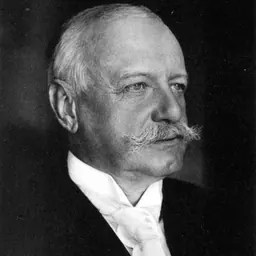

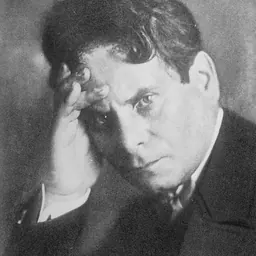

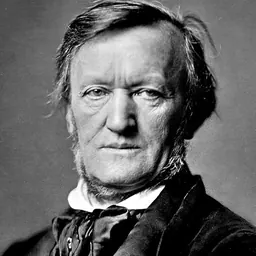


Related people
Same field, nearest in time
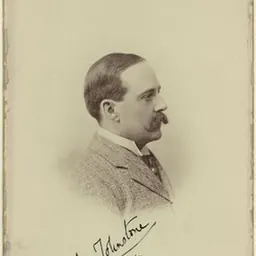
Contemporaries
People whose lives overlapped Philip, Prince of Eulenburg's






Frequently asked questions
Who was Philip, Prince of Eulenburg?
German politician, diplomat, composer, and writer (1847-1921)
When was Philip, Prince of Eulenburg born?
Philip, Prince of Eulenburg was born on 12 February 1847 in Königsberg, Kaliningrad.
When did Philip, Prince of Eulenburg die?
Philip, Prince of Eulenburg died on 17 September 1921 in Templin.
What was Philip, Prince of Eulenburg's occupation?
Philip, Prince of Eulenburg was a diplomat, politician, writer, jurist, military officer and composer.
What nationality was Philip, Prince of Eulenburg?
Philip, Prince of Eulenburg was German.
Sources & further reading
· Wikipedia: Philip, Prince of Eulenburg
· DBpedia: Philipp, Prince of Eulenburg
Cite this page
APA: Biography.guide. (2026). Philip, Prince of Eulenburg. https://biography.guide/philip-prince-of-eulenburg/
MLA: "Philip, Prince of Eulenburg." Biography.guide, https://biography.guide/philip-prince-of-eulenburg/.
Chicago: "Philip, Prince of Eulenburg." Biography.guide. https://biography.guide/philip-prince-of-eulenburg/.
Data last updated: 2026-09-20 · Spot an error? Report a correction.
Page generated 2026-09-27 05:29 UTC