
About Philip Neame
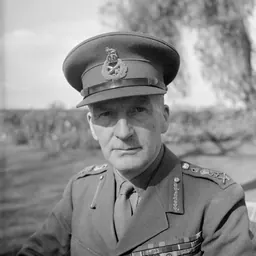
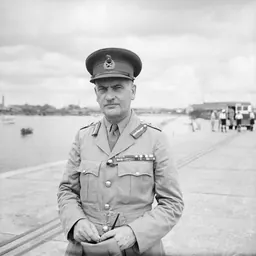
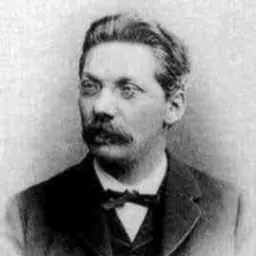
Lived 1888 – 1978 (aged 89). Philip Neame was a British engineer, sport shooter, military officer and lieutenant Governor of Guernsey.
Lieutenant-General Sir Philip Neame, (12 December 1888 – 28 April 1978) was a senior British Army officer and a recipient of the Victoria Cross, the highest award for gallantry in the face of the enemy that can be awarded to British and Commonwealth forces, and the winner of an Olympic Games gold medal; he is the only person to achieve both distinctions.
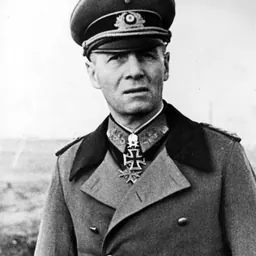
During the Second World War, in the spring of 1941, Neame was commander of British troops in Cyrenaica (north-eastern Libya), recently conquered from the Italians by General Richard O'Connor. However, as the region was retaken by the newly-arrived Afrika Korps under Erwin Rommel, Neame and O'Connor were taken prisoner. Both men remained in captivity in Italy until the autumn of 1943.
Early life and military career Philip Neame was born on 12 December 1888 in Faversham in the County of Kent, the son of Kathleen Neame (née Stunt) and Frederick Neame (b. 1847). He received his education at Cheltenham College, and the British Army's Royal Military Academy at Woolwich, Kent.
Upon graduating from the Royal Military Academy, Neame received a commission as a second lieutenant into the Royal Engineers in July 1908. He was promoted to lieutenant in August 1910, whilst serving with the 15th Field Company.
First World War The declaration of war in August 1914 found Neame with the 15th Field Company in the Gibraltar Garrison. The company joined the British Expeditionary Force (BEF) on the Western Front in October 1914.
During the First Battle of Ypres in October 1914, Neame experienced first hand in the trenches the inferiority of the British issue hand-grenades compared to their German equivalent, and set about creating an alternative, the sappers improvising rudimentary but effective hand grenades made from empty jam tins filled with scrap metal, with the charge being created using gun-cotton, and a cord-fuse projecting from the end of the tin, requiring ignition by flame.
Victoria Cross Neame was 26 years old when the following deed took place, for which he received the Victoria Cross (VC):
During a minor night trench action on the Western Front in the Neuve Chapelle district five days before Christmas 1914, Neame was leading a party of sappers in action when he was requested by the commanding officer of a battalion of the West Yorkshire Regiment to go forward and to strengthen the defences in a recently captured German trench. When he got there he met another commissioned officer who informed him that the Germans were counter-attacking with bombs, that his own bombers had all been wounded and that the bombs that were left would not go off. At this Neame went further up the trench to the contact point to talk to one of the surviving bombers there, and discovered that the problem was that he wasn't able use the bombs because there were no fuzee matches left. Neame, knowing how to technically ignite the grenades without a fuzee match by holding a regular match-head on the grenade's fuse and striking a match box across it, commenced lighting and throwing grenades in this fashion into the German trenches at the two different directions where a German dawn counter-attack was materializing, holding it back whilst under continual return fire for forty-five minutes whilst the West Yorks Regiment evacuated its wounded behind him back towards the original British frontline trench.
Neame was promoted to the rank of captain in 1915, and was mentioned in despatches in February 1915, and again in January 1916. He was awarded the Distinguished Service Order (DSO) in January 1916.
After a short period as a staff officer (GSO3) from October 1915, he was appointed brigade major of the 168th Brigade, 56th (London) Division, in February 1916, staffing this post through the Somme offensive in 1916, including the actions at Gommecourt on 1 July, and the Battle of Ginchy in September, until relinquishing it for another staff (GSO2) assignment in November 1916.
He was promoted to brevet major in the 1917 New Year honours list. He received further mentions in despatches in January and December 1917. In June 1918 he moved up to a senior staff post (GSO1), and ended the war in November 1918 with the temporary rank of lieutenant colonel.
Inter-war military career and Olympian Neame was honoured for his war service in France with the Legion of Honour (Croix de Chevalier) in January 1919, and the Croix de guerre in July. He was also awarded the Belgian Croix de guerre. In June 1919 he was noted in The London Gazette as being amongst several names intended for the rank of brevet lieutenant-colonel, with the substantive rank of major. but the actual gazetting to brevet lieutenant-colonel did not appear until June 1922, and his substantive rank was finally promoted from captain to major in January 1925.
Neame was a member of Great Britain's 1924 Olympic Running Deer team at Paris and is the only Victoria Cross recipient who has won an Olympic gold medal. The Running Deer competition was one of the shooting events at the games. It involved teams of four (firing single shots), where a moving target simulated the animal.
After serving as an instructor at the Staff College, Camberley, from March 1919 to April 1923, and then saw service in India with the Bengal Sappers and Miners from 1925 before attending the Imperial Defence College in 1930. (skipping the substantive lieutenant-colonel rank) and became a General Staff Officer 1 in the Waziristan District in India. In 1933 he was badly mauled by a tigress whilst hunting in India. He was admitted to a hospital, Lady Minto Nursing Association, in Bareilly where he was nursed to health by Harriet Alberta Drew. He married the nurse, taking leave from India towards the end of 1933 whereupon he was on half pay without appointment until May 1934.
In July 1934 Neame was granted the temporary rank of brigadier in order to take up an appointment as brigadier general staff (BGS) and on 28 February he was promoted to major general (with seniority backdated to 19 December 1937)
Second World War While Commandant at the Military College, Neame had been given to understand that should war be declared, he would be appointed as Chief of General Staff to the British Expeditionary Force's putative C-in-C, John Dill. In the event, Lord Gort was appointed C-in-C, with Henry Pownall as CGS and Neame as his deputy responsible for operations and staff duties. Neame organised defences and planned for the campaign, but in February 1940 he was posted to Egypt to command the 4th Indian Infantry Division. and his command being limited in effective control by a Headquarters not sited in a battle station and remote from the action, Neame was over the next few days of fighting overwhelmed by Rommel. Faced with the apparent danger of the 2nd Armoured Division's disintegration which he perceived from its chaotic radio-traffic as it struggled to cope with the rolling blows it was receiving, he ordered the forces under him to fall back eastward in an uncoordinated fashion to avoid being cut off and completely destroyed by the sudden advance of the enemy.
On 6 April 1941, while driving in a small convoy of vehicles to a newly established Headquarters, Neame and his travelling companions, Lieutenant-General Richard O'Connor (who had been rapidly dispatched to join Neame's Headquarters by General Archibald Wavell who was alarmed at the apparent collapse of Neame's forces) and Brigadier John Combe, were over-run and captured by a German advanced force led by Gerhard von Schwerin. and Colonel 131 (Airborne) Engineer Regiment from January 1948.
Neame was knighted as a Knight Commander of the Order of the British Empire in June 1946, and made a knight of the charitable Order of St John in the same year. In January 1955 he was appointed a Deputy Lieutenant of the County of Kent.
Personal life Neame married Harriet Drew (1906–1994) in 1934, the marriage producing four children: Gerald (born 1935), Veronica (born 1937), Nigel (born 1946), Philip (born 1946). The latter's youngest child, also named Philip, served as commander of D Company, 2nd Parachute Regiment, in 1982 during the Falklands War.
Neame died at Selling in Kent on 28 April 1978, in his eighty-ninth year. His body was buried in the graveyard of St Mary the Virgin Church, in Selling. His medals and awards are held by the Imperial War Museum in London.
Don’t just read it —
keep it.
Full-length biographies made to live with: read them, listen on the way to work, watch them tonight.
- E-book
- Audio
- Video
Instant download · yours to keep · every purchase keeps this site free
Important facts
People in Philip Neame's life
Named in this biography and alive at the same time





Related people
Same field, nearest in time


Contemporaries
People whose lives overlapped Philip Neame's




Frequently asked questions
Who was Philip Neame?
Victoria Cross recipient (1888–1978)
When was Philip Neame born?
Philip Neame was born on 12 December 1888 in Faversham.
When did Philip Neame die?
Philip Neame died on 28 April 1978 in Selling.
What was Philip Neame's occupation?
Philip Neame was an engineer, sport shooter, military officer and lieutenant Governor of Guernsey.
What nationality was Philip Neame?
Philip Neame was British.
Sources & further reading
Cite this page
APA: Biography.guide. (2026). Philip Neame. https://biography.guide/philip-neame/
MLA: "Philip Neame." Biography.guide, https://biography.guide/philip-neame/.
Chicago: "Philip Neame." Biography.guide. https://biography.guide/philip-neame/.
Data last updated: 2026-09-20 · Spot an error? Report a correction.
Page generated 2026-09-27 05:26 UTC