
Philip Krantz
Russian-born Jewish-American socialist, newspaper editor, and Yiddish writer
About Philip Krantz
Lived 1858 – 1922 (aged 63–64). Philip Krantz was a journalist.
Jacob Rombro (October 10, 1858 – November 28, 1922), better known by his pen name Philip Krantz, was a Belarusian-born Jewish-American socialist, newspaper editor, and Yiddish writer.
Life Krantz was born on October 10, 1858, in Zhuprany, in the Vilna Governorate, Russian Empire, the son of Baruch Rombro and Bella Rosa Uger. Some biographers claimed he was born in Khodaki, in the Podolian Governorate.
Krantz moved with his parents to Ashmyany, where he studied in a Russian school and had private tutors. In 1872, he began attending the Zhitomir rabbinical school. In 1873, he switched to the Kremenchug senior high school, graduating from there in 1879. During school, he became involved with the revolutionary movement. He was arrested in 1877 for political propaganda and imprisoned for a year in Kharkov. He studied at the St. Petersburg Technological Institute from 1879 to 1881. He began working as a journalist in 1880 and initially wrote for the Russian Jewish weekly Razsviet. He then studied at the Sorbonne in 1882. In 1881, following the assassination of Alexander II, he fled Russia due to his associations with the people involved in the assassination and went to Paris.
While in Paris, Krantz began his literary career by writing a lengthy essay on Baruch Spinoza in the Razsviet. He also began writing for other Russian magazines during that time, including Russki Evrey, Voskhod, and Kievskaya Zarya, became active in spreading his social democracy ideals among the Jewish working classes, and was a founder of the Jewish Arbeiter Verein, an active center of socialism for workers and students who emigrated from Czarist Russia. He moved to London in 1883 and began writing for Morris Winchevsky's Yiddish weekly socialist journal Der Poylisher Yidl. Although he never previously considered writing in the "Jewish Jargon," he spent the rest of his life writing in Yiddish. Within two years, he became editor of the new Socialist monthly Arbeter Fraynd. In 1888, he helped found a Jewish Social-Democratic group and, at their request, translated Ferdinand Lassalle's Das Arbeiter-Programme. In 1889, the London Jewish workers chose him as their delegate to the first International Workers Congress in Paris. In 1893, he took post-graduate courses in chemistry at New York University and worked there as an assistant lecturer in chemistry. From 1894 to 1902, he taught English in New York public evening schools. in Warsaw. In 1907, government persecution led him to move to Vilna and edit a monthly there. He also worked as a correspondent for the Morning Journal back in New York during that time. He returned to New York shortly afterwards and joined the staff of The Forward, working for that paper for the rest of his life. a method for studying English, and a series of biographies on Aristotle, Bar Kokhba, Josephus Flavius, Muhammad, Don Isaac Abarbanel, Baruch Spinoza, Sabbatai Zevi, Lessing and Mendelssohn, the Rothschilds, and Meyerbeer. Some of his books went into several editions.
Krantz died at his home in the Bronx from heart disease on November 28, 1922. He was buried in the Workmen's Circle section of Mount Carmel Cemetery.
Don’t just read it —
keep it.
Full-length biographies made to live with: read them, listen on the way to work, watch them tonight.
- E-book
- Audio
- Video
Instant download · yours to keep · every purchase keeps this site free
Important facts
People in Philip Krantz's life
Named in this biography and alive at the same time

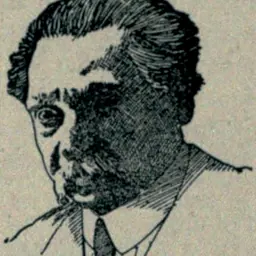
Related people
Same field, nearest in time

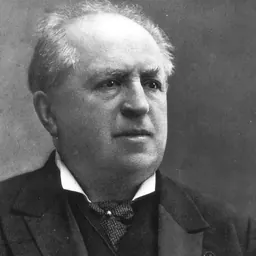
Contemporaries
People whose lives overlapped Philip Krantz's


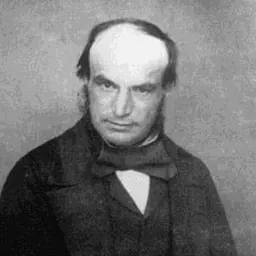
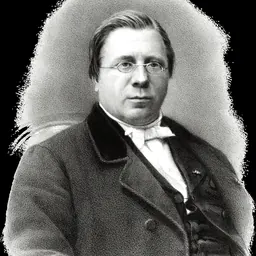
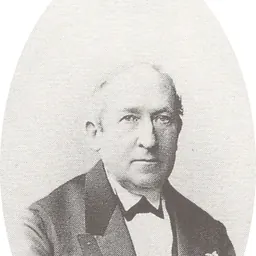
Frequently asked questions
Who was Philip Krantz?
Russian-born Jewish-American socialist, newspaper editor, and Yiddish writer
When was Philip Krantz born?
Philip Krantz was born in 1858.
When did Philip Krantz die?
Philip Krantz died in 1922.
What was Philip Krantz's occupation?
Philip Krantz was a journalist.
Sources & further reading
Cite this page
APA: Biography.guide. (2026). Philip Krantz. https://biography.guide/philip-krantz/
MLA: "Philip Krantz." Biography.guide, https://biography.guide/philip-krantz/.
Chicago: "Philip Krantz." Biography.guide. https://biography.guide/philip-krantz/.
Data last updated: 2026-09-20 · Spot an error? Report a correction.
Page generated 2026-09-27 05:02 UTC