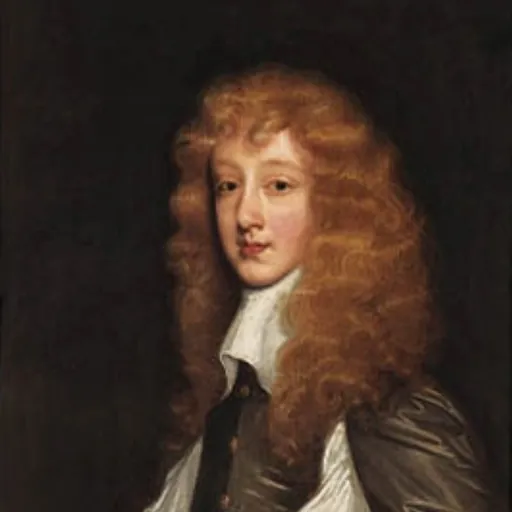
Philip Herbert, 7th Earl of Pembroke
English nobleman and convicted murderer
About Philip Herbert, 7th Earl of Pembroke
Lived 1653 – 1683 (aged 29–30).
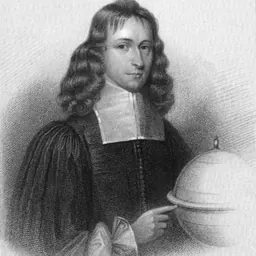
Philip Herbert, 7th Earl of Pembroke, 4th Earl of Montgomery KB (1652/53 – 29 August 1683) was an English nobleman, politician and serial killer who succeeded to the titles and estates of two earldoms on 8 July 1674 on the death of his brother William Herbert, 6th Earl of Pembroke.
Pembroke was prone to violent behaviour and was a convicted murderer, who has been called "the infamous Earl of Pembroke." Although the murder of the magistrate Sir Edmund Berry Godfrey, which sparked the Popish Plot, has never been solved, a strong body of evidence points to Pembroke as the killer.
Early life Baptised on 5 January 1652/53 and brought up in Wiltshire at Wilton House, Pembroke was the son of Philip Herbert, 5th Earl of Pembroke, being the eldest son of his father's second marriage to Katherine Villiers, a daughter of Sir William Villiers and his wife Rebecca Roper. His paternal grandmother was the 4th Earl's first wife, Susan de Vere; his step-grandmother was Anne Clifford, daughter of George Clifford, 3rd Earl of Cumberland, and widow of Richard Sackville, 3rd Earl of Dorset. He was created a Knight of the Bath at the coronation of King Charles II.
As he grew up, Herbert was considered to have inherited his mental instability from his grandfather Philip Herbert, 4th Earl of Pembroke: both were prone to violent and unprovoked assaults, although the grandson was by far the more violent character.
Life and career On 8 July 1674, when he was twenty-two years old, Herbert succeeded his elder half-brother William as Earl of Pembroke and Earl of Montgomery, and on 17 December the same year married Henrietta de Kéroualle, the sister of Charles II's mistress Louise de Kéroualle. By this marriage, Herbert had his only child, a daughter named Charlotte, who married firstly John Jeffreys, 2nd Baron Jeffreys, (son of the notorious George Jeffreys, 1st Baron Jeffreys), and secondly, Thomas Windsor, 1st Viscount Windsor. Charlotte died in 1733, leaving issue by both marriages. The Lords then petitioned for Pembroke's release, with seven bishops and the Duke of York dissenting; the king released Pembroke on 30 January. The Lord High Steward, the Duke of Ormonde, who presided at the trial, warned Pembroke that "his lordship would do well to take notice that no man could have the benefit of that statute but once." Pembroke, however, was incorrigible, and shortly afterwards made a savage assault on Charles Sackville, 6th Earl of Dorset, with whom he was engaged in a lawsuit.
Suspect in the Murder of Sir Edmund Godfrey On 17 October 1678, Sir Edmund Godfrey, who had been foreman of the grand jury which indicted Pembroke for the murder of Cony, was found dead in a ditch on Primrose Hill, impaled with his own sword. This unexplained death caused an anti-Catholic uproar, generally known as the Popish Plot. Author John Dickson Carr, in a book about Godfrey's death, examines the contemporary evidence and concludes that Pembroke murdered Godfrey in a revenge killing. This theory was later considered and supported by the historian Hugh Ross Williamson. Another historian, John Philipps Kenyon, while raising some difficulties with the theory, agreed that of all the suspects Pembroke had by far the strongest motive for killing Godfrey.
His last murder, final years In 1680, writer John Aubrey noted that Pembroke had at Wilton "52 mastives and 30 grey-hounds, some beares, and a lyon, and a matter of 60 fellowes more bestial then they."
On 18 August 1680, Pembroke killed William Smeeth, an officer of the watch, following a drunken evening in a tavern at Turnham Green. On 21 June 1681, the grand jury of Middlesex again indicted him for murder. As Ormonde had warned him, he could not claim the privilege of peerage a second time, and he briefly fled the country. Remarkably, though, following a petition to the king signed by twenty-four of his fellow peers, he was granted a royal pardon. Philip was buried in Salisbury Cathedral.
Don’t just read it —
keep it.
Full-length biographies made to live with: read them, listen on the way to work, watch them tonight.
- E-book
- Audio
- Video
Instant download · yours to keep · every purchase keeps this site free
Important facts
Family & relationships
People in Philip Herbert, 7th Earl of Pembroke's life
Named in this biography and alive at the same time



Contemporaries
People whose lives overlapped Philip Herbert, 7th Earl of Pembroke's




Frequently asked questions
Who was Philip Herbert, 7th Earl of Pembroke?
English nobleman and convicted murderer
When was Philip Herbert, 7th Earl of Pembroke born?
Philip Herbert, 7th Earl of Pembroke was born in 1653.
When did Philip Herbert, 7th Earl of Pembroke die?
Philip Herbert, 7th Earl of Pembroke died on 29 August 1683.
What nationality was Philip Herbert, 7th Earl of Pembroke?
Philip Herbert, 7th Earl of Pembroke's recorded nationality: England and Wales.
Sources & further reading
· Wikipedia: Philip Herbert, 7th Earl of Pembroke
· DBpedia: Philip Herbert, 7th Earl of Pembroke
Cite this page
APA: Biography.guide. (2026). Philip Herbert, 7th Earl of Pembroke. https://biography.guide/philip-herbert-7th-earl-of-pembroke/
MLA: "Philip Herbert, 7th Earl of Pembroke." Biography.guide, https://biography.guide/philip-herbert-7th-earl-of-pembroke/.
Chicago: "Philip Herbert, 7th Earl of Pembroke." Biography.guide. https://biography.guide/philip-herbert-7th-earl-of-pembroke/.
Data last updated: 2026-09-21 · Spot an error? Report a correction.
Portrait: Wikimedia Commons · author & licence
Page generated 2026-09-27 04:59 UTC