
About Philip Guedalla
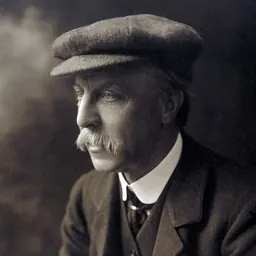
Lived 1889 – 1944 (aged 55). Philip Guedalla was a British historian, biographer, jurist and writer.
Philip Guedalla (12 March 1889 – 16 December 1944) was an English barrister, and a popular historical and travel writer and biographer. His wit and epigrams are well-known, one example being "Even reviewers read a Preface". He also was the originator of a now-common theory on Henry James, writing that "The work of Henry James has always seemed divisible by a simple dynastic arrangement into three reigns: James I, James II, and the Old Pretender."
Family and education Guedalla was born in Maida Vale, London, into a secular Jewish family of Spanish origin; in later life he embraced his Jewish identity. He was educated at Rugby School and Balliol College, Oxford, where he in 1911 was the President of the Oxford Union; and was published in Oxford Poetry 1910–1913. In 1919 he married Nellie Maude Reitlinger, the daughter of a banker. They never had children. Asked how to say his name, he told The Literary Digest "My own pronunciation is gwuh-dal'lah. I have very little doubt that this is wholly incorrect."
Career Having been called to the Bar by the Inner Temple, Guedalla practised as a barrister from 1913 to 1923, before turning to writing. During the First World War he organised and acted as secretary to the Flax Control Board and also served as legal adviser to the Contracts Departments of the War Office and the Ministry of Munitions.
In the Autumn of 1936 a joint committee of the British Council, the Foreign Office, Overseas Trade Department, British Film Institute, and the Travel Association (the contemporary equivalent of VisitBritain) was set up under the Chairmanship of Guedalla, with the aim of selecting (and later producing) British documentaries for overseas distribution.
When the Travel Association closed in 1939 (due to the United Kingdom joining the Second World War), the British Council took ownership of the committee's activities to establish the British Council's Film Department. Despite his role in the Royal Air Force, where he held the rank of Squadron Leader,
Politics Guedalla was a parliamentary candidate for the Liberal Party five times, always unsuccessfully. He first stood for Parliament as a Liberal at the 1922 general election in Hackney North in a straight fight with the incumbent Conservative Sir Walter Greene, MP. Greene held the seat with a majority of 4,615 votes.
At the 1923 general election Guedalla was adopted as Liberal candidate for the Derbyshire North East constituency. This looked as if it might be a winnable seat for the Liberals as at the general election of 1922 the Liberal candidate Stanley Holmes had come within 15 votes of taking the seat from Labour in a three-cornered contest. Despite the boost the Liberals had received in the run-up to the 1923 general election with the reunion of the Lloyd George and Asquithian wings of the party, Guedalla was unable to gain Derbyshire North East and fell to the foot of the poll behind the Conservatives. Election box begin | title=General Election 1923: North East Derbyshire Election box begin | title=General Election 1924: North East Derbyshire Election box begin | title=General Election 1929: Manchester Rusholme So Guedalla found himself opposed by Edward Fleming for the Conservatives who won the seat comfortably with a majority of 14,718.
In 1936 he was elected to serve on the Liberal Party Council.
Death Guedalla died in hospital in London on 16 December 1944 at age 55, having contracted an illness during his service in the RAF.
Sleuth reference
In the play Sleuth by Anthony Shaffer, mystery writer Andrew Wyke says, "Do you agree that the detective story is the normal recreation of noble minds? I'm quoting from Philip Guedalla, a biographer of the thirties, that golden age when every Cabinet Minister had a thriller by his bedside and all detectives were titled."
Works
Ignes Fatui - A Book of Parodies (Oxford: B. H. Blackwell; London: Simpkin, Marshall, 1911) The Partition of Europe: A Textbook of European History, 1715-1815 (Oxford: Clarendon Press, 1914) Supers and Supermen: Studies in Politics, History and Letters (London: T. Fisher Unwin, 1920) The Second Empire: Bonapartism, The Prince, The President, The Emperor (London: Hodder and Stoughton, 1922) Masters and Men (London: Constable, 1923) essays The Secret of the Coup d'État: Unpublished Correspondence of Prince Louis Napoleon, MM. De Morny, De Flahault, and Others, 1848-1852 (London: Constable, 1924) with the Earl of Kerry A Gallery (London: Constable, 1924) Napoleon and Palestine (London: G. Allen & Unwin, 1925) - Arthur Davis Memorial Lecture Essays of To-day and Yesterday (London: G. G. Harrap, 1926) Palmerston (London: Ernest Benn, 1926) Independence Day: A Sketchbook (n.p.: J. Murray, 1926); American edition as Fathers of the Revolution (New York: G. P. Putnam's Sons, 1926) Collected Essays of Philip Guedalla, 4 vols (London: Hodder and Stoughton, 1927) - vol. 1 Men of Letters, vol. 2 Men of Affairs, vol. 3 Men of War, vol. 4 Still Life Conquistador: American Fantasia (London: Hodder & Stoughton, 1927) Gladstone and Palmerston: Being the Correspondence of Lord Palmerston With Mr. Gladstone 1851-1865 (London: V. Gollancz Ltd, 1928) Bonnet and Shawl (New York: C. Gauge; London: Hodder and Stoughton, 1928) Mary Arnold (1928) - reprinted from Bonnet and Shawl The Missing Muse and Other Essays (London: Hodder and Stoughton, 1928) Slings and Arrows: Sayings Chosen from the Speeches of the Rt. Hon. David Lloyd George (London: Cassell and Company, 1929) editor The Duke (London: Hodder and Stoughton, 1931; much reprinted; reissued 1997, ); American edition as Wellington (New York: Harper, 1931) If the Moors in Spain Had Won (n.p.d., [1931?]), reprinted from If It Had Happened Otherwise, edited by J. C. Squire (London: Longmans, Green, 1931) Argentine Tango (London: Hodder and Stoughton, 1932) The Queen and Mr. Gladstone (London: Hodder and Stoughton, 1933; Garden City, New York: Doubleday, Doran & Company Inc., 1934) The Hundred Days (London: Peter Davies, 1934) Letters of Napoleon to Marie Louise (1935) introduction, with Charles de la Roncière The Hundred Years (London: Hodder and Stoughton, 1936) Idylls of the Queen (London: Hodder and Stoughton, 1937) Ragtime and Tango (London : Hodder and Stoughton, 1938) Lecture on Modern Biography (Buenos Aires: Argentine Association of English Culture, 1939) The Hundredth Year (London: Thornton Butterworth, 1939) - "a record of the year 1936" The Jewish Past (London: Jewish Historical Society of England, 1939) - Presidential address delivered before the Jewish Historical Society of England The Other Americas (London: Hutchinson, 1941) - talks given by P. Guedalla and J. A. Camacho between April and July 1941, in the Home Service programme of the B.B.C. Mr Churchill (London: Pan, 1941) The Liberators (London: Hodder and Stoughton, 1942) The Two Marshals: Bazaine, Pétain (London: Hodder and Stoughton, 1943) Middle East, 1940 to 1942: A Study in Air Power (London: Hodder and Stoughton, 1944)
Guedalla also chaired the Royal Institute of International Affairs study group that prepared the report The Republics of South America (1937)
Don’t just read it —
keep it.
Full-length biographies made to live with: read them, listen on the way to work, watch them tonight.
- E-book
- Audio
- Video
Instant download · yours to keep · every purchase keeps this site free
Important facts
People in Philip Guedalla's life
Named in this biography and alive at the same time


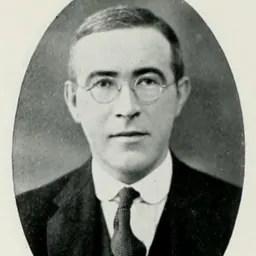
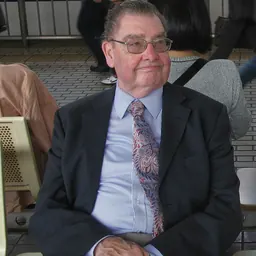


Related people
Same field, nearest in time
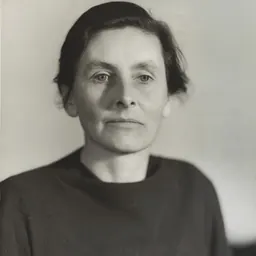
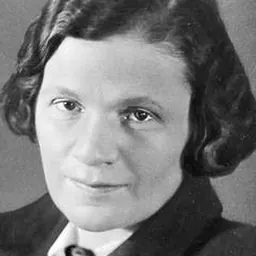
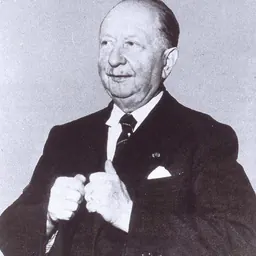
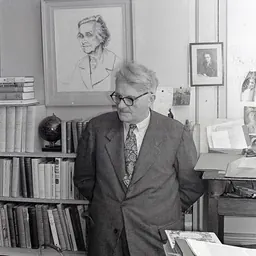
Contemporaries
People whose lives overlapped Philip Guedalla's
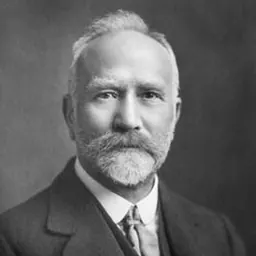



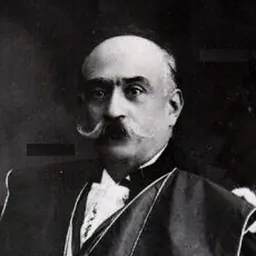
Frequently asked questions
Who was Philip Guedalla?
British historical writer (1889–1944)
When was Philip Guedalla born?
Philip Guedalla was born on 12 March 1889 in Maida Vale.
When did Philip Guedalla die?
Philip Guedalla died on 16 December 1944 in London.
What was Philip Guedalla's occupation?
Philip Guedalla was a historian, biographer, jurist and writer.
What nationality was Philip Guedalla?
Philip Guedalla was British.
Sources & further reading
Cite this page
APA: Biography.guide. (2026). Philip Guedalla. https://biography.guide/philip-guedalla/
MLA: "Philip Guedalla." Biography.guide, https://biography.guide/philip-guedalla/.
Chicago: "Philip Guedalla." Biography.guide. https://biography.guide/philip-guedalla/.
Data last updated: 2026-09-20 · Spot an error? Report a correction.
Page generated 2026-09-27 05:33 UTC