
About Philip Gibbs
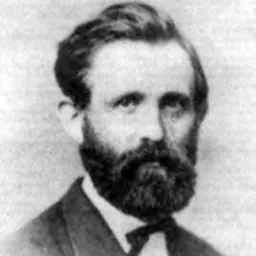
Lived 1877 – 1962 (aged 84). Philip Gibbs was a British journalist, novelist, war correspondent and writer.
Sir Philip Armand Thomas Hamilton Gibbs KBE, Chevalier of the Legion of Honour (1 May 1877 – 10 March 1962) was an English journalist and author who served as one of five official British war correspondents during the First World War.
Early life The son of a civil servant, Gibbs was born in Kensington, London. He received a home education and determined at an early age to become a writer. Four of his siblings were also writers: A. Hamilton Gibbs, Francis Hamilton Gibbs, Helen Hamilton Gibbs and Cosmo Hamilton, as was his father Henry James Gibbs and his son, Anthony. Gibbs was a Roman Catholic.
Career His first article was published in 1894 in the Daily Chronicle; five years later he published the first of many books, Founders of the Empire. He was given the post of literary editor at Alfred Harmsworth's leading (and growing) tabloid format newspaper the Daily Mail. He subsequently worked on other prominent newspapers including the Daily Express.
The Times, in 1940 referring to 1909, credited Gibbs with "bursting the bubble with one cable to the London newspaper he was representing". The bubble in question was the September 1909 claim by American explorer Frederick Cook to have reached the North Pole in April 1908. Gibbs didn't trust Cook's "romantic" impressions of his journey into the ice.
His first attempt at semi-fiction was published in 1909 as The Street of Adventure, which recounted the story of the official Liberal Party newspaper Tribune, founded in 1906 and failing spectacularly in 1908. The paper was founded at vast expense by Franklin Thomasson, MP for Leicester from 1906 to 1910. A man of decidedly liberal views, Gibbs took an interest in popular movements of the time, including the suffragettes, publishing a book on the British women's suffrage movement in 1910. With tensions growing in Europe in the years immediately preceding 1914, Gibbs repeatedly expressed a belief that war could be avoided between the Entente and Central Powers.
As one of five official war correspondents, Gibbs wrote about the Mines in the Battle of Messines (1917):
Gibbs' work appeared in the Daily Telegraph and Daily Chronicle. The price he had to pay for accreditation was to submit to effective censorship: all of his work was to be vetted by C. E. Montague, formerly of the Manchester Guardian. He agreed, although unhappy with the arrangement. Gibbs' wartime output was prodigious. He produced a stream of newspaper articles and a series of books: The Soul of the War (1915), The Battle of the Somme (1917), From Bapaume to Passchendaele (1918) and The Realities of War (UK title, 1920; "Now it Can Be Told", United States title, 1920). Gibbs' work in the immediate post-war period was focused on a fear of societal unrest created by brutalised ‘ape-men’ and wartime-employed women who 'were clinging onto their jobs, would not let go of the pocket-money which they had spent on frocks’. He was appointed KBE in the 1920 civilian war honours. The same year he was made a Chevalier of the Legion of Honour by the French government.
In The Realities of War Gibbs exacted a form of revenge for the frustration he suffered in submitting to wartime censorship; published after the armistice, the book gave an account of his personal experiences in war-torn Europe, painting a most unflattering portrait of Sir Douglas Haig, British Commander-in-Chief in France and Flanders, and his General Headquarters.
Working as a freelance journalist, having resigned from the Daily Chronicle over its support for the Lloyd George government's Irish policy, he published a series of books and articles. These included the introduction to Ireland in Insurrection about recent English atrocities in that country and an autobiography, Adventures in Journalism (1923).
Gibbs' 1937 book Ordeal In England was a study of poverty and also an anti-socialist critique of English Journey by J. B. Priestley and The Road to Wigan Pier by George Orwell. Ordeal In England was later republished by the conservative Right Book Club.
America Speaks An Historical Account Of Compendious and Swift Writing
Australasia: The Britains of the South, 1903. Beauty and Nick, 1921. Behind the Curtain Blood Relations, 1935. Both Your Houses
Broken Pledges, 1938. Called Back Cities Of Refuge Crowded Company Darkened Rooms, 1930. England Speaks, 1935. European Journey Facts and Ideas: Short Studies Of Life and Literature, 1905. Founders Of the Empire
Great Argument Heirs Apparent, 1924 How Now England Knowledge Is Power Lady Of the Yellow River Life's Adventure
No Price For Freedom
Oil Lamps and Candlelight Oliver's Kind Women, 1929. Ordeal In England People Of Destiny, 1920.
Since Then, 1930. Sons Of the Others Ten Years After: A Reminder, 1925. The Age Of Reason, 1930. The Anxious Days
The Battle Within
The Cloud Above the Green The Cross Of Peace The Curtains Of Yesterday The Custody of the Child The Day After To-Morrow The Eighth Year: A Vital Problem of Married Life, 1913. The Germans On the Somme The Golden Years The Healing Touch The Hidden City, 1930. The Hope Of Europe The Hopeful Heart The Individualist The Interpreter The Journalist's London The Law-Breakers The Life and Times Of King George V: George the Faithful The Long Alert
The Pageant Of the Years, 1946. The Pilgrim's Progress To Culture The Reckless Duke The Reckless Lady, 1925. The Riddle Of a Changing World The Romance Of Empire
The Spoils Of Time
The Winding Lane The Wonders of the World Thine Enemy This Nettle Danger Through the Storm Unchanging Quest, 1926. Venetian Lovers and Other Stories, 1930. Wounded Souls Young Anarchy, 1926.
Film adaptations Several of his books were adapted as movies.
1921, The Street of Adventure 1925, Venetian Lovers 1925, The City of Temptation 1926, High Steppers, based on the novel Heirs Apparent 1926, The Reckless Lady 1928, Paradise, based on The Crossword Puzzle 1928, Out of the Ruins 1929, Darkened Rooms 1933, Captured!, based on the story "Fellow Prisoners"
Don’t just read it —
keep it.
Full-length biographies made to live with: read them, listen on the way to work, watch them tonight.
- E-book
- Audio
- Video
Instant download · yours to keep · every purchase keeps this site free
Important facts
People in Philip Gibbs's life
Named in this biography and alive at the same time
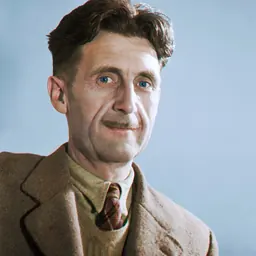






Related people
Same field, nearest in time
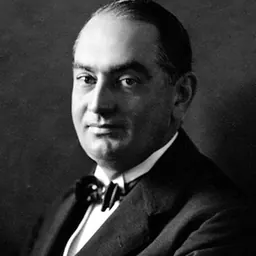
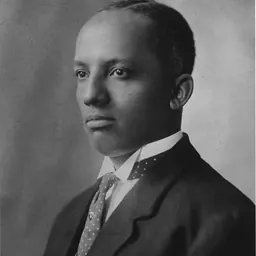
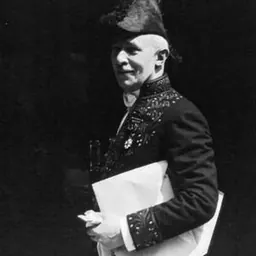

Contemporaries
People whose lives overlapped Philip Gibbs's


Frequently asked questions
Who was Philip Gibbs?
English journalist and novelist (1877–1962)
When was Philip Gibbs born?
Philip Gibbs was born on 1 May 1877 in London.
When did Philip Gibbs die?
Philip Gibbs died on 10 March 1962 in Godalming.
What was Philip Gibbs's occupation?
Philip Gibbs was a journalist, novelist, war correspondent and writer.
What nationality was Philip Gibbs?
Philip Gibbs was British.
Sources & further reading
Cite this page
APA: Biography.guide. (2026). Philip Gibbs. https://biography.guide/philip-gibbs-journalist/
MLA: "Philip Gibbs." Biography.guide, https://biography.guide/philip-gibbs-journalist/.
Chicago: "Philip Gibbs." Biography.guide. https://biography.guide/philip-gibbs-journalist/.
Data last updated: 2026-09-20 · Spot an error? Report a correction.
Page generated 2026-09-27 05:19 UTC