
About Philip C. Pendleton
Lived 1779 – 1863 (aged 83). Philip C. Pendleton was an American lawyer, judge and politician.
Philip Clayton Pendleton (November 24, 1779 – April 3, 1863) was a Virginia attorney, planter, politician and jurist. He briefly served as a United States district judge of the United States District Court for the Western District of Virginia. He previously served in the Virginia House of Delegates and as a Virginia state judge.
Education and career
Born on November 24, 1779, in Berkeley County, Virginia (now West Virginia), Pendleton attended Dickinson College and the College of New Jersey (now Princeton University), then read law . which number grew to 23 slaves in the 1840 United States census. In the 1860 United States census, Pendleton owned 16 slaves in Berkeley County, Virginia. His firstborn son, also Philip C. Pendleton (1814–1899) farmed across the Potomac River in Oakland, Allegheny County, Maryland before the Civil War with the assistance of 13 enslaved people, then possibly served as a Union major and paymaster during the war.
Meanwhile, Berkeley County voters elected Pendleton as one of their representatives in the Virginia House of Delegates (a part-time position) in 1805 and re-elected him the following year. Although he was not one of the two top vote-getters in 1807, one of the two men elected (Philip P. Wilson) died before the session began and Pendleton succeeded him, then was replaced by George Porterfield for one term, before he and Magnus Tate served together for a term, then Porterfield again replaced Pendleton. Reportedly, his tenure in the Virginia General Assembly led to Pendleton's later aversion to further political involvement. The Virginia General Assembly elected Pendleton as a member of the Board of Commissioners who met at the tavern at Rockfish Gap in 1818 and decided to locate the University of Virginia at Charlottesville. The group also included Thomas Jefferson, James Madison, James Monroe, John Marshall and among others, John G. Jackson, another future judge of the United States District Court for the Western District of Virginia. (Pendleton's vote was for Lexington).
Military service
Pendleton served in the War of 1812, enlisting as a private in the militia company raised by fellow lawyer and planter Elisha Boyd in Martinsburg, Virginia (now West Virginia). He became the unit's paymaster. Their troop of Berkeley County militia defended Norfolk and Portsmouth Virginia against a British naval and land attack. Another Berkeley County militia troop would be the first to reach Washington, D.C. after the British burned the new nation's capitol.
Federal judicial service
Pendleton received a recess appointment from President John Quincy Adams on May 6, 1825, to a seat on the United States District Court for the Western District of Virginia vacated by Judge John G. Jackson.
The Virginia General Assembly elected Pendleton as a judge for the County Court for Berkeley County, and he served for many years as chief judge of that court until his death.
Death
Pendleton died on April 3, 1863, in Berkeley County, Virginia. He was interred in Norbourne Parish Cemetery in Martinsburg.
Family
Pendleton was descended from the First Families of Virginia, the eldest son of Colonel Philip Pendleton (1752–1829) who led the Berkeley County militia during the American Revolutionary War and helped found Martinsburg in 1778. In 1813, Pendleton married Sarah Ann Boyd (1797–1868), Elisha Boyd's daughter. Their son Edmund B. Pendleton (1816–1880) would follow his father's path in law and politics into the Virginia judiciary, serving one term in the Virginia House of Delegates from 1844 to 1845, as well as twice voting against secession twice as one of Berkeley County's delegates at the Virginia Secession Convention of 1861. Pendleton and his wife Sarah also had sons Philip Pendleton (1814–1899) and Dr. Elisha Boyd Pendleton (1820–1902), and a daughter, Elizabeth who married and had children.
Edmund B. Pendleton
Berkeley County had not sent any representatives to the Wheeling Conventions which helped create the new state, and several of his relatives served in the Confederate States Army. His son Edmund B. Pendleton would move from Berkeley County back into Frederick County, Virginia (from which Berkeley county had been created in 1772) and become a Virginia judge from 1869 until resigning a year later and retiring there until his death in 1880, although Virginia's attempts to regain Berkeley County and Jefferson County would be rejected by the United States Supreme Court in Virginia v. West Virginia in 1871.
Don’t just read it —
keep it.
Full-length biographies made to live with: read them, listen on the way to work, watch them tonight.
- E-book
- Audio
- Video
Instant download · yours to keep · every purchase keeps this site free
Important facts
People in Philip C. Pendleton's life
Named in this biography and alive at the same time


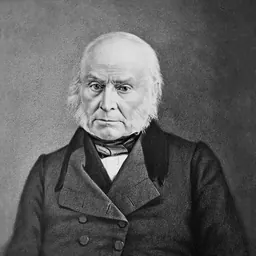

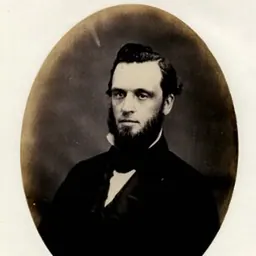
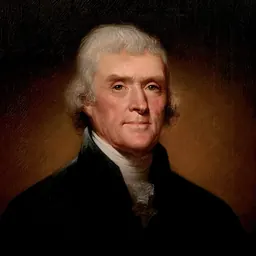

Related people
Same field, nearest in time

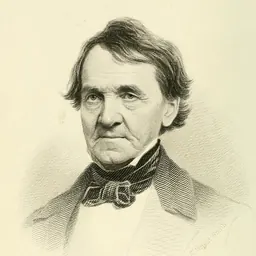


Contemporaries
People whose lives overlapped Philip C. Pendleton's


Frequently asked questions
Who was Philip C. Pendleton?
United States federal judge (1779-1863)
When was Philip C. Pendleton born?
Philip C. Pendleton was born on 24 November 1779 in Martinsburg.
When did Philip C. Pendleton die?
Philip C. Pendleton died on 3 April 1863 in Martinsburg.
What was Philip C. Pendleton's occupation?
Philip C. Pendleton was a lawyer, judge and politician.
What nationality was Philip C. Pendleton?
Philip C. Pendleton was American.
Sources & further reading
· Wikipedia: Philip C. Pendleton
· DBpedia: Philip C. Pendleton
Cite this page
APA: Biography.guide. (2026). Philip C. Pendleton. https://biography.guide/philip-c-pendleton/
MLA: "Philip C. Pendleton." Biography.guide, https://biography.guide/philip-c-pendleton/.
Chicago: "Philip C. Pendleton." Biography.guide. https://biography.guide/philip-c-pendleton/.
Data last updated: 2026-09-20 · Spot an error? Report a correction.
Page generated 2026-09-27 05:12 UTC