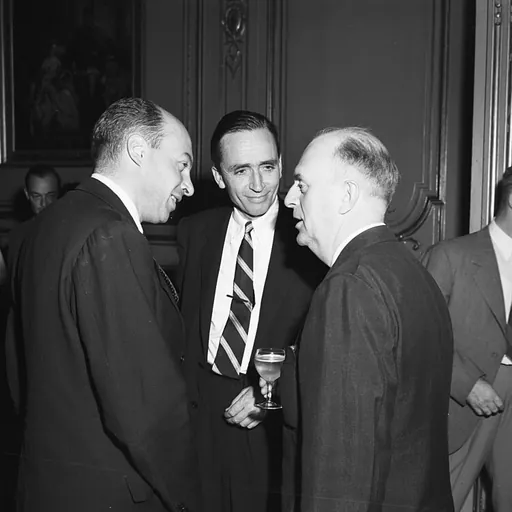
About Philip Bonsal
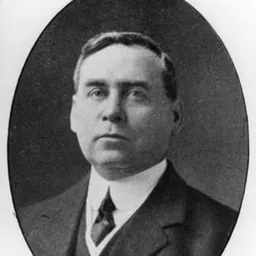
Lived 1903 – 1995 (aged 92). Philip Bonsal was an American diplomat.
Philip Wilson Bonsal (May 22, 1903 – June 28, 1995) was an American career diplomat with the U.S. Department of State. A specialist on Latin America, he served as United States Ambassador to Cuba from February 1959 until October 1960, the first months of the Castro regime.
Early years Bonsal was born in New York City on May 22, 1903. His father was Stephen Bonsal (1865–1951), a well-known journalist who served several years in the US diplomatic corps, wrote several books, and won a Pulitzer Prize. (Stephen Bonsal covered the Spanish–American War and many other conflicts for the New York Herald and reported on the revolution in Mexico for the New York Times in 1910–1911.) He spent several years in the U.S. diplomatic corps and served as President Wilson's translator at the Paris Peace Conference. Among his eight books, his memoir of the Versailles Peace Conference won the Pulitzer Prize for History in 1945. His mother was Henrietta Morris, a descendant of Gouverneur Morris, a leader in the American Revolution. He had three brothers, including New York judge Dudley Baldwin Bonsal.
Bonsal's early education took place in the Philippines and Switzerland. He graduated from Yale in 1924.
Bonsal married Margaret Lockett of Knoxville, Tennessee, circa 1929. Bonsal worked in Spain and Chile for its parent company, International Telephone & Telegraph, rising to become chief of its Latin American Division. He then entered government service as a specialist in telephone services with the Federal Communications Commission,
Bonsal was fluent in Spanish.
Bonsal served as an adviser at the 1954 Geneva Conference on Korea and Indochina.
Colombia Eisenhower nominated Bonsal as United States Ambassador to Colombia in February 1955. and he presented his credentials on April 1. He maintained friendly relations with opposition politicians, angering Colombian dictator General Gustavo Rojas Pinilla,
Eisenhower nominated him as United States Ambassador to Bolivia on March 18, 1957. He concluded his service in Colombia on April 24, 1957.
Bolivia Bonsal served as United States Ambassador to Bolivia from 1957 to 1959. He wholeheartedly supported the US economic assistance program under way there, which he later described as a "pioneer" and "solitary example" of what was required of the US in Latin America. Bonsal's predecessor, Earl E. T. Smith, had maintained friendly relations with Cuban dictator Fulgencio Batista and was quickly recalled by the State Department after Batista's ouster. It has been argued that the choice of Bonsal signaled an intention on the part of the State Department to defuse the Cuban Revolution in the same way that it had defused the Bolivian Revolution of 1952.
Bonsal attempted to find a working arrangement with the leader of the new government. Bonsal admitted that "animosity was inevitable" but that he was hopeful that "at some point we can get down to a reasoned dialogue." Castro was critical of the arrival of Bonsal in the Cuban press and compared him to a colonial viceroy, and dialogue was not easily forthcoming.
When Bonsal testified before a closed session of the House Committee on Foreign Relations in May 1959, he explained why the revolution had such widespread popular support: "the corruption and the sadism of many Batista henchmen united most Cubans against the regime." He described how Batista's security forces had killed many while "many, many more were arrested on no charges and kept in jail for indefinite periods."
In August, he protested to Secretary of State Herter that Cuban-American relations were being poisoned by the fact that the US was allowing several hundred Batista allies to live in the country, which appeared to the Cubans as harboring counter-revolutionaries. He urged them to be forced to "move on to some other country."
On September 3, 1959, Bonsal met with Castro and express concern that American businesses, which had complied fully with the Land Reform Law, were concerned that government agents were acting arbitrarily and without legal sanction. He complained of anti-American comments by Guevara, who was then on a world tour. Castro advised patience and forbearance with "the exuberances of young and inexperienced revolutionaries."
In October 1959, Castro called the US "accomplices" of Batista loyalists forces who had launched air attacks on Cuba. Bonsal lodged a formal protest with Cuban President Osvaldo Dorticós on October 27 and blamed Castro for the deterioration of relations.
In mid-1960, the Cuban government reached an agreement to sell 700,000 tons of sugar to the Soviet Union, leading to a series of escalating actions by the US and Cuba. The US suspended sugar imports, Cuba nationalized American-owned businesses, and on October 19, the US imposed an embargo on US exports to Cuba except for food and medicine. Bonsal thought the Eisenhower administration was over-reacting and forcing Castro into an alliance with the Soviets.
After Castro called for a reduction in the staff of the US embassy in Havana, Bonsal was recalled to Washington in October 1960.
Formal diplomatic relations between the two countries were severed shortly afterward, and US diplomatic representation in Cuba was handled by the United States Interests Section in Havana, part of the embassy of Switzerland. That arrangement lasted until July 20, 2015, with the culmination of the Cuban Thaw.
Some leading members of the US Congress felt his attempt at a conciliatory approach to the Castro regime represented an appeasement of communism.
Morocco Bonsal was United States Ambassador to Morocco from 1961 to 1962. He retired from government service in 1965.
Bonsal published a memoir, "Cuba, Castro and the United States," in 1971.
Bonsal died of pneumonia on June 28, 1995, at the age of 92. He was survived by his wife.
Don’t just read it —
keep it.
Full-length biographies made to live with: read them, listen on the way to work, watch them tonight.
- E-book
- Audio
- Video
Instant download · yours to keep · every purchase keeps this site free
Important facts
Family & relationships
People in Philip Bonsal's life
Named in this biography and alive at the same time




Related people
Same field, nearest in time
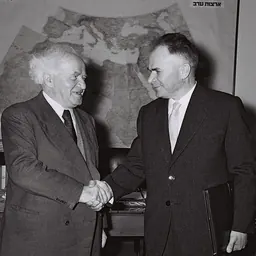
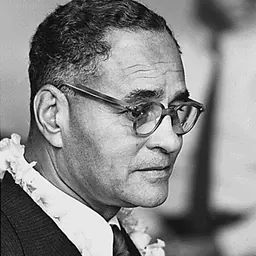

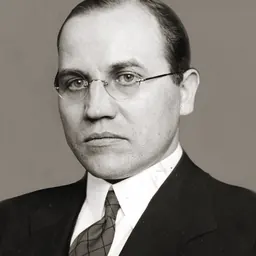
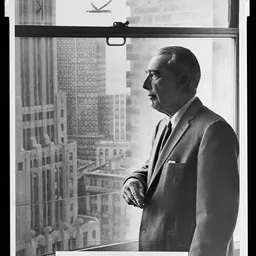
Contemporaries
People whose lives overlapped Philip Bonsal's
Frequently asked questions
Who was Philip Bonsal?
American diplomat (1903–1995)
When was Philip Bonsal born?
Philip Bonsal was born on 22 May 1903 in New York City.
When did Philip Bonsal die?
Philip Bonsal died on 28 June 1995 in Washington, D.C..
What was Philip Bonsal's occupation?
Philip Bonsal was a diplomat.
What nationality was Philip Bonsal?
Philip Bonsal was American.
Sources & further reading
Cite this page
APA: Biography.guide. (2026). Philip Bonsal. https://biography.guide/philip-bonsal/
MLA: "Philip Bonsal." Biography.guide, https://biography.guide/philip-bonsal/.
Chicago: "Philip Bonsal." Biography.guide. https://biography.guide/philip-bonsal/.
Data last updated: 2026-09-24 · Spot an error? Report a correction.
Portrait: Wikimedia Commons · author & licence
Page generated 2026-09-27 05:08 UTC