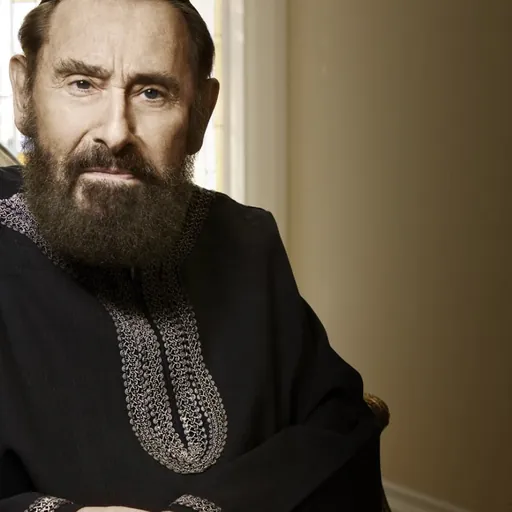
About Philip Berg
Lived 1927 – 2013 (aged 86). Philip Berg was an American rabbi and astrologer.
Philip S. Berg (original name Shraga Feivel Gruberger, ; August 20, 1927 – September 16, 2013) was an American rabbi and dean of the worldwide Kabbalah Centre organization.
Berg was a great populariser of Ashlagian Kabbalah. Having written a number of books on the subject of Kabbalah, Berg expanded its access to a greater audience than traditionally permitted, one which included secular Jews, non-Jews and women. Berg initially aimed at returning alienated Jews to their heritage through the teachings of Yehuda Ashlag; he later adopted a more universalistic approach.
There is disagreement about whether Berg's teachings, as relayed through the Kabbalah Centre, have sufficient grounds and/or genuine authority according to halakha (Jewish law), as they include some dogmas and translations differing markedly from those of more-traditional Kabbalists. Some Jewish scholars emphatically reject such teachings, deeming them as foreign to both the Kabbalah in particular and to Judaism in general.
In poor health following a stroke in 2004, Berg died on September 16, 2013.
Biography Berg was born as Shraga Feivel Gruberger in 1927 in Brooklyn, to an Orthodox Jewish family. His father, Max Gruberger, immigrated from Nadvirna, Galicia (Ukraine), and worked as a clothes presser in Williamsburg. In his youth, Berg underwent Talmudic education at Lakewood Yeshiva under Rabbi Aharon Kotler. He later returned to Williamsburg, where in 1951 at age 22 he received ordination from Yeshiva Torah Vodaas. Berg went into the business world and worked as an insurance agent for New York Life. He also became involved in real estate, and by 1962 it is claimed he was a millionaire. It is likely that he began to be called Philip during this time, as it is not unusual practice among Jews with Yiddish names to use an English equivalent while working in a secular environment.
Berg's first wife, Rivkah Brandwein, had an uncle named Yehuda Brandwein, whom Berg first met on a trip to Israel in 1962. Brandwein, a Hasidic rabbi from the Stretiner Hasidic dynasty and a close student in the Kabbalistic circle around Yehuda Ashlag, would become Berg's Kabbalistic mentor. Brandwein was the head of the Religious Department of the Israeli national workers union, Histadrut, and established Yeshivat Kol Yehuda (named after Ashlag) as a continuation of his mentor's yeshiva/publishing house "Beit Ulpana Itur Rabbanim". The uniqueness of Kol Yehuda was that students focused on kabbalistic study. The students would receive a salary to cover their living expenses so they could devote themselves to full-time learning. However, Brandwein faced difficulty in finding funds for the yeshiva and publishing. Berg had become Brandwein's book distributor and fundraiser in the United States, and it is likely he was encouraged by Brandwein to establish the National Institute for the Research in Kabbalah in New York in 1965 to aid the yeshiva.
After Brandwein's death in 1969, Berg returned to the United States and began working again with his former secretary (and future wife) Karen, on the condition that she let him teach her Kabbalah, a discipline he claimed was reserved exclusively for men. In 1971, Philip and Karen married and traveled to Israel. It was there that they changed their surname from Gruberger to Berg, as it was a common practice to shorten a European Jewish surname upon moving to Israel. In 1973, the Bergs returned to Queens, New York, where they established their full-time headquarters during the 1980s.
The Research Centre of Kabbalah In July 1965, Berg was initially involved in the founding of a publishing house called "The National Institute for the Research in Kabbalah" along with Ashlag's American student Levi Krakovsky, who died the following year. The institute was most likely a fundraising branch of Brandwein’s Yeshiva Kol Yehuda, as books published by the institute have Brandwein named as the senior figure, while Berg was listed as its president.
Rabbi Brandwein's Yeshivat Kol Yehuda, Ha-Yehudim St. in the Old City of Jerusalem Krakovsky was an emissary of Ashlag’s yeshiva "Itur Rabbanim", and had translated some of Ashlag's writings into English to support the yeshiva. He also wrote his own English introductory books to Kabbalah, and in the 1930s established his own yeshiva in the United States for the purpose of teaching Kabbalah in English. Krakovsky’s writings were also published by the new Institute. although a letter sent to him by Brandwein in July 1968 indicated he was President of the yeshiva.
In 2010, the Internal Revenue Service launched an investigation, reportedly investigating whether funds were directed to the personal enrichment of the Berg family and subpoenaed financial records of the organization and two affiliated charities connected to Madonna. The centre called the allegations "merit-less" and said it "intends to defend the case vigorously".
Publications of Berg and the Research Centre of Kabbalah Philip S. Berg, The Wheels of a Soul. Research Centre of Kabbalah, 1984. Philip S. Berg, Astrology, the Star Connection: The Science of Judaic Astrology. Research Centre of Kabbalah, 1987. Philip S. Berg, Kabbalah for the Layman, Vol. I. Research Centre of Kabbalah, 1981. Philip S. Berg, Kabbalah for the Layman, Vol. II. Research Centre of Kabbalah, 1988. Philip S. Berg, Kabbalah for the Layman, Vol. III. Research Centre of Kabbalah, 1988. Philip S. Berg, Kabbalistic Astrology Made Easy. Research Centre of Kabbalah, 1999. Rav P. S. Berg, Kabbalistic Astrology: And the Meaning of Our Lives. Kabbalah Publishing, 2006. Philip S. Berg, Power of Aleph Beth, Volume 1. Research Centre of Kabbalah, 1988. Philip S. Berg, Power of Aleph Beth, Volume 2. Research Centre of Kabbalah, 1988. Philip S. Berg, Time Zones. Research Centre of Kabbalah, 1990. Yehuda L. Ashlag, Compiled and edited by Philip S. Berg, An Entrance to The Zohar. Research Centre of Kabbalah, 1974. Yehuda Ashlag, Compiled and edited by Philip S. Berg, An Entrance to The Tree of Life. Research Centre of Kabbalah, 1977. Philip S. Berg, The Kabbalah Connection. Research Centre of Kabbalah, 1983. Yehuda L. Ashlag, Translated by Rabbi Levi I. Krakovsky, Ten Luminous Emanations, Volume 1. Research Centre of Kabbalah, 1969. Yehuda L. Ashlag, Compiled and edited by Philip S. Berg, Ten Luminous Emanations, Volume 2. Research Centre of Kabbalah, 1973. Rabbi Levi I. Krakovsky, The Light of Redemption. Research Centre of Kabbalah, 1970. Rabbi Moses C. Luzzatto, General Principles of The Kabbalah. Research Centre of Kabbalah, 1970.
Don’t just read it —
keep it.
Full-length biographies made to live with: read them, listen on the way to work, watch them tonight.
- E-book
- Audio
- Video
Instant download · yours to keep · every purchase keeps this site free
Important facts
People in Philip Berg's life
Named in this biography and alive at the same time

Related people
Same field, nearest in time



Contemporaries
People whose lives overlapped Philip Berg's


Frequently asked questions
Who was Philip Berg?
American astrologer and astrological writer (1927–2013)
When was Philip Berg born?
Philip Berg was born on 20 August 1927 in Brooklyn.
When did Philip Berg die?
Philip Berg died on 16 September 2013 in Los Angeles.
What was Philip Berg's occupation?
Philip Berg was a rabbi and astrologer.
What nationality was Philip Berg?
Philip Berg was American.
Sources & further reading
Cite this page
APA: Biography.guide. (2026). Philip Berg. https://biography.guide/philip-berg/
MLA: "Philip Berg." Biography.guide, https://biography.guide/philip-berg/.
Chicago: "Philip Berg." Biography.guide. https://biography.guide/philip-berg/.
Data last updated: 2026-09-22 · Spot an error? Report a correction.
Portrait: Wikimedia Commons · author & licence
Page generated 2026-09-27 05:01 UTC