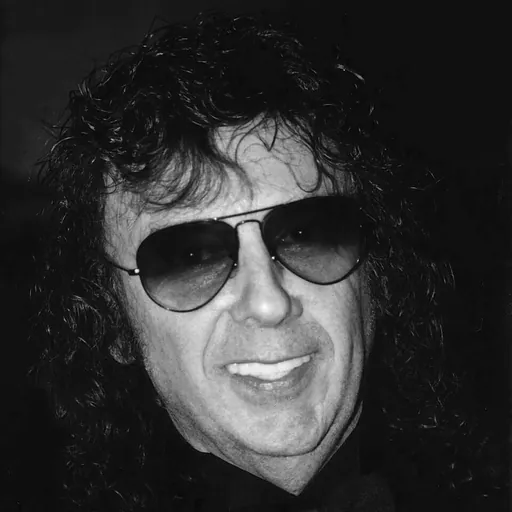
About Phil Spector
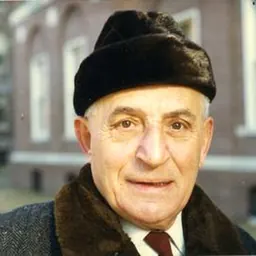
Lived 1939 – 2021 (aged 81). Phil Spector was an American record producer, composer, songwriter and musician.
Harvey Phillip Spector (December 26, 1939 – January 16, 2021) was an American record producer and songwriter known primarily for his orchestral pop productions and recording technique, dubbed "the Wall of Sound", and decades later for his trials and imprisonment for murder . Considered the first music producer auteur, he is the most successful American producer of the 1960s and widely regarded as one of the most influential figures in pop music history.
Spector ultimately produced nineteen U.S. top-ten singles, including four additional number-ones (the Crystals' "He's a Rebel", the Righteous Brothers' "You've Lost That Lovin' Feelin'", the Beatles' "The Long and Winding Road", and Harrison's "My Sweet Lord"). He is credited with having a significant impact on rock music, the girl group sound, in-studio composition, and the professional function of record producers themselves. He contributed to the development of music genres and movements such as psychedelia, art rock/pop, noise pop, dream pop, and shoegaze. In 1989, he was inducted into the Rock and Roll Hall of Fame.
After the 1980s, Spector remained largely inactive amid periods of reclusion, substance abuse, and erratic behavior. In 2009, he was convicted of the 2003 murder of actress Lana Clarkson and sentenced to 19 years to life in prison, where he died in 2021.
Background Harvey Spector was born on December 26, 1939. His mother, Bertha, was a first-generation immigrant in a Russian-Jewish family in the Bronx, New York City. She had been born in France to Russian migrants George and Clara Spektor, who brought her to the United States in 1911 aged 9 months. His father, Benjamin, was born as Baruch in the Russian Empire to George and Bessie Spektus or Spektres, and brought to the U.S. by his parents in 1913 aged 10. Both families anglicized their last names to "Spector" on their naturalization papers, which were witnessed by the same man, Isidore Spector. The similarities in name and background of the grandfathers led Spector to believe that his parents were first cousins. He had a sister named Shirley, who was six years his senior; she died in 2004 in Hemet, California, at the age of 70.
In April 1949, Spector's father, who was deeply in debt, died by suicide; on his gravestone were inscribed the words "Ben Spector. Father. Husband. To Know Him Was To Love Him". In 1953, Spector's mother moved the family to Los Angeles where she found work as a seamstress. Spector attended John Burroughs Junior High School (now John Burroughs Middle School) on Wilshire Boulevard, then in 1955 attended Fairfax High School. Having learned to play guitar, Spector performed "Rock Island Line" in a talent show at Fairfax High. He joined a loose-knit community of aspiring musicians, including Lou Adler, Bruce Johnston, Steve Douglas, and Sandy Nelson. Spector formed a group, the Teddy Bears, with Nelson and three other friends, Marshall Leib, Harvey Goldstein and Annette Kleinbard.
Career (1958–2009) 1958–1961: The Teddy Bears and early production work
During this period, record producer Stan Ross—co-owner of Gold Star Studios in Hollywood—began to tutor Spector in record production and exerted a major influence on Spector's production style. In 1958, the Teddy Bears recorded the Spector-penned "Don't You Worry My Little Pet", and then signed a two to three singles recording deal with Era Records, with the promise of more if the singles did well.
At their next session, they recorded another song Spector had written—this one inspired by the epitaph on Spector's father's tombstone. Released on Era's subsidiary label, Doré Records, "To Know Him Is to Love Him" reached number one on Billboard Hot 100 singles chart on December 1, 1958, selling over a million copies by year's end.
While recording the Teddy Bears' album, Spector met Lester Sill, a former promotion man who was a mentor to Jerry Leiber and Mike Stoller. Sill and his partner, Lee Hazlewood supported Spector's next project, the Spectors Three. In 1960, Sill arranged for Spector to work as an apprentice to Leiber and Stoller in New York. Spector co-wrote the Ben E. King Top 10 hit "Spanish Harlem" with Leiber and also worked as a session musician, playing the guitar solo on the Drifters' song "On Broadway".
Spector's first true recording artist and project as producer was Ronnie Crawford. Spector's production work during this time included releases by LaVern Baker, Ruth Brown, and Billy Storm, as well as the Top Notes' original recording of "Twist and Shout". Leiber and Stoller recommended Spector to produce Ray Peterson's "Corrine, Corrina", which reached number 9 in January 1961. Later, he produced another major hit for Curtis Lee, "Pretty Little Angel Eyes", which made it to number 7. Returning to Hollywood, Spector agreed to produce one of Sill's acts. After both Liberty Records and Capitol Records turned down the master of "Be My Boy" by the Paris Sisters, Sill formed a new label, Gregmark Records, with Lee Hazlewood, and released it. It reached only number 56, but the follow-up, "I Love How You Love Me", was a hit, reaching number 5. 1961–1965: Philles Records In late 1961, Spector formed a record company with Sill, who by this time had ended his business partnership with Hazlewood. Philles Records combined the first names of its two founders. Through Hill and Range Publishers, Spector found three groups he wanted to produce: the Ducanes, the Creations, and the Crystals. The first two signed with other companies, but Spector managed to secure the Crystals for his new label. Their first single, "There's No Other (Like My Baby)" was a success, hitting number 20. Their next release, "Uptown", made it to number 13.
Spector continued to work freelance with other artists. In 1962, he produced "Second Hand Love" by Connie Francis, which reached number 7. Ahmet Ertegun of Atlantic paired Spector with future Broadway star Jean DuShon for "Talk to Me", the B-side of which was "Tired of Trying", written by DuShon.
In 1962, Spector briefly took a job as an A&R producer for Liberty Records. It was while working at Liberty that he heard a song written by Gene Pitney, for whom he had produced a number 41 hit, "Every Breath I Take", a year earlier. "He's a Rebel" was due to be released on Liberty by Vikki Carr, but Spector rushed into Gold Star Studios and recorded a cover version using Darlene Love and the Blossoms on lead vocals. The record was released on Philles, attributed to the Crystals, and quickly rose to the top of the charts.
The Ronettes, 1966. Spector married frontwoman Veronica Bennett (known as Ronnie, center) in 1968.
By the time "He's a Rebel" went to number 1, Lester Sill was out of the company, and Spector had Philles all to himself. He created a new act, Bob B. Soxx & the Blue Jeans, featuring Darlene Love, Fanita James (a member of the Blossoms), and Bobby Sheen, a singer he had worked with at Liberty. The group had hits with "Zip-a-Dee-Doo-Dah" (number 8), "Why Do Lovers Break Each Other's Heart" (number 38), and "Not Too Young to Get Married" (number 63). Spector also released solo material by Darlene Love in 1963. In the same year, he released "Be My Baby" by the Ronettes, which went to number 2.
Beginning with "Zip-A-Dee-Doo-Dah", Spector paired his singles with intentionally inconsequential B-sides, which were typically instrumental tracks improvised at the close of a session, to ensure radio programmers played his preferred A-side. Spector named the B-sides after various associates, including his psychiatrist ("Dr. Kaplan's Office") and the operator of a hamburger stand located outside of Gold Star ("Brother Julius"). In some cases, he delegated responsibility for these recordings to keyboardist Don Randi, who stated that Spector ultimately claimed sole credit for many of them.
The first time Spector put the same amount of effort into an LP as he did into 45s was when he utilized the full Philles roster and the Wrecking Crew to make what he felt would become a hit for the 1963 Christmas season. A Christmas Gift for You from Philles Records was released a few days after the assassination of President Kennedy in November 1963.
On September 28, 1963, the Ronettes appeared at the Cow Palace, near San Francisco. Also on the bill were the Righteous Brothers. Spector, who was conducting the band for all the acts, was so impressed with Bill Medley and Bobby Hatfield that he bought their contract from Moonglow Records and signed them to Philles. In early 1965, "You've Lost That Lovin' Feelin'" became the label's second number 1 single. Three more major hits with the duo followed: "Just Once in My Life" (number 9), "Unchained Melody" (number 4, originally the B-side of "Hung on You"), and "Ebb Tide" (number 5). Despite having hits, he lost interest in producing the Righteous Brothers and sold their contract and all their master recordings to Verve Records. However, the sound of the Righteous Brothers' singles was so distinctive that the act chose to replicate it after leaving Spector, notching a second number 1 hit in 1966 with the Bill Medley–produced "(You're My) Soul and Inspiration".
In 1963, Spector established the short-lived Phi-Dan subsidiary label, intended to feature productions by associates such as Vini Poncia, Peter Andreoli, keyboardist Leon Russell, among others. The imprint released eight singles before dissolving, including singles by artists including Betty Willis, the Lovelites, and the Ikettes. None of the recordings on Phi-Dan were produced by Spector.
The recording of "Unchained Melody", credited on some releases as a Spector production although Medley has consistently said he produced it originally as an album track, had a second wave of popularity 25 years after its initial release, when it was featured prominently in the 1990 hit movie Ghost. A re-release of the single re-charted on the Billboard Hot 100, and went to number one on the Adult Contemporary charts. This also put Spector back on the U.S. Top 40 charts for the first time since his last appearance in 1971 with John Lennon's "Imagine", though he did have UK top 40 hits in the interim with the Ramones.
1966–1969: Ike & Tina Turner and hiatus
Spector's final signing to Philles was the husband-and-wife team of Ike & Tina Turner in April 1966. Spector considered their single "River Deep – Mountain High" his best work, but it failed to reach any higher than number 88 in the United States. The record, which actually featured Tina Turner without Ike Turner, was successful in Britain, reaching number 3.
Spector released another single by Ike & Tina Turner, "I'll Never Need More Than This", while negotiating a deal to move Philles to A&M Records in 1967. The deal did not materialize, and Spector subsequently lost enthusiasm for his label and the recording industry. Already something of a recluse, he withdrew temporarily from the public eye, marrying Veronica "Ronnie" Bennett, lead singer of the Ronettes, in 1968. Spector emerged briefly for a cameo as himself in an episode of I Dream of Jeannie (1967) and as a drug dealer in the film Easy Rider (1969).
In 1969, Spector made a brief return to the music business by signing a production deal with A&M Records. A Ronettes single, "You Came, You Saw, You Conquered" flopped, but Spector returned to the Hot 100 with "Black Pearl", by Sonny Charles and the Checkmates, Ltd., which reached number 13.
1970–1973: Comeback and Beatles collaborations In early 1970, Allen Klein, the new manager of the Beatles, brought Spector to England. After impressing with his production of John Lennon's solo single "Instant Karma!", which went to number 3, Spector was invited by Lennon and George Harrison to take on the task of turning the Beatles' abandoned Let It Be recording sessions into a usable album. He went to work using many of his production techniques, making significant changes to the arrangements and sound of some songs. Released a month after the Beatles' break-up, the album topped the U.S. and UK charts. It also yielded the number 1 U.S. single "The Long and Winding Road". Spector's overdubbing of "The Long and Winding Road" infuriated its composer, Paul McCartney.
For Harrison's multiplatinum album All Things Must Pass (number 1, 1970), Spector helped provide a symphonic ambience, although his health issues meant that after recording the basic tracks, he was absent from the project until the mixing stage. Rolling Stones reviewer lauded the album's sound, calling it "Wagnerian, Brucknerian, the music of mountain tops and vast horizons". The triple LP yielded two major hits: "My Sweet Lord" (number 1) and "What Is Life" (number 10). That same year, Spector co-produced Lennon's Plastic Ono Band (number 6), a stark-sounding album devoid of any Wall of Sound extravagance. Through Harrison, he also produced the debut single by Derek and the Dominos, "Tell the Truth", but the band disliked the sound and had the record withdrawn.
Spector was made head of A&R for Apple Records. He held the post for only a year, during which he co-produced Lennon's 1971 single "Power to the People" (number 11) and his chart-topping album Imagine. The album's title track hit number 3. With Harrison, Spector co-produced Harrison's "Bangla Desh" (number 23)—rock's first charity single—and wife Ronnie Spector's "Try Some, Buy Some" (number 77). The latter was recorded for Ronnie's intended solo album on Apple Records, a project that stalled due to the same erratic, alcohol-fueled behavior from Spector that had hindered work on All Things Must Pass. Spector was convinced that the Harrison-written single would be a major hit, and its poor commercial performance was one of the biggest disappointments of his career.
That same year Spector oversaw the live recording of the Harrison-organized Concert for Bangladesh shows in New York City, which resulted in the number 1 triple album The Concert for Bangladesh. The album won the "Album of the Year" award at the 1973 Grammys. Despite being recorded live, Spector used up to 44 microphones simultaneously to create his trademark Wall of Sound. Following Harrison's death in 2001, Spector said that the most creative period of his career was when he worked with Lennon and Harrison in the early 1970s, and he believed that this was true of Lennon and Harrison also, despite their achievements with the Beatles.
Lennon retained Spector for the 1971 Christmas single "Happy Xmas (War Is Over)" and the poorly reviewed 1972 album Some Time in New York City (number 48), both collaborations with Yoko Ono. In late 1972, Apple reissued Spector's A Christmas Gift for You from Philles Records (as Phil Spector's Christmas Album), bringing the recordings the commercial success and critical recognition that had originally eluded the 1963 release. Lennon and Ono's "Happy Xmas" single similarly stalled in sales upon its initial release, but later became a fixture on radio station playlists around Christmas.
Harrison and Spector started work on Harrison's Living in the Material World album in October 1972, but Spector's unreliability soon led to Harrison dismissing him from the project. Harrison recalled having to climb down into Spector's central London hotel room from the roof to get him to attend the sessions, and that his co-producer would then need "eighteen cherry brandies before he could get himself down to the studio". (In the same 1987 interview, Harrison said Spector's problems with alcohol and his frequent hospitalisation typified their collaborations from 1970 onward.) He nevertheless described the producer as "brilliant ... one of the greatest", adding, "he should be out there doing stuff right now—but not with me!" Spector was admitted to the UCLA Medical Center on the night of March 31, suffering serious head injuries that required several hours of surgery, with over 300 stitches to his face and more than 400 to the back of his head. His head injuries, Thompson suggests, were the reason that Spector began his habit of wearing outlandish wigs in later years.
He established the Warner-Spector label with Warner Bros. Records, which undertook new Spector-produced recordings with Cher, Darlene Love, Danny Potter, and Jerri Bo Keno, in addition to several reissues. A similar relationship with Britain's Polydor Records led to the formation of the Phil Spector International label in 1975. When the Cher and Keno singles (the latter's recordings were only issued in Germany) foundered on the charts, Spector released Dion DiMucci's Born to Be with You to little commercial fanfare in 1975; largely produced and recorded by Spector in 1974, it was subsequently disowned by the singer. In the 1990s and 2000s, the album enjoyed a resurgence among the indie rock cognoscenti.
Spector began to reemerge later in the decade, producing and co-writing a controversial 1977 album by Leonard Cohen, titled Death of a Ladies' Man. This angered many Cohen fans who preferred his stark acoustic sound to the orchestral and choral wall of sound that the album contains. The recording was fraught with difficulty. After Cohen had laid down practice vocal tracks, Spector mixed the album in studio sessions, rather than allowing Cohen to take a role in the mixing, as Cohen had previously done.
Spector also produced the much-publicized Ramones album End of the Century in 1979. As with his work with Leonard Cohen, End of the Century received criticism from Ramones fans who were angered over its radio-friendly sound. However, it proved to be their highest-charting album, peaking at number 44 on the Billboard Hot 200. The album contains some of the best known and most successful Ramones singles, such as "Rock 'n' Roll High School", "Do You Remember Rock 'n' Roll Radio?", and their cover of a previously released Spector song for the Ronettes, "Baby, I Love You". Guitarist Johnny Ramone later commented on working with Spector on the recording of the album, "It really worked when he got to a slower song like "Danny Says"—the production really worked tremendously. For the harder stuff, it didn't work as well."
Rumors circulated for years that Spector had threatened members of the Ramones with a gun during the sessions. Dee Dee Ramone claimed that Spector once pulled a gun on him when he tried to leave a session. Drummer Marky Ramone recalled in 2008, "They [guns] were there but he had a license to carry. He never held us hostage. We could have left at any time."
1981–2009: Semi-hiatus
Spector remained inactive throughout most of the 1980s, 1990s, and early 2000s. In early 1981, shortly after the death of John Lennon, he temporarily re-emerged to co-produce Yoko Ono's Season of Glass. He attempted to work with Céline Dion on her 1996 album Falling into You but fell out with her production team. His last released project was Silence Is Easy by Starsailor, in 2003. He was originally supposed to produce the entire album, but was fired owing to personal and creative differences. One of the two Spector-produced songs on the album, the title track, was a UK top 10 single (the other single being "White Dove").
Amid his murder charge, Spector produced singer-songwriter Hargo Khalsa's track (known professionally as Hargo) "Crying for John Lennon", which originally appears on Hargo's 2006 album In Your Eyes. On a visit to Spector's mansion for an interview for the Lennon tribute film Strawberry Fields, Hargo played Spector the song and asked him to produce it.
In December 2007, Spector attended the funeral of Ike Turner. In his eulogy, Spector criticized Tina Turner's autobiography I, Tina—and its subsequent promotion by Oprah Winfrey—as a "badly written" book that "demonized and vilified Ike". Spector commented that "Ike made Tina the jewel she was. When I went to see Ike play at the Cinegrill in the '90s ... there were at least five Tina Turners on the stage performing that night, and any one of them could have been the real Tina Turner."
In mid-April 2008, BBC Two broadcast a special titled Phil Spector: The Agony and the Ecstasy, by Vikram Jayanti. It consists of Spector's first screen interview, breaking a long period of media silence.
By 2011, his catalog was controlled by EMI Publishing.
Artistry and musical impact
Production and Wall of Sound Spector is credited with redefining the role of the record producer as a central creative force, analogous to a film director, and with establishing a paradigm where the producer is credited as the primary artist. Before his emergence, the producer's role was not widely recognized as distinct from other recording disciplines and, through his independent label Philles Records, he created a new model for producing and marketing pop music. In contrast to the rapid, high-volume release strategy of other labels, he released relatively few singles, a large percentage of which became hits. He was the first producer to exert comprehensive control over every artistic aspect of a record's production and the first associated with a signature style, later termed the "Wall of Sound". In a 1965 profile published by the New York Herald Tribune, journalist Tom Wolfe dubbed Spector the "first tycoon of teen". Wolfe's article also propagated inaccuracies that reinforced myths about him working in isolation, among other embellishments. (Spector is also credited as the first "star" producer.) and numerous recordings during the 1960s paid explicit tribute to Spector, including "Sha La La La Lee" by Simon and Pi, produced by Mark Wirtz as a stated tribute, and the Attack's "Please Phil Spector". Author and musician Virgil Moorefield writes that Spector's use of the studio as an orchestral instrument defined him as "the quintessential pop-rock producer" and "inspired a great many producers who followed him". In his 2007 book about American popular music, Starr attributes the increasing prominence of record producers after the 1960s, including George Martin's work with the Beatles, directly to "Spector's contribution and notoriety [...] And when today's bands labor painstakingly for a year or more over the studio production of a disc, they are demonstrating, knowingly or not, Spector's legacy at work."
Youth culture, girl group sound and rock music Spector influenced and helped facilitate the success of teen-oriented bands such as the Beatles. John Lennon (right) later stated, "Spector kept rock 'n' roll alive while Elvis was in the army".
At age 21, Spector was the youngest U.S. label owner, and in journalist Richard Williams' estimation, "revolutionized the industry's attitude to youth". His success helped sustain the visibility of rock-oriented pop on American radio following the cessation of several prominent rock 'n' performers at the end of the 1950s and positioned teenage listeners and pop music as a substantial and increasingly influential commercial market. Musicologist Sean MacLeod argued that his songs, which engaged in themes of romantic idealism, emotional uncertainty, and challenging "traditional values", contributed to the emergence of the 1960s youth culture and the success of both the British Invasion and acts such as the Beatles, the Rolling Stones, Bob Dylan, and the Beach Boys. Beach Boys leader Brian Wilson sought to expand on Spector's innovations and, in author Mark Ribowsky's description, joined with Spector as "twin leviathans of American rock and roll in the early and mid-sixties".
Elements of Spector's approach were absorbed into broader rock music and the work of his collaborators. Philles' early success helped prompt the founding of Red Bird Records in 1964 by Leiber, Stoller, and George Goldner, with Barry and Greenwich as staff writers. According to critic Mark Deming, Spector's success with the Paris Sisters and the Teddy Bears, whose aesthetic overlapped with the vocal style common to 1950s female pop and the orientation that later defined early-1960s girl-group records, paved the subsequent emergence of singers such as Lesley Gore and the Shangri-Las' Mary Weiss. His recordings for the Crystals built upon the Shirelles' girl-group template and subsequently influenced Hank Medress' productions for the Chiffons, according to Williams, while his crossover success with black artists helped enable the visibility of subsequent black performers and led Motown founder Berry Gordy to adopt Brill Building practices and aspects of Spector's business and production approach.
Spector's influence extended to surf music, especially groups such as Jan & Dean, and French yé-yé. In Britain, Spector's girl group productions, together with the Motown sound, formed part of the early-1960s mod culture, associated with bands such as the Rolling Stones and the Who. Williams states that British groups of 1963 onwards were largely unaffected by Spector, with the significant exception of the Rolling Stones, whose producer Andrew Loog Oldham incorporated elements of Spector's technique in their early recordings.
Psychedelia, art rock, and later popular music
After the mid-1960s, Spector's influence extended across the development of subsequent popular music genres and recordings, including psychedelia and albums such as the Beach Boys' Pet Sounds (1966) and the Beatles' Sgt. Pepper's Lonely Hearts Club Band (1967). According to musicologist John Covach, the "most artistically ambitious" early 1960s girl-group productions, including those by Spector, the "most important producer of girl-group pop", provided a direct precedent for the experimental approach that characterized later psychedelic rock.
Music critic Stephen Holden traced the mid-1960s emergence of art pop to the adoption of "quasi-symphonic" textures in pop recording, citing the "Wagnerian" character associated with his productions among progenitors. In the description of author Matthew Bannister, he had mirrored "the auteur theory of cinema, or the centrality of the composer in classical tradition", and drawing on Williams' analysis, described him as the earliest art rock figure. Music journalist and author Evan Eisenberg identified Spector's output as "perhaps the first fully self-conscious phonography in the popular field" and Spector himself as the first producer-auteur in popular music, whose "immense" influence on contemporaries such as the Beatles and Frank Zappa led the transition to the album era and transformed "kitsch into Dada." Writing in 1981, sociomusicologist Simon Frith identified Spector's self-imposed retirement in 1966, alongside Brian Wilson's withdrawal in 1967, as the catalysts for the "rock/pop split that has afflicted American music ever since".
In the 1970s, subsequent artists, such as Wizzard, Bruce Springsteen, and Elton John, enjoyed commercial success with variants of Spector's production style. Later in the decade, elements of his sound were adopted by new wave bands such as Blondie and the Go-Go's. He significantly influenced popular music in Japan, particularly the artist-producers Tatsuro Yamashita and Eiichi Ohtaki, and the 1990s Shibuya-kei movement. His approach informed independent and noise pop acts, including 1980s groups such as the Jesus and Mary Chain and Cocteau Twins, as well as 21st-century bands like the Raveonettes and Dum Dum Girls. Shoegaze, an alternative rock subgenre, also drew from the Wall of Sound. MacLeod additionally argues that elements of Spector's sound can be heard in later artists and production teams such as the Smiths; Stock, Aitken, and Waterman; Amy Winehouse; the Spice Girls; Vivian Girls; and the Pipettes.
Personal life and murder conviction Relationships and children
Spector's first marriage was in 1963 to Annette Merar, lead vocalist of the Spectors Three, a 1960s pop trio formed and produced by Spector. He named a record company after Merar, Annette Records. Spector and Merar divorced in 1966. While still married to Merar, he began having an affair with Ronnie Bennett, later known as Ronnie Spector. Bennett was the lead singer of the girl group the Ronettes (another group Spector managed and produced). They married in 1968 and adopted a son, Donté Phillip Spector.
In her 1990 memoir, Be My Baby: How I Survived Mascara, Miniskirts And Madness, Bennett alleged that Spector had imprisoned her in his California mansion and subjected her to years of psychological torment. According to Bennett, Spector sabotaged her career by forbidding her to perform, and she escaped from the mansion barefoot with the help of her mother in 1972. In their 1974 divorce settlement, she forfeited all future record earnings and surrendered custody of their children. She alleged that this was because Spector had threatened to hire a hitman to kill her.
Spector's son Donté told The Daily Mail in 2003 that he and his brother Gary were "kept captive as children" and were "forced to perform simulated intercourse" with Spector's then-girlfriend. According to Donté, "I was blindfolded and sexually molested. Dad would say, 'You're going to meet someone,' and it would be a 'learning experience'." Gary subsequently rejected his brother's claims, stating of his father, "He was not a people person… [but] he shows in his own way that he cares."
In 1982, Spector had twin children with his girlfriend Janis Zavala: Nicole Audrey Spector and Phillip Spector Jr.; Phillip Jr. died of leukemia in 1991. On September 1, 2006, while on bail and awaiting trial, Spector married his third wife Rachelle Short, who was 26 at the time (Spector was 67). Spector filed for divorce in April 2016, claiming irreconcilable differences. They divorced in 2018.
Clarkson murder, imprisonment, and death
On February 3, 2003, Spector shot actress Lana Clarkson in the mouth while in his mansion, the Pyrenees Castle, in Alhambra, California. Her body was found slumped in a chair. Spector told Esquire in July 2003 that Clarkson's death was an "accidental suicide" and that she "kissed the gun". The emergency call from Spector's home, made by Spector's driver, Adriano de Souza, quotes Spector as saying, "I think I killed somebody." He remained free on $1 million bail while awaiting trial. Defense expert and forensic pathologist Vincent Di Maio said that Spector might be suffering from Parkinson's disease, stating, "Look at Mr. Spector. He has Parkinson's features. He trembles." On September 26, Fidler declared a mistrial because of a hung jury (ten to two for conviction).
The retrial of Spector for murder in the second degree began on October 20, 2008, with Judge Fidler again presiding; the retrial was not televised. Spector was once again represented by attorney Jennifer Lee Barringer. The case went to the jury on March 26, 2009, and 18 days later, on April 13, the jury returned a guilty verdict. Additionally, Spector was found guilty of using a firearm in the commission of a crime, which added four years to the sentence. On May 29, 2009, he was sentenced to 19 years to life in the California state prison system. He would have been eligible for parole in 2024. California Department of Corrections photos from 2013 (released in September 2014) showed evidence of a progressive deterioration in Spector's health, according to observers. He had been an inmate at the California Health Care Facility (a prison hospital) in Stockton since October 2013. In September 2014, it was reported that Spector had lost his ability to speak, owing to laryngeal papillomatosis.
Spector was diagnosed with COVID-19 in December 2020. He was taken to San Joaquin General Hospital in French Camp, California, on December 31, and intubated the next month. Spector died in an outside hospital on January 16, 2021, at the age of 81, according to the California Department of Corrections and Rehabilitation. His daughter Nicole attributed her father's death to complications of COVID-19. and the most successful producer of the 1960s. He produced five number-one singles and 19 top-ten singles that appeared on the Billboard Hot 100 between 1958 and 1971 and he is one of few producers to have number one records in three consecutive decades (1950s, 1960s and 1970s). His music has appeared in many films, with prominent usages in Martin Scorsese's Mean Streets (1973) and Goodfellas (1990). In 1989, he was inducted by Tina Turner into the Rock and Roll Hall of Fame as a non-performer. He was inducted into the Songwriters Hall of Fame in 1997 and received the Grammy Trustees Award in 2000. Referencing the musicians' association with Spector, session player Carol Kaye later remarked that "a piece of us were on trial, too". Some media outlets received criticism for their coverage; the obituaries in The New York Times and Rolling Stone originally stated, respectively, that Spector's legacy "was marred by a murder conviction" and that his "life was upended" after being sentenced. These obituaries were revised following a social media backlash.
In 2022, Showtime premiered Spector, a four-part docuseries directed by Don Argott and Sheena M. Joyce. The series dedicated equal focus to Clarkson and Spector with participation from Clarkson's family, Spector's daughter Nicole, and his former associates. The directors stated their intention was to portray both subjects accurately and neutrally without a definite resolution as to the broader question of separating an artist's work from their personal actions. In popular culture Beyond the Valley of the Dolls (1970): The character of Ronnie "Z-Man" Barzell is based upon Spector, though neither Russ Meyer nor screenwriter Roger Ebert had met him. Phantom of the Paradise (1974): The villainous character Swan (played by Paul Williams) was supposedly inspired by Spector. A music producer and head of a record label, Swan was named "Spectre" in original drafts of the film's screenplay. What's Love Got to Do with It (1993): Spector is portrayed by Rob LaBelle. Grace of My Heart (1996): The film contains many characters based upon 1960s musicians, writers and producers including the character Joel Milner played by John Turturro (based on Spector). In the docudrama And the Beat Goes On: The Sonny and Cher Story, Phil Spector is portrayed by Christian Leffler. Metalocalypse (2006–2013): The character Dick "Magic Ears" Knubbler is a parody of Spector, based on profession, appearance and record of assault. A Reasonable Man (2009): Harv Stevens is reportedly based on Spector. The film examines his relationship with John Lennon. Christmas Kids (2010): A song included in the album I Can't Handle Change, which describes a simplified version of the history of the relationship between Ronnie and Phil Spector. Phil Spector (2013): Spector is portrayed by Al Pacino. The film was met with overwhelming controversy and criticism, including from biographer Mick Brown, with regards to its fictionalized embellishments and sympathetic depiction of Spector. Love & Mercy (2014): Spector is portrayed by Jonathan Slavin in a scene that was cut from the theatrical release.
Discography
Awards and accolades
Awards and nominations
Don’t just read it —
keep it.
Full-length biographies made to live with: read them, listen on the way to work, watch them tonight.
- E-book
- Audio
- Video
Instant download · yours to keep · every purchase keeps this site free
Important facts
People in Phil Spector's life
Named in this biography and alive at the same time


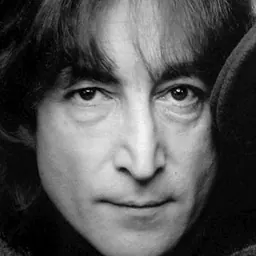
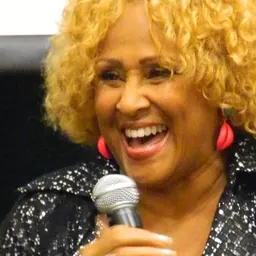



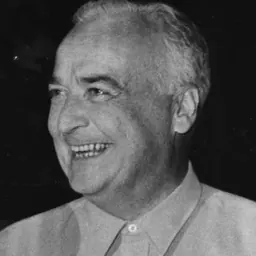
Related people
Same field, nearest in time


Contemporaries
People whose lives overlapped Phil Spector's




Frequently asked questions
Who was Phil Spector?
American record producer (1939–2021)
When was Phil Spector born?
Phil Spector was born on 26 December 1939 in The Bronx, New York City.
When did Phil Spector die?
Phil Spector died on 16 January 2021 in Stockton.
What was Phil Spector's occupation?
Phil Spector was a record producer, composer, songwriter and musician.
What nationality was Phil Spector?
Phil Spector was American.
Sources & further reading
Cite this page
APA: Biography.guide. (2026). Phil Spector. https://biography.guide/phil-spector/
MLA: "Phil Spector." Biography.guide, https://biography.guide/phil-spector/.
Chicago: "Phil Spector." Biography.guide. https://biography.guide/phil-spector/.
Data last updated: 2026-09-23 · Spot an error? Report a correction.
Portrait: Wikimedia Commons · author & licence
Page generated 2026-09-27 05:07 UTC