
About Phil Goatcher
Lived 1851 – 1931 (aged 79–80). Phil Goatcher was a British scenographer and designer.
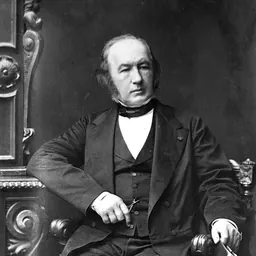
Phillip William Goatcher (23 November 1851 – 8 October 1931), often spelled "Philip", signing his work "Phil. W. Goatcher", was an English-born theatre scene painter who had a considerable career in America and Australia. His American-born son James Goatcher followed in his father's footsteps in Sydney, then both left for Perth, Western Australia, where they set up in business as painters and decorators. In later life James Goatcher was a highly regarded watercolor artist.
Phil W. Goatcher
Goatcher was born in London, a son of Phil Goatcher (died 22 December 1897), who may have been a scenic painter. After leaving school, he signed on as an apprentice on the sailing ship True Briton.
Australia True Briton docked at Melbourne in 1866, and he had a brief reunion with his aunt and uncle Boxall in Ballarat, and despite their entreaties returned to the ship. He again made port in Melbourne a year later, aboard Dover Castle (True Briton arrived at Port Phillip in July 1866 and Dover Castle in March 1867.) A newspaper obituary put his first arrival in 1864 and another historian for the Thames goldfields in New Zealand, but after failing to "strike it rich", took a job with Charles Massey, painting scenes for the Robert Heir company at the Theatre Royal, Grahamstown (now Onerahi). He stayed with that company until they were back in Sydney, then joined an American ship as an ordinary seaman. left for America. For three years he was in Philadelphia, under contract to the Kiralfy brothers, decorating their newly-acquired Alhambra Palace Theatre, During the summer breaks, Goatcher produced under contract numerous drop-scenes painted to give the impression of a lustrous fabric, such as satin, so effective that the deception was not seen until close up; they were used in various theatres across America. In 1888 he joined with John H. Young in Manhattan as Goatcher & Young, scenic designers, but despite lucrative contracts such as a Macbeth production starring Lillie Langtry, and a huge cyclorama depicting the Shenandoah Valley, the shop was a commercial failure. followed by Buchanan and Sims' The English Rose at the Theatre Royal. Other triumphs in this period were the pantomimes The Merry Monarch in 1891, Beauty and the Beast with George Gordon in 1893, also Around the World in Sixty Days [yes] and Cinderella and the Little Glass Slipper at the Lyceum Theatre, Sydney in 1894. Topping them all was Djin Djin, the Japanese Bogie-man, with scenery from Goatcher, George and Jack Gordon, and W. B. Spong for Christmas 1895.
In 1895 he was commissioned to decorate the interior of George Adams's new Palace Theatre, Sydney, and took on the dual responsibilities of lessee and director. His plans fell through, however, and he was forced to declare insolvency, and returned to the paintpot and brush. In 1898 he won a commission to decorate the Singer Sewing Machine showroom in Sydney’s Queen Victoria Building, using Wunderlich zinc ceiling tiles to create an Oriental atmosphere. Five years later he would decorate the Singer company's Melbourne showrooms in the Block Arcade, and in 1907 decorated the smoking room of the Menzies Hotel, Melbourne, with motifs of progress and modernization. In 1902 he was engaged to supervise decoration of the new Her Majesty's Theatre, Auckland, New Zealand.
Western Australia Around 1903 Goatcher, with his wife Emma and younger son James, left for Western Australia in the hope that Perth's drier climate would be beneficial to his health, as he had been suffering from a chronic respiratory complaint, and in 1904 set up in business as "Phil W. Goatcher & Son, Art Decorators and General House Painters". He did, however, take on several scene painting commissions in the eastern states, notably The Chocolate Soldier, which opened in Melbourne in August 1911 before transferring to Sydney in November, in time for his 60th birthday.
He made an oil painting of The Assumption at the Church of St John the Evangelist, Fremantle, and another in 1922, entitled "Come unto me all ye who labour" mural at the Heritage-listed All Saints' Anglican Church, Collie, a variation on the Adoration of the Magi depicting the Virgin and Child being reverenced by the local Aboriginals, church dignitaries and miners.
Boulder Town Hall "curtain" Goatcher was noted for his trompe-l'œil act-drops in various designs which gave the illusion of (for instance) exotic scenery behind rich and elaborate curtains. The purpose of an act-drop is to hide on-stage activity by scene shifters between acts, and for the more expensive productions would be new designs, freshly painted and possibly a different screen for each act. Being highly visible at times during times of no other activity, they were the subject of scrutiny and contributed significantly to the success of the play. Unlike other works of art, the paintwork on act-drops was considered disposable, and at the end of a show's season the canvas, if still serviceable, would be washed down (the paint used being water-soluble) and reused for the next production. A rare survival of this process is an act-drop painted by Goatcher in 1908, held at the Town Hall in the town of Boulder, Western Australia. It was discovered in 1990 amongst a lot of discarded material by a local artist. Restoration began six years later and cost $250,000.
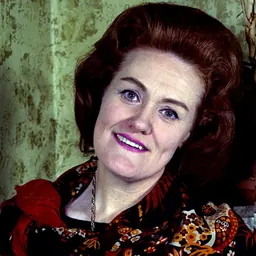
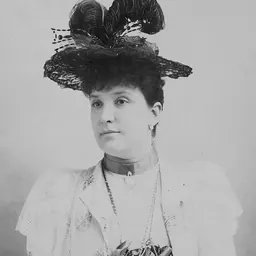
Guided tours are held several times a week, and visitors may see the work lowered and raised by its original machinery (it has a timber frame). The carefully preserved hall is itself of further historic interest as the site of performances by Nellie Melba, Eileen Joyce and Joan Sutherland.
A photograph of the "curtain" may be viewed here.
The Goatcher Auditorium at Wesley College in South Perth was named in his honour in 2008.
James Goatcher James Goatcher (14 August 1879 – 29 July 1957) was born in Philadelphia, USA, to Phillip Goatcher and his wife Alice née Little (1857–1934). His parents separated around 1890 and James was one who elected to leave for Australia with his father. He studied painting under his father, also took classes in Sydney and the Melbourne Art Gallery, and in his student days he may have shared accommodation with the Lindsay brothers.
His father remarried and in December 1903 the family relocated to Perth, Western Australia, setting up in business as Goatcher & Son, decorators. He served a term as president of the Master Painters Society. He was a longtime member of the West Australian Society of Arts, and served a term as vice-president in 1952 but, being a tradesman, was not invited to join the Perth Society of Artists. Elizabeth Catherine Goatcher (c. 1847 – 4 November 1930) married Ward Mary Goatcher (24 June 1850 – ) married Hockey Phillip William Goatcher (23 November 1851 – 8 October 1931) married Alice Little (1857–1934) in London in 1875. He left her in 1890, having failed to secure a divorce. – 27 October 1913), Phillip W. Goatcher jun., left the US with his father, married Minnie. He trained in London with the scenic artist William Telbin jnr (1846–1931), returning to Melbourne in 1910. He died at Waterfall Sanatorium, a tuberculosis hospital near Sydney. James Goatcher (14 August 1879 – 29 July 1957) left the US with his father, married Margaret Mary "Dolly" Healy ( – 14 April 1946), lived Mount Lawley, Western Australia Merle Goatcher (maybe 9 September 1918 – ) married Dr K. R. Miles, lived in Adelaide. Phil Goatcher married Jennie, lived in Adelaide. Arthur Goatcher (1885– ) born in New York, remained with his mother when father left in 1890. He married again on 15 July 1899, to Emma Stone (c. 1873 – 24 December 1913) and had twin sons, of whom one survived. They had a home at 20 Gordon Street, West Perth. Ernest Goatcher (c. April 1900 – 8 January 1901) Robert Goatcher (c. April 1900 – 1985) Robert Goatcher (24 October 1853 – ) James Goatcher (16 November 1857 – 8 March 1924) died in London Jane Goatcher (14 March 1861 – ) married Pearse
Don’t just read it —
keep it.
Full-length biographies made to live with: read them, listen on the way to work, watch them tonight.
- E-book
- Audio
- Video
Instant download · yours to keep · every purchase keeps this site free
Important facts
People in Phil Goatcher's life
Named in this biography and alive at the same time





Related people
Same field, nearest in time


Contemporaries
People whose lives overlapped Phil Goatcher's



Frequently asked questions
Who was Phil Goatcher?
English theatre scene painter
When was Phil Goatcher born?
Phil Goatcher was born in 1851 in England.
When did Phil Goatcher die?
Phil Goatcher died in 1931.
What was Phil Goatcher's occupation?
Phil Goatcher was a scenographer and designer.
What nationality was Phil Goatcher?
Phil Goatcher was British.
Sources & further reading
Cite this page
APA: Biography.guide. (2026). Phil Goatcher. https://biography.guide/phil-goatcher/
MLA: "Phil Goatcher." Biography.guide, https://biography.guide/phil-goatcher/.
Chicago: "Phil Goatcher." Biography.guide. https://biography.guide/phil-goatcher/.
Data last updated: 2026-09-24 · Spot an error? Report a correction.
Page generated 2026-09-27 05:05 UTC