
About Phil Brogan
Lived 1896 – 1983 (aged 87). Phil Brogan was an American historian, geologist, geographer, astronomer, meteorologist and journalist.
Philip Francis Brogan (23 March 1896 – 30 May 1983) was an Oregon journalist and author. He was a reporter, writer, and editor for the Bend Bulletin for 44 years, earning numerous awards for his work. He was also a well known historian, geologist, paleontologist, geographer, meteorologist, astronomer, and outdoorsman. He served as president of the Oregon Geographic Names Board for over twenty years. Brogan wrote East of the Cascades in 1964, an important source of information on the geology, geography, and history of Central Oregon. Brogan was given the title "Father of Oregon Speleology" by Charles V. Larson for his dedication to the study and conservation of caves, particularly Fort Rock Cave, Skeleton Cave and Lavacicle Cave. Phil Brogan Viewpoint near Lava Butte in Newberry National Volcanic Monument is named in his honor.
Early life
Brogan was born on 23 March 1896 in The Dalles, Oregon. He grew up on a stock ranch near Ashwood. As a young man, he worked on ranches in the area around Ashwood and Antelope, Oregon, and then as a sheep camp tender in the Cascade Mountains near the McKenzie Pass. Brogan served as a signalman in the United States Navy during World War I. After the war, he returned to Oregon to work on his uncle's cattle and sheep ranch. Brogan also wrote a few articles for the Antelope Herald newspaper.
In 1919, while working at a sheep camp in the western Cascades a sheep herder from a nearby camp was murdered. Brogan was called to Eugene as a witness. While in Eugene, he applied to the University of Oregon in order to take advantage of a state education program that paid veterans $25 a month for college expenses. Because he had not finished high school, Brogan was required to take a special examination. After passing the test, he entered the university as a journalism student.
Journalist
After leaving the University of Oregon in 1923, Brogan got a job interview with Robert W. Sawyer, owner of the Bend Bulletin. Sawyer was looking for a science writer for the Bulletin. He liked Brogan's geology articles, but that was not enough. To test Brogan's science knowledge, Sawyer pointed out a bright star on the horizon and asked its name, Brogan replied that it was the planet Venus.
Interest in science
In 1923, Bend's official weather data were collected by the Bulletin staff at their office. As the newest member of the staff, Brogan was assigned the task of taking daily weather measurements and reporting the information to Portland. He liked the job and continued to collect Bend's official weather data for the next 47 year without missing a day, eventually moving the official weather collection site to his home. When he was out of town his wife recorded the weather data; and when both were away, a group of specially train high school students took the measurements. For his accomplishments, the National Weather Service awarded Brogan its first Thomas Jefferson Award for outstanding service in 1960. He was also a director for the Oregon Museum of Science and Industry, a member of the American Association for the Advancement of Science, director of the Oregon chapter of the American Meteorological Society, and a fellow of the Geographical Society of the Oregon Country.
Brogan was interested in a wide range of scientific subjects including geology, paleontology, geography, astronomy, meteorology, forestry, and the environment. By 1970, he had written an estimated four thousand articles on various scientific topics, most were related to Oregon in some way.
Legacy
Over the years, Brogan wrote thousands of articles on Central Oregon history and the area's natural environment. Bob Chandler, owner and publisher of the Bulletin, spent years trying to persuade Brogan to compile his extensive knowledge of Central Oregon into a book. Finally, Chandler order Brogan to work on his book every afternoon until it was finished. The book, East of the Cascades, was published in 1964. At least three editions of the book have been published since 1964. Today, East of the Cascades remains an important source for information on the geology, geography, and history of Central Oregon.
In 1967, the University of Oregon established an astronomical observatory at Pine Mountain east of Bend. To recognize Brogan's contribution to astronomy, the library at Pine Mountain Observatory was named in his honor in 1970.
Don’t just read it —
keep it.
Full-length biographies made to live with: read them, listen on the way to work, watch them tonight.
- E-book
- Audio
- Video
Instant download · yours to keep · every purchase keeps this site free
Important facts
People in Phil Brogan's life
Named in this biography and alive at the same time

Related people
Same field, nearest in time

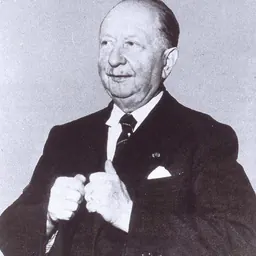
Contemporaries
People whose lives overlapped Phil Brogan's


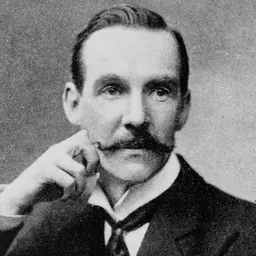


Frequently asked questions
Who was Phil Brogan?
American journalist (1896–1983)
When was Phil Brogan born?
Phil Brogan was born on 23 March 1896 in The Dalles.
When did Phil Brogan die?
Phil Brogan died on 30 May 1983 in Denver.
What was Phil Brogan's occupation?
Phil Brogan was a historian, geologist, geographer, astronomer, meteorologist and journalist.
What nationality was Phil Brogan?
Phil Brogan was American.
Sources & further reading
Cite this page
APA: Biography.guide. (2026). Phil Brogan. https://biography.guide/phil-brogan/
MLA: "Phil Brogan." Biography.guide, https://biography.guide/phil-brogan/.
Chicago: "Phil Brogan." Biography.guide. https://biography.guide/phil-brogan/.
Data last updated: 2026-09-20 · Spot an error? Report a correction.
Page generated 2026-09-27 05:03 UTC