
About Phan Dinh Phung
Lived 1847 – 1896 (aged 48–49). Phan Dinh Phung was a Vietnamese poet, revolutionary and writer.
alt= A tattered, ripped and crumpled piece of light coloured paper with writings penned in Chinese chearacters in dark ink, pinned on a wall for display in a museum.
Phan Đình Phùng (; 1847January 21, 1896) was a Vietnamese revolutionary who led rebel armies against French colonial forces in Vietnam. He was the most prominent of the Confucian court scholars involved in anti-French military campaigns in the 19th century and was cited after his death by 20th-century nationalists as a national hero. He was renowned for his uncompromising will and principles—on one occasion, he refused to surrender even after the French had desecrated his ancestral tombs and had arrested and threatened to kill his family.
Born into a family of mandarins from Hà Tĩnh Province, Phan continued his ancestors' traditions by placing first in the metropolitan imperial examinations in 1877. Phan quickly rose through the ranks under Emperor Tự Đức of the Nguyễn dynasty, gaining a reputation for his integrity and uncompromising stance against corruption. Phan was appointed as the Imperial Censor, a position that allowed him to criticise his fellow mandarins and even the emperor. As the head of the censorate, Phan's investigations led to the removal of many incompetent or corrupt mandarins.
Upon Tự Đức's death, Phan almost died during a power struggle in the imperial court. The regent Tôn Thất Thuyết disregarded Tự Đức's will of succession, and three emperors were deposed and killed in just over a year. Phan protested against Thuyết's activities, was stripped of his honours and briefly jailed, before being exiled to his home province. At the time, France had just conquered Vietnam and made it a part of French Indochina. Along with Thuyết, Phan organised rebel armies as part of the Cần Vương movement, which sought to expel the French and install the boy Emperor Hàm Nghi at the head of an independent Vietnam. This campaign continued for three years until 1888, when the French captured Hàm Nghi and exiled him to French Algeria.
Phan and his military assistant Cao Thắng continued their guerrilla campaign, building a network of spies, bases and small weapons factories. However, Cao Thắng was killed in the process in late 1893. The decade-long campaign eventually wore Phan down, and he died from dysentery as the French surrounded his forces.
Court official Phan was born in the village of Đông Thái in the northern central coast province of Hà Tĩnh. Đông Thái was famous for producing high-ranking mandarins and had been the home of senior imperial officials since the time of the Lê dynasty. Twelve consecutive generations of the Phan family had been successful mandarinate graduates. Early on, Phan indicated his distaste for the Confucian classical curriculum required of an aspiring mandarin. He nevertheless persevered with his studies, passing the regional exams in 1876 and then topping the metropolitan exams the following year. In his exam response, Phan cited Japan as an example of how an Asian country could make rapid military progress given sufficient willpower.
Phan was never known for his scholarly abilities; it was his reputation for principled integrity that led to his quick rise through the ranks under the reign of Emperor Tự Đức. He rose to become the Imperial Censor (Sino-Vietnamese: Ngự Sử), a position which allowed him to criticise other high officials and even the emperor for misconduct. Aside from his work in rooting out corruption, Phan also compiled a historical geography of Vietnam, which was published in 1883.
Despite his prominent position in the Nguyễn dynasty, little is known about Phan's personal stance on Vietnamese relations with France, which was in the process of colonising Vietnam. beginning the colonisation of southern Vietnam. Three provinces were ceded under the 1862 Treaty of Saigon, and a further three in 1867 to form the colony of Cochinchina. During the period, there was debate in the Huế court on the best strategy to regain the territory. One group advocated military means, while another believed in the use of diplomacy in addition to financial and religious concessions. By the time of Tự Đức's death in 1883, the whole of Vietnam was colonised, henceforth incorporated with Laos and Cambodia into French Indochina.
Upon his death in 1883, the childless Tự Đức had named his nephew, Kiến Phúc, as his successor, However, led by Thuyết, the regents enthroned Dục Đức under the pressure of the ladies of the court. Thuyết and fellow regent Nguyễn Văn Tường had enthroned Hiệp Hòa after disposing of Dục Đức. However, the new emperor was wary of the regents' behaviour and attempted to avoid their influence, leading Thuyết to organise his execution. The teenage Kiến Phúc ascended the throne, but was poisoned by his adoptive mother Học Phi—one of Tự Đức's wives—whom he caught having intercourse with Tường. Kiến Phúc was thus replaced by his 14-year-old brother Hàm Nghi. In the meantime, the French concluded that the regents were causing too much trouble and had to be disposed of. but Phan thought that Vietnam's best chance of effective support came from Siam.
In any case, the Cần Vương revolt started on July 5, 1885, when Thuyết launched a surprise attack against the colonial forces after a diplomatic confrontation with the French. Thuyết took Hàm Nghi northwards to the Tân Sở mountain base near the border with Laos after the attack failed. The campaign was launched when the emperor issued the Cần Vương edict that had been prepared by the regent.
Phan initially rallied support from his native village and set up his headquarters on Mount Vũ Quang, which overlooked the coastal French fortress at Hà Tĩnh. Phan's organisation became a model for future insurgents. For flexibility, he divided his operational zone into twelve districts. Phan initially used the local scholar-gentry as his military commanders. Their first notable attack targeted two nearby Catholic villages that had collaborated with French forces. Colonial troops arrived a few hours later, quickly overwhelming the rebels and forcing them to retreat to their home village, where the retribution was heavy.
Nay tôi chỉ có một ngôi mộ rất to nên giữ là nước Việt Nam. Tôi chỉ có một ông anh rất to là mấy triệu đồng bào. Nếu về mà sửa sang lại phần mộ tổ tiên riêng mình thì ngôi mộ cả nước ai giữ? Về cứu sống ông anh của riêng mình thì còn bao nhiêu anh em trong nước ai cứu?
(English) From the time I joined with you in the Cần Vương movement, I determined to forget the question of family and village. Now I have but one tomb, a very large one, that must be defended: the land of Vietnam. I have only one brother, very important, that is in danger: more than twenty million countrymen. If I worry about my own tombs, who will worry about defending the tombs of the rest of the country? If I save my own brother, who will save all the other brothers of the country? There is only one way for me to die now.
Phan was later reported to have simply retorted, "If anyone carves up my brother, remember to send me some of the soup". For the purpose of creating such replica guns, they captured Vietnamese artisans. According to French officers who later captured some of the Vietnamese copies, the weapons were proficiently reproduced. The only details in which they were regarded as being defective were in the tempering of the springs, which were improvised with umbrella spokes, and the lack of rifling in the barrels, which curtailed range and accuracy.
Nevertheless, the weaponry used by Phan's rebels was far inferior to that of their adversaries, and their inland positions were within firing range of the French Navy. In 1890, the Siamese Army transported around 1,000 Austrian repeating-rifles from Bangkok to Luang Prabang in Laos. However, it is unclear whether the weapons found their way into Vietnamese hands or whether they were related to Cô Trâm's activities. leading to the emperor's capture and deportation to Algeria. Phan and Cao Thắng fought on in the mountainous areas of Hà Tĩnh, Nghệ An and Thanh Hóa. Another 15 bases were built along the mountain to complement the headquarters at Vũ Quang. Each base had a subordinate commander leading units numbering between 100 and 500 men. The operations were funded by local villagers, who were levied with a land tax in silver and rice.
Late in the year, the burden on Phan increased after the loss of two Cần Vương allies. In September, Tống Duy Tân—who led the royalists in Thanh Hóa—was captured and publicly executed. Nguyễn Thiện Thuật, who had been active in the northern provinces of Hưng Yên and Hải Dương, fled to Guangxi in China. The supporters of Tân and Thuật moved south and integrated into Phan's force. According to the historian David Marr, there was evidence that Phan clearly realised the advantages and limitations of prolonged resistance.
Downfall alt=Aged man with cylindrical headdress, long flowing beard and moustache, a traditional Vietnamese tunic, darkly coloured with a light circular and Chinese character imprints, light coloured trousers, and dark shoes, sitting in a chair. Hoàng Cao Khải, the French-installed viceroy of Tonkin, perceived Phan's intent to a degree that his French masters did not. He became the main backer of a determined effort to crush Phan's forces, using every means available: political, psychological and economic. Khải credited Phan with righteousness, loyalty and dedication towards the monarchy.
I have always been taught that superior men should consider the care of the people as fundamental; who has ever heard of men who were loyal to their King but forgot the people's aspirations?... As of now, hundreds of families are subject to grief; how do you have the heart to fight on? I venture to predict that, should you pursue your struggle, not only will the population of our village be destroyed but our entire country will be transformed into a sea of blood and a mountain of bones.
According to Marr, "Phan Dinh Phung's reply was a classic in savage understatement, utilizing standard formalism in the interest of propaganda, with deft denigration of his opponent". Phan concluded that it was "because the destiny of our country has been willed by Heaven itself". After analysing his own actions, Phan concluded with a thinly veiled attack on Khải and his collaborators.
With Phan's rebuke in his hands, Khải translated both documents into French and presented them to De Lanessan, proposing that it was time for the final "destruction of this scholar gentry rebellion".
Phan is widely regarded by Vietnamese people as a revolutionary and national hero. Phan Bội Châu, regarded as the leading Vietnamese anti-colonial figure of the early 20th century, strongly praised Phan in his writing, with particular emphasis on his defiance of Khải. During Phan Bội Châu's career as a teacher, he strongly emphasised Phan's deeds to his students. In 1941, after returning to Vietnam after decades in exile, the Marxist revolutionary Hồ Chí Minh, then using the name Nguyễn Ái Quốc (Nguyễn the Patriot), invoked the memory of Phan in appealing to the public for support for his independence movement. Like Phan, Hồ was a native of Nghệ An and Hà Tĩnh. In the 1940s, Hồ's Việt Minh named their self-produced style of grenades in honour of Phan. Since then, Hồ's communists have portrayed themselves as the modern day incarnations of revered nationalist leaders such as Phan, Trương Định and Emperors Lê Lợi and Quang Trung, who expelled Chinese forces from Vietnam. Both North and South Vietnam had prominent thoroughfares in their capital cities (Hanoi and Saigon, respectively) named in Phan's honour. The ant species Xymmer phungi is named in his honour.
Don’t just read it —
keep it.
Full-length biographies made to live with: read them, listen on the way to work, watch them tonight.
- E-book
- Audio
- Video
Instant download · yours to keep · every purchase keeps this site free
Important facts
People in Phan Dinh Phung's life
Named in this biography and alive at the same time



Related people
Same field, nearest in time
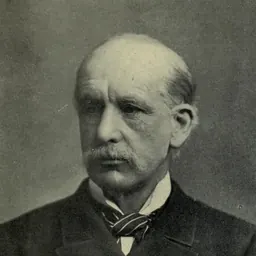

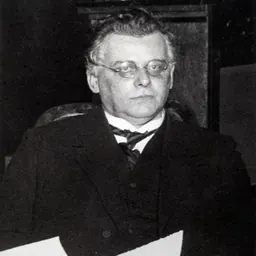
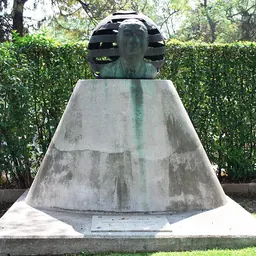
Contemporaries
People whose lives overlapped Phan Dinh Phung's

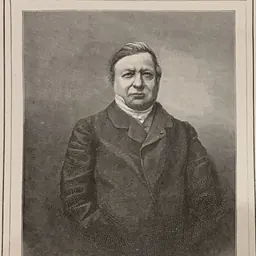




Frequently asked questions
Who was Phan Dinh Phung?
Vietnamese revolutionary
When was Phan Dinh Phung born?
Phan Dinh Phung was born in 1847 in Đông Thái.
When did Phan Dinh Phung die?
Phan Dinh Phung died on 21 January 1896 in Nghệ An.
What was Phan Dinh Phung's occupation?
Phan Dinh Phung was a poet, revolutionary and writer.
What nationality was Phan Dinh Phung?
Phan Dinh Phung was Vietnamese.
Sources & further reading
Cite this page
APA: Biography.guide. (2026). Phan Dinh Phung. https://biography.guide/phan-dinh-phung/
MLA: "Phan Dinh Phung." Biography.guide, https://biography.guide/phan-dinh-phung/.
Chicago: "Phan Dinh Phung." Biography.guide. https://biography.guide/phan-dinh-phung/.
Data last updated: 2026-09-20 · Spot an error? Report a correction.
Page generated 2026-09-27 05:20 UTC