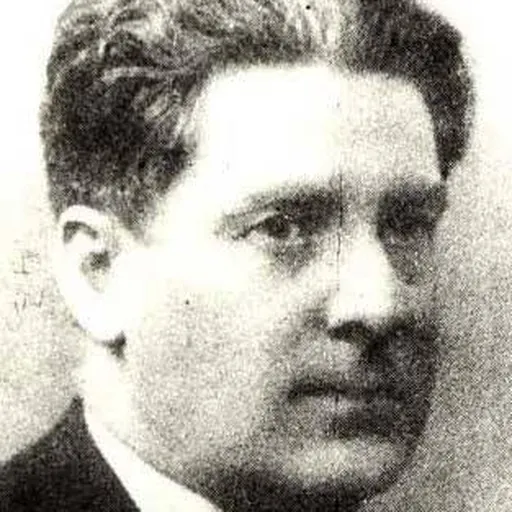
About Petre Andrei
Lived 1891 – 1940 (aged 49). Petre Andrei was a Romanian politician, university teacher, sociologist and philosopher.
Petre Andrei (June 29, 1891 – October 4, 1940) was a Romanian sociologist, philosopher, and politician who served as Education Minister in 1938–1940.
Biography Origins and work He was born in Brăila, the fourth child of a family of low-ranking civil servants, Costache Andrei and Vasilica, née Conduriotis. He attended Nicolae Bălcescu High School from 1902 to 1910. He then moved to Iași, where he enrolled in the literature and philosophy faculty of the University of Iași, graduating in 1913. While a student, his mentor was Ion Petrovici. In 1920, Andrei married Alice-Georgette Tulbure, a relative of Constantin Meissner.
From 1927 to 1930, Andrei headed the local magazine Minerva, dedicated to cultural synthesis. His sociological ideas, which Andrei promoted both within and outside the department, are encapsulated in a series of studies and articles, among them: Sociologia revoluției, 1921; Problema fericirii; Fundamentul etic sociologic, 1921: Fascismul, 1927; Probleme de metode în sociologie, 1927; Probleme de sociologie, 1927; Sociologie generală, 1936; Manual de sociologie, 1938.
Politics Attracted by its promise of deepening bourgeois democracy, Andrei joined the new National Peasants' Party (PNȚ) in 1928, becoming president of its Vaslui County chapter. He sat in the Assembly of Deputies while the PNȚ was in power from 1929 to 1933, making frequent speeches before the body. He spoke memorably of the role of parliament in the nation's political life, and worked to pass modern legislation, particularly in the fields of education and administration. In particular, he pushed for a law late in 1929 that brought about administrative decentralization, commenting that it would allow for a genuine exercise of national sovereignty.
Downfall and legacy Carol's abdication and the establishment of a National Legionary State in September 1940 had dramatic consequences for Andrei. The incoming Education Minister, Traian Brăileanu, ordered his dismissal from higher education, while the new dictator, Ion Antonescu, had him put under investigation. In early October, while Iron Guard members were searching his home and due to be arrested, he committed suicide, swallowing potassium cyanide. His political testament is contained in two letters: one to his wife, the other to his four sons. He is buried at Eternitatea Cemetery in Iași.
After World War II, the authorities of the new communist regime arrested his son Petru for having taken part in student anti-communist demonstrations; he was imprisoned from 1949 to 1952. Initially banned, the work of Petre Andrei was censored, with all passages referring to communist concepts, doctrine and practice excised, even from an authoritative edition published in the 1970s. In 1974, a treatise on sociological thought relegated Andrei to a "departmental sociologist", prompting a vigorous response from his son. Later in the decade and into the 1980s, Ovidiu Bădina and Romanian Communist Party ideologue engaged in a polemic on the value of Andrei's work. In 1990, on the occasion of the 50th anniversary of his death, the private Petre Andrei University of Iași was founded. In January 1991, he was elected a titular post-mortem member of the Romanian Academy. His diary was published at Iași in 1993. Streets in Brăila and Iași bear his name.
Don’t just read it —
keep it.
Full-length biographies made to live with: read them, listen on the way to work, watch them tonight.
- E-book
- Audio
- Video
Instant download · yours to keep · every purchase keeps this site free
Important facts
People in Petre Andrei's life
Named in this biography and alive at the same time


Related people
Same field, nearest in time






Contemporaries
People whose lives overlapped Petre Andrei's


Frequently asked questions
Who was Petre Andrei?
Romanian politician (1891-1940)
When was Petre Andrei born?
Petre Andrei was born on 29 June 1891 in Brăila.
When did Petre Andrei die?
Petre Andrei died on 4 October 1940 in Iași.
What was Petre Andrei's occupation?
Petre Andrei was a politician, university teacher, sociologist and philosopher.
What nationality was Petre Andrei?
Petre Andrei was Romanian.
Sources & further reading
Cite this page
APA: Biography.guide. (2026). Petre Andrei. https://biography.guide/petre-andrei/
MLA: "Petre Andrei." Biography.guide, https://biography.guide/petre-andrei/.
Chicago: "Petre Andrei." Biography.guide. https://biography.guide/petre-andrei/.
Data last updated: 2026-09-20 · Spot an error? Report a correction.
Portrait: Wikimedia Commons · author & licence
Page generated 2026-09-27 04:58 UTC