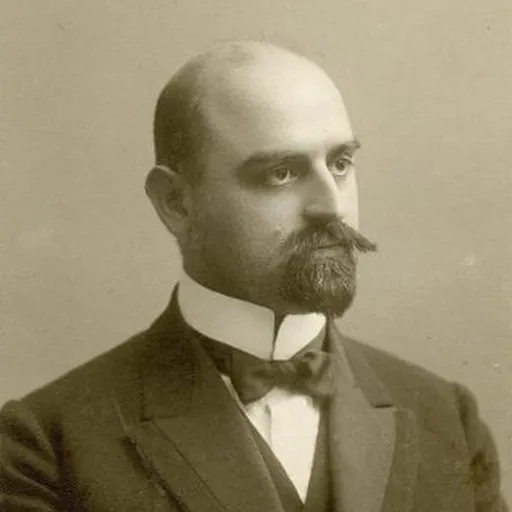
About Petr Gertsen
Lived 1871 – 1947 (aged 75). Petr Gertsen was a Swiss and Russian physician, surgeon and editor.
Peter Alexandrovich Herzen (May 20, 1871 January 2, 1947) was a Soviet surgeon, doctor of medicine, healthcare manager, and professor. He was also one of the pioneers of oncology in the USSR.
He was the son of the Swiss physiologist Alexander Alexandrovich Herzen and the grandson of the Russian publicist, writer, and philosopher Alexander Ivanovich Herzen.
Herzen was the head of the Department of Operative Surgery at the 1st Moscow State University from 1919 to 1921, the head of the Department of General Surgery at the First Moscow State University from 1921 to 1934, the head of the Department of Hospital Surgery at the 1st Moscow Medical Institute from 1934 to 1947, the director of the Institute for the Treatment of Tumors from 1922 to 1934, a corresponding member of the Academy of Sciences of the Soviet Union (1939), an Honored Scientist of the RSFSR (1934), an honorary member of the French Academy of Surgery, a member of the International Society of Surgeons, a member of the Higher Attestation Commission, the chairman of the boards of the All-Russian and All-Union Societies of Surgeons from 1926 to 1928 and from 1935 to 1936, and chairman of the XXI (1929) and XXIV (1938) All-Union Congresses of Surgeons.
After his death in 1947, the Moscow Research Institute of Oncology was named after him.
Biography
Origins and education
Peter Alexandrovich Herzen was born on in Florence, Kingdom of Italy, into the family of the Swiss physiologist of Russian origin Alexander Alexandrovich Herzen and the daughter of a peasant, the Italian Thérèse (Toreze) Félici (Thérèse Félici, 1851–1927). Besides Peter, the family had nine more children: three girls and six boys. He was the grandson of the Russian publicist, writer, and philosopher Alexander Ivanovich Herzen. in the clinic of the Swiss surgeon César Roux. At the same time, he conducted researhes in his father's physiological laboratory at the University of Lausanne. Just one year after graduating from university, Herzen successfully defended his dissertation in Lausanne for the degree of Doctor of Medicine titled On the Causes of Death after Bilateral Vagotomy in Their Relation to Survival Conditions, based on extensive experimental material and receiving positive reviews in the specialized literature. After moving to the Russian Empire In 1897, after declining César Roux's offer of a staff assistant position in the clinic, Quickly learning Russian (that he did not know), he enrolled as an auditor in the fifth year of the medical faculty of Moscow University. In December 1898, P. A. Herzen received his Russian diploma as a physician with honors, having passed state examinations for the entire university course. at the Old Catherine's Hospital under the guidance of the Moscow surgeon and experienced educator I. D. Sarychev, a student of N. V. Sklifosovsky. He worked in this clinic first as an extern physician (until 1900), then as a resident of the surgical department (until 1920) for 22 years (with interruptions for military service as a military surgeon), acquiring vast practical experience and surgical skill here. At the same time as Herzen, talented surgeons such as V. N. Rozanov and V. M. Mints studied and worked at Old Catherine's Hospital. During 1904–1905, in the Russo-Japanese War, as a military surgeon with the Moscow detachment, and in 1910 he was elected privatdozent During World War I, he served as a surgeon in the active army.
After the October Revolution After the October Revolution, Peter Alexandrovich's wife left for Italy with their three children, but he did not follow them. In 1919, P. A. Herzen was elected as the head of the Department of Operative Surgery at the 1st Moscow State University, which became vacant after the departure of Professor F. A. Rein. There, he revised the operative surgery program, basing it on the physiological justification of applied surgical treatment methods. Since 1920, he simultaneously lectured on operative surgery at the 2nd Moscow State University, heading that department from 1920 to 1922. During the Russian Civil War, P. A. Herzen served as a consultant to the 151st military hospital (1920–1921). which in 1922 was transferred to the base of the Institute for the Treatment of Tumors (now the Moscow Research Institute of Oncology named after P. A. Herzen). Since that moment, Peter Alexandrovich headed both the department and the institute, remaining its director until 1934. Despite his high position, Herzen personally consulted a large number of outpatients daily at the institute's polyclinic, performed many complex operations, and conducted detailed clinical rounds; he could spend hours working at the microscope, studying blood pictures in patients with systemic diseases of the hematopoietic organs. In 1926, Herzen was first elected chairman of the Moscow Surgical Society, and in 1929 — chairman of the XXI Congress of Russian Surgeons. (now the First Moscow State Medical University), which he led until the end of his life. In 1934, he was awarded the honorary title of Honoured Scientist of the RSFSR, and on January 29, 1939, he was elected a corresponding member of the Academy of Sciences of the Soviet Union in the Department of Mathematical and Natural Sciences, specialty "Surgery".
During the Great Patriotic War, P. A. Herzen remained in Moscow throughout, operating on and treating the wounded, and was awarded the Medal "For Valiant Labour in the Great Patriotic War 1941–1945".
Contributions to Russian medicine Peter Alexandrovich Herzen authored about 100 scientific works, including 5 monographs. Among them, particularly significant are the works On the Technique of Cholecystenterostomy (1903), Surgical Treatment of Traumatic Aneurysms (1911), Introduction to the Clinic of Surgical Forms of Cancer (1930), Breast Cancer (1930), and On Hemorrhages (1940). Herzen proposed 16 original methods and modifications of surgical operations, including the operation for forming an artificial presternal esophagus from the small intestine (1907), cholecystectomy, intraperitoneal fixation of the rectum in cases of its prolapse, operations for femoral hernias, anterior cerebral hernias, closure of fistulas of the parotid salivary gland, and others. As a surgeon with a broad scope, Herzen made a substantial contribution to the study and development of problems in the surgical treatment of diseases of the abdominal cavity organs, blood vessels, as well as oncological, urological, and cardiac surgical issues. He gained wide recognition after the publication of his works Skull Fractures in Children, On Suppuration in Typhoid Fever, and On Heart Suture in Its Wounding.
In abdominal surgery At the II Congress of Russian Surgeons in 1901, he reported on his modification of cholecystoenterostomy: after transecting the jejunum, its distal end was connected to the gallbladder, while the proximal end was sutured into the side of the jejunum below the anastomosis, which prevented the development of ascending cholangitis.
In his dispute with the advocate of gastroenterostomy in the treatment of peptic ulcer of the stomach, V. V. Uspensky, Herzen argued for the advantages of gastrectomy.
The clinic of hospital surgery at the 1st Moscow Medical Institute, headed by P. A. Herzen, effectively developed issues in the surgical treatment of diseases of the biliary tract. At the 5th Regional Conference of Surgeons of the Moscow Region (1934), reporting on biliary duct surgery, Herzen advocated early cholecystectomy as the operation of choice, abandoning cholecystostomy, of which he had long been a proponent. In his article Surgery of the Biliary Tract, he detailed the pathology of the gallbladder and biliary ducts, thoroughly discussed various types of surgical interventions, and emphasized the need for early cholecystectomy before the development of severe complications. P. A. Herzen supplemented the classification of S. P. Fyodorov (in particular, dividing chronic recurrent cholecystitis into uncomplicated and complicated forms) with dyskinetic forms and proposed the term "initial forms of cholecystitis" instead of diagnoses such as "hydrops of the gallbladder" and "sclerosing cholecystitis".
Herzen spoke at surgical congresses of various levels on numerous occasions, and his reports were devoted to issues of surgical treatment of spleen diseases. In 1924, at the XVI Congress of Russian Surgeons, he delivered a report On the Surgical Treatment of Certain Forms of Splenomegaly; a similar report was made in 1925 at the XXXIV Congress of French Surgeons, and in 1926 at the XVIII Congress of Russian Surgeons (On Spleen Diseases in Connection with Indications for Splenectomy and Its Long-Term Results). In these presentations, he pointed to the hemolytic role of the spleen and its ability to accumulate "blood poisons". In many spleen diseases, the severity of which is determined by dysfunction or hyperfunction of this organ, the patient's condition can be alleviated by its removal. He was the first in the Soviet Union to perform splenectomy for hemorrhagic diathesis. September 10, 1907 — Stage I: mobilization of a segment of small intestine and advancement to the neck, with ligation of 3 mesenteric arteries;
October 4, 1907 (24 days later) — Stage II: intestinal transplant sutured into the stomach, with resection of about 20 cm of intestinal tube in the epigastrium; the stomach was small and pulled posteriorly; implantation of the intestine performed near the middle of the lesser curvature on the anterior wall of the stomach;
November 17, 1907 (44 days later) — Stage III: anastomosis between the esophagus and intestine on the neck, with mobilization of the intestine over 15 cm; its end obliquely refreshed; esophagus isolated and transected, lower end closed tightly, upper end slightly incised laterally and longitudinally, then connected to the intestine.
On the 8th day after the operation, an esophageal fistula formed, requiring insertion of a gutta-percha probe through the mouth into the intestinal transplant for intensified feeding. On the 21st day the fistula closed, the probe was removed, and the patient began normal feeding.
At the VII Congress of Russian Surgeons (1907), P. A. Herzen reported on the operation for forming an artificial presternal esophagus in connection with its benign stricture. This operation was first proposed by the Swiss surgeon César Roux in 1906 to replace the natural esophagus. After performing the initial stages (forming a transplant from the small intestine and advancing it through a subcutaneous tunnel to the base of the neck), due to the patient's cachexia, Roux postponed connecting the transplant to the esophagus to a later time, bringing the upper end of the intestine out to the skin as a jejunostomy. However, this patient required several reconstructive operations to connect the transplant to the esophagus in the neck; only in 1911 was Roux able to complete the plasty. The world's first successful completed total subcutaneous small intestine esophageal plasty was performed in Moscow by César Roux's student P. A. Herzen in three stages in September–November 1907 on a 20-year-old patient with post-burn stenosis of the esophagus resulting from sulfuric acid poisoning 6 months before the operation. In his report to the Congress of Russian Surgeons, Herzen pointed out five difficult-to-resolve aspects of Roux's method and proposed ways to eliminate these drawbacks: first, divide the entire operation into 3 and not 2 stages: first advance the intestine to the neck, then suture it into the stomach, and finally connect it to the esophagus, significantly shortening the duration of the first stage performed on the most debilitated patients; second, pass the long upper segment of the mobilized intestine through a spacious opening created in the mesocolon and gastrocolic ligament into the upper floor of the abdominal cavity, and from there through a tunnel under the skin to the neck. This operation became known in domestic and foreign medical literature as the Roux—Herzen operation. My dear colleague!
I've just seen your mother today and got your address, and I hasten to sincerely congratulate you on this splendid success.
I am very glad that students surpass their teachers and rejoice at the opportunity to tell you so: You know that all your successes will always find a sympathetic response in Lausanne...
(From a letter by César Roux to P. A. Herzen)For many years afterward, attempts by other domestic and foreign surgeons to repeat the Roux—Herzen operation were mostly unsuccessful.
In oncology Upon assuming the position of director of the Institute for the Treatment of Tumors, P. A. Herzen carried out a significant reorganization, establishing major radium-X-ray and hematology departments, as well as experimental, clinical, and anatomical pathology laboratories, thereby elevating this medical institution — where patients with oncopathology received care in accordance with modern scientific standards — to a leading position in the USSR. The number of operations increased threefold, while mortality decreased from 45% to 10%.
P. A. Herzen was convinced that effective treatment of oncology patients required widespread health education of the population and active participation of healthcare authorities. He initiated the establishment in Moscow in 1930 of a special committee to develop regulations for the Moscow Oncology Organization. Herzen delivered lectures in many cities, insisted on organizing 9 oncology stations in Moscow, obliging institute staff to serve as district oncologists, and achieved the opening of branches in Ryazan, Tula, Kolomna, and several other cities. At the same time, he initiated the holding of "Anti-Cancer Week" and the 1st Regional Oncology Conference. Peter Alexandrovich and his staff began delivering lectures on oncology issues for physicians of major preventive medical institutions in the Moscow Oblast.
At the IX Pirogov Congress in 1904, Herzen proposed completely removing the bony part of the chest wall in the precordial region during operations for heart wounds, viewing this as prevention of heart compression in case of possible development of adhesive pericarditis in the future.
In urology In 1906, at the VI Congress of Russian Surgeons, Herzen reported on the technique of transvesical prostatectomy. In 1907, he published a clinical case of surgical treatment of gunshot injury to renal vessels and liver: surgical intervention on both organs achieved complete recovery of the patient. That same year, he performed a rare urological operation — pelvioureteral plasty for remitting hydronephrosis — with very good results (this operation by Herzen was the 14th in world literature). In his doctoral dissertation defended in 1909, Experimental Study on the Effect on the Kidneys of Substances Arising in the Blood during Immunization of Animals with Renal Tissue or Damage to One Kidney,
In nephroptosis, Herzen removed the aorto-renal sympathetic ganglion simultaneously with nephropexy, obtaining good treatment results; he performed removal of sympathetic nerves of the ileocolic artery for partial denervation of the cecum and elimination of pain associated with mobile cecum and primary chronic appendicitis. P. A. Herzen was the first in the Soviet Union to perform operations for heart failure and angina pectoris, performing subtotal thyroidectomy and removing sympathetic ganglia in the neck, which reduced the intensity of metabolic processes in the body and decreased oxygen consumption by the myocardium, thereby easing the work of the diseased heart. Herzen performed surgical interventions on the brain and spinal cord; in spontaneous gangrene, he performed epinephrectomy, ganglionectomy, and neurotomy. P. A. Herzen wrote the work On the Surgical Treatment of Acromegaly. In diffuse toxic goiter, Herzen performed removal of the stellate ganglion.
In anesthesiology P. A. Herzen paid great attention to the development of issues in local anesthesia. In 1901, he conducted studies on the use of conduction anesthesia, and from that moment preferred the simultaneous application of conduction and infiltration anesthesia for local anesthesia of the traumatized focus to be operated on, which allowed better results. At the same time, Herzen was not an advocate of only one anesthesia method, believing that in more complex cases, when it is necessary to operate on several wounds of different localizations or perform a more complex operation, preference should be given to general anesthesia; moreover, narcosis eliminates the danger of developing secondary shock. In the work Narcosis and Anesthesia, he thoroughly expounds the advantages of intravenous narcosis using barbiturate preparations hexobarbital and pronarcon.
Scientific school and pedagogical activity P. A. Herzen conducted extensive pedagogical work from 1910 until his death in 1947. He was the first in attempting to introduce new forms of teaching operative surgery and topographic anatomy, as he was convinced that a purely anatomical presentation of operative surgery did not fully meet the modern requirements of medical science: a surgeon must know what functional disorders may result even from a technically flawless operation performed by him. Thanks to these views, a physiological direction became established in the department he headed in the teaching of operative surgery, consisting in the physiological substantiation of the surgical treatment methods applied.
He constantly performed surgeries surrounded by students and trainee physicians, believing that teaching should take place not only in the lecture hall, but also at the patient's bedside, in the operating theatre, dressing room or anatomical theatre. However, Herzen was also a brilliant lecturer, captivating his audience with his temperament, encyclopaedic knowledge and originality of thought. He aspired to impart as much knowledge as possible to his students and trainees, teaching them to think clinically and evaluate facts and observations correctly in order to draw proper conclusions.Peter Alexandrovich was not demanding, or rather indulgent, and I do not recall him ever making a more or less sharp remark to a doctor for an oversight in work, even if the latter deserved it. (A. M. Zabludovsky on P. A. Herzen)
Being an skilled surgeon-anatomist who amazed students and doctors with his knowledge, Herzen tried to instill his love for anatomy in students during lectures, practical classes, and in the operating room. He said:A surgeon has no right to pick up a knife without knowing anatomy and the possible complications and their causes.In the clinic, Herzen granted considerable independence and initiative to doctors in scientific work and was less demanding toward them. However, despite a certain liberalism toward young doctors, he exerted a colossal influence on them through his temperament, talent, large number of new ideas, refined surgical technique, passion for surgery, and his unique charisma.
P. A. Herzen created a major school of surgeons who studied a wide range of surgical issues: problems of vascular surgery, oncology, surgical diseases of the organs of the chest and abdominal cavity. Among his students are many renowned scientists, including the following: V. I. Astrakhan, E. L. Beryozov, Yu. M. Bomash, Ya. M. Bruskin, B. G. Egorov, K. D. Yesipov, I. S. Zhorov, A. M. Zabludovsky, P. I. Ilchenko, V. A. Ivanov, A. I. Kozhevnikov, G. E. Koritsky, F. M. Lampert, I. G. Lukomsky, N. P. Maslov, P. G. Melikhov, B. V. Milonov, L. M. Nisnevich, D. E. Odinov, G. E. Ostroverkhov, B. V. Petrovsky, L. N. Pozdnyakov, E. S. Rabinovich, G. A. Reynberg, A. I. Savitsky, V. M. Svyatukhin, S. R. Frenkel, A. N. Shabanov, E. S. Shakhabazyan. Herzen's school was always characterized by the forward-looking nature of its scientific directions and continuous progressive development. Many of Herzen's students worked in medical institutions in various parts of the Soviet Union, where they continued to develop relevant problems in surgery.
A. L. Myasnikov, who studied under him in the 1920s, recalled: … another talented surgeon who, at our request, repeated operative surgery forgotten since the third year, P. A. Herzen —A. I. Herzen writer's grandson— loudly shouted in strange Russian (he was raised in France): "Don't be afraid of bleeding. What a beautiful picture. Press it with your finger —and that's it— slap!"
Public activities Herzen had authority among both national and foreign medical communities. He was a member of the Central Committee of the Medsantrud trade unions, the Scientific Council of the Ministry of Health of the USSR, and served as editor of the journals Khirurgiya 10 June 1945) A memorial plaque has been installed on the institute building at 3 Second Botkinsky Proyezd, bearing the inscription: "From 1923 to 1934, the founder of the Moscow oncological school, Peter Alexandrovich Herzen worked here". A bust of Herzen has been installed inside the institute building, and in Peter Alexandrovich's former operating room, efforts by contemporary physicians have recreated his office where the professor conducted his research and received patients; exhibits include a physician's bag with a set of medical instruments for house calls, surgical instruments, manuscripts, a significant number of personal belongings, his desk, armchair, lamp, leather sofa, and cabinets. In December 2023, a monument to Peter Alexandrovich Herzen was unveiled (sculptor: K. R. Chernyavsky) near the building of the Moscow Oncology Research Institute.
Medical terms bearing the name of P. A. Herzen Herzen's approach in mastectomy: the skin incision begins from the coracoid process of the scapula, borders the base of the breast, and ends at the xiphoid process or the base of the sternum. Herzen's operation: A two-stage surgical operation used for anterior craniocerebral hernias, the first stage of which involves ligation and transection of the intracranial portion of the hernia sac neck and plastic repair of the inner opening of the bony canal of the hernia using a free periosteal–osseous flap obtained by cutting from the frontal eminence (without performing plastic repair of the dural defect), while the second stage consists of complete excision of the outer part of the hernia; A surgical operation used for femoral hernia, in which closure of the hernial orifice is achieved by attaching the inguinal ligament to the pubic bone with wire sutures passed through holes drilled in the bone. A surgical operation for a mobile caecum: the abdominal cavity is opened by an oblique incision in the right iliac region, the vermiform appendix is removed; the excess portion of the peritoneum on the mesentery of the caecum and in the region of the iliac fossa lateral to the intestine is resected, after which the edge of the incision of the parietal peritoneum is sutured in an oblique direction with interrupted sutures to the tenia libera; upon tightening of the sutures, fixation and narrowing of the intestine occurs. Herzen–Monprofit operation — a palliative surgical operation used for cancer of the head of the pancreas, consisting of creating an anastomosis between the gallbladder and the distal end of a loop of the jejunum excluded by a U-shaped Roux anastomosis. Herzen–Lichtenberg operation — a surgical operation used for hydronephrosis, consisting of the creation of a longitudinal pelvi-ureteral anastomosis. Zerenin–Kümmell–Herzen operation — a surgical operation used for rectal prolapse, consisting of transabdominal fixation of the pelvic portion of the sigmoid colon to the anterior longitudinal ligament of the spine in the region of the sacral promontory. Marie–Herzen operation — a surgical operation used for portal hypertension and ascites, consisting of wrapping the kidney with a pedicled omentum. Roux–Herzen operation — a surgical operation consisting of the creation of an artificial oesophagus from the small intestine, passed subcutaneously in front of the sternum. Herzen–Bakulev method — a method of oesophagojejunostomy following gastrectomy: a portion of the stomach along the lesser curvature is left on the oesophagus; an anastomosis with a loop of the jejunum is placed on the formed "small stomach". Herzen–Friedrich method — a surgical operation used for rectal prolapse, consisting of suturing the sigmoid colon in a tensioned position to the anterior abdominal wall after preliminary creation of an anastomosis between both limbs of the intestine. Herzen's bile diversion method (Roux–Herzen method) — a method of cholecystojejunostomy: an anastomosis is created between the end of a V-shaped excluded loop of the jejunum and the gallbladder.
Principal scientific works
Family Wife: Elena Mikhailovna Zoti, daughter of an honorary citizen. Their children: Elena (1899–?) Alexander (1900–?) Konstantin (1902–?) Vladimir (1907–?)
Don’t just read it —
keep it.
Full-length biographies made to live with: read them, listen on the way to work, watch them tonight.
- E-book
- Audio
- Video
Instant download · yours to keep · every purchase keeps this site free
Important facts
People in Petr Gertsen's life
Named in this biography and alive at the same time
Related people
Same field, nearest in time




Contemporaries
People whose lives overlapped Petr Gertsen's


Frequently asked questions
Who was Petr Gertsen?
Russian and Soviet surgeon (1871-1947)
When was Petr Gertsen born?
Petr Gertsen was born on 8 May 1871 in Florence.
When did Petr Gertsen die?
Petr Gertsen died on 2 January 1947 in Moscow.
What was Petr Gertsen's occupation?
Petr Gertsen was a physician, surgeon and editor.
What nationality was Petr Gertsen?
Petr Gertsen was Swiss and Russian.
Sources & further reading
Cite this page
APA: Biography.guide. (2026). Petr Gertsen. https://biography.guide/petr-gertsen/
MLA: "Petr Gertsen." Biography.guide, https://biography.guide/petr-gertsen/.
Chicago: "Petr Gertsen." Biography.guide. https://biography.guide/petr-gertsen/.
Data last updated: 2026-09-20 · Spot an error? Report a correction.
Page generated 2026-09-27 05:09 UTC