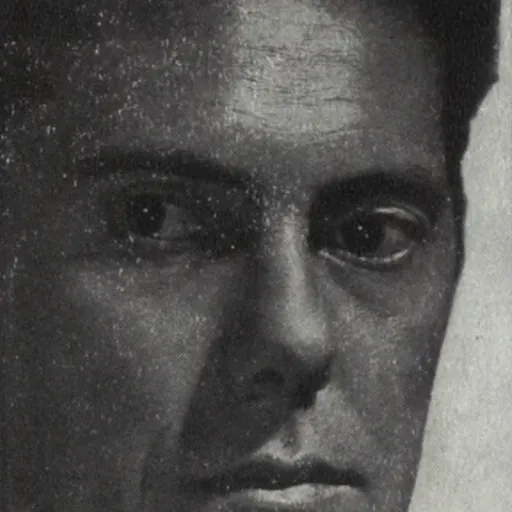
About Petr Eben
Lived 1929 – 2007 (aged 78). Petr Eben was a Czech organist, composer, pianist, university teacher, musician and music educator.
Petr Eben (22 January 1929 – 24 October 2007) was a Czech composer of modern and contemporary classical music, and an organist and choirmaster.
Life and career Born in Žamberk in northeastern Bohemia, Eben spent most of his childhood and early adolescence in Český Krumlov in southern Bohemia. There he studied piano, and later cello and organ. The years of World War II were especially difficult for the young man. Although Eben was raised as a Catholic, his father was a Jew and thus fell foul of the National Socialist occupiers of his homeland. In 1943, aged 14, Eben was captured and imprisoned by the Nazis in Buchenwald, remaining there for the duration of the war.
After being released, he was admitted to the Prague Academy for Music, and there he studied piano with František Rauch and composition with Pavel Bořkovec. He graduated in 1954. Eben improvised and developed a cycle of organ movements in the years from 1991 to 2003 based on excerpts from John Comenius' famous book, Labyrinth of the World and the Paradise of the Heart that became a published work in response to positive reception.
His music has been widely performed and recorded since about 1980, with his popularity still apparently on the rise. Stylistically, his musical language can be considered as "neoexpressionistic" in many ways, however in some works we can hear some kind of new forms of impressionistic tendencies. He is often compared with Olivier Messiaen (the comparison is valid to some extent, in that both men wrote a great deal of organ music, and quite often have examples of their organ output included in the same recitals), but overall his style is less consistently experimental and voluptuous than Messiaen's.
Recordings
The majority of Eben's works has been published by Czech label Supraphon. Some recordings of his organ pieces were performed by himself. The Norwegian organist Halgeir Schiager has recorded five CDs of Petr Eben's organ music on Hyperion Records. The German organist Gunther Rost has recorded 6 discs of Petr Eben's organ music on label Motette. The interpretation recorded on this CD-SACD series was largely influenced by the composer's personal suggestions and comments. The series compiles all of Eben's works for solo organ which have been published to this date, played by Gunther Rost on various contemporary instruments. The speaker in both cycles, Job (vol. I) and The Labyrinth of the World and the Paradise of the Heart (vol. V, published in 2008), is Gert Westphal, one of Germany's most important contemporary reciters. Some of his CDs feature works by Sieglinde Ahrens. Petr Eben's Moto Ostinato from "Sunday Music" is played by English organist Gillian Weir in her "The King of Instruments" series (Priory Records' PRDVD 7001). The Canadian organist Philip Crozier, playing the Fulda Cathedral organ, has also recorded a number of Eben's works on the Azimuth label. Swedish jazz pianist Bobo Stenson included two versions of Eben's "Song of Ruth" on his 2008 trio album Cantando.
Compositions Missa adventus et quadragesimae, 1952 Simphonia Gregoriana (Organ Concerto No. 1), 1954 Sunday Music, organ, 1957–59 Hořká hlína (Bitter Earth), cantata, 1959–60 Piano Concerto, 1960–61 Laudes, organ, 1964 Ordinarium missae, 1966 Apologia Socratus, oratorio, 1967 Truvérská mše (Trouvere Mass), 1968–69 Vox clamantis, 1969 Ten Preludes on Chorales of the Bohemian Brethren, organ, 1971–73 Pragensia, cantata, 1972 Noční hodiny (Hours of the Night), sinfonia, 1975 Faust, incidental music, 1976 Hamlet, incidental music, 1976–77 Pocta Karlu IV., cantata, 1978 Mutationes, organ, 1980 Rorate coeli, Fantasy for viola and organ, 1982 Missa cum populo, 1982 Kletby a dobrořečení (Curses and Blessings), ballet, 1983 Hommage à Dietrich Buxtehude, organ, 1987 Job, organ, 1987 A Festive Voluntary: Variations on Good King Wenceslas, organ, 1987 Two Invocations (for trombone and organ), 1988 Organ Concerto No. 2, 1988 Prague Te Deum, 1989 (for mixed choir, 4 brass instruments, timpani and percussion or organ) Biblical Dances, organ, 1990–91 Posvátná znamení (Sacred Symbols), oratorio, 1992–93 Proprium festivum monasteriense, hymn, 1993 Amen — es werde wahr: Choralphantasie für Orgel, organ, 1994 Momenti d'organo, organ, 1994 Hommage à Henry Purcell, organ, 1994–95 Jeremiah, opera, 1996–97 Campanae gloriosae, organ, 1999 The Labyrinth of the World and the Paradise of the Heart, organ and speaker, 2002
Don’t just read it —
keep it.
Full-length biographies made to live with: read them, listen on the way to work, watch them tonight.
- E-book
- Audio
- Video
Instant download · yours to keep · every purchase keeps this site free
Important facts
People in Petr Eben's life
Named in this biography and alive at the same time






Related people
Same field, nearest in time



Contemporaries
People whose lives overlapped Petr Eben's



Frequently asked questions
Who was Petr Eben?
Czech composer and organist (1929–2007)
When was Petr Eben born?
Petr Eben was born on 22 January 1929 in Žamberk.
When did Petr Eben die?
Petr Eben died on 24 October 2007 in Prague.
What was Petr Eben's occupation?
Petr Eben was an organist, composer, pianist, university teacher, musician and music educator.
What nationality was Petr Eben?
Petr Eben was Czech.
Sources & further reading
Cite this page
APA: Biography.guide. (2026). Petr Eben. https://biography.guide/petr-eben/
MLA: "Petr Eben." Biography.guide, https://biography.guide/petr-eben/.
Chicago: "Petr Eben." Biography.guide. https://biography.guide/petr-eben/.
Data last updated: 2026-09-20 · Spot an error? Report a correction.
Portrait: Wikimedia Commons · author & licence
Page generated 2026-09-27 04:57 UTC