
About Peter Ucko
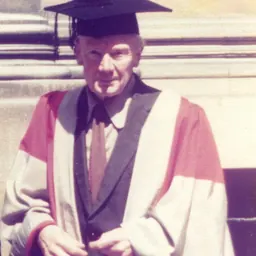
Lived 1938 – 2007 (aged 68). Peter Ucko was a British anthropologist, archaeologist and prehistorian, known for World Archaeological Congress.
Peter John Ucko FRAI FSA (27 July 1938 – 14 June 2007) was an influential English archaeologist. He served as Director of the Institute of Archaeology at University College London (UCL), and was a Fellow of both the Royal Anthropological Institute and the Society of Antiquaries. A controversial and divisive figure within archaeology, his life's work focused on eroding western dominance by broadening archaeological participation to developing countries and indigenous communities.
Born in London to middle class German Jewish parents, Ucko attained his BA and PhD in the anthropology department of UCL, where he proceeded to work from 1962 to 1972, also publishing a number of significant books on archaeology. From 1972 to 1981 he worked as Principal of the Australian Institute of Aboriginal Studies in Canberra, Australia, instituting measures to increase the participation of Indigenous Australian communities in their heritage. Returning to England in 1981 to teach archaeology at the University of Southampton, he became national secretary of the International Union of Prehistoric and Protohistoric Sciences (IUPPS) and was responsible for organising their eleventh congress in 1986; disagreements over whether to abide by the academic boycott of South Africa resulted in Ucko denouncing the IUPPS and founding the World Archaeological Congress (WAC), which focused on recognising current socio-political dimensions to archaeology.
In 1996 he was controversially appointed director of the UCL Institute of Archaeology, overseeing largescale expansion to create the world's largest archaeology department. Also teaching there, he initiated reforms to the syllabus and forged links with the archaeological community in the People's Republic of China, co-founding the International Centre for Chinese Heritage and Archaeology. Retiring in 2005, he continued developing connections between the UK and China until his death from diabetes.
Life
Early life: 1938–1972 Peter Ucko was born in Buckinghamshire on 27 July 1938 to German Jewish parents. His father was a professor of endocrinology who took a great interest in music, conducting orchestras and organising operas, while his mother was a child psychologist. He formed an 'unwavering obsession' with Egyptology at the age of eleven.
Taking a particular interest in the fields of public archaeology and cultural heritage studies, he appointed new staff members to teach courses in such topics, and was involved in founding the Public Archaeology journal, initially edited by honorary lecturer Neal Ascherson. After Cavendish Press, publishers of the UCL Press imprint, were bought out by Taylor and Francis, Ucko initiated successful talks with Left Coast Press for the IoA to publish future works through them. A festschrift titled A Future for Archaeology, edited by Robert Layton, Stephen Shennan and Peter Stone, was produced in Ucko's honour in 2006.
The Ucko Collection The Ucko Collection consists of archaeological objects originally collected by Peter Ucko. On his death, ownership passed to his partner Jane Hubert, who later approached members of the Institute of Archaeology's staff with a desire to donate the collection to a public institution, an act which inspired the "Transitional Objects" project (UCL, 2014–2016).
Publications Books Ucko, P & T. Champion, (2003). The Wisdom of Egypt: changing visions through the ages. London: UCL Press. One of eight books in the Encounters with Ancient Egypt series edited by Peter Ucko Ucko, P., (1987). Academic Freedom and Apartheid: The Story of the World Archaeological Congress. London: Duckworth. Ucko, P., (1968). Anthropomorphic figurines of predynastic Egypt and neolithic Crete, with comparative material from the prehistoric Near East and mainland Greece. London: Andrew Szmidla. 530 p. Ucko, Peter J. & Andrée Rosenfeld, (1967). Palaeolithic Cave Art. London: Cop. Articles Sully,D., Quirke,S., Ucko,P.J. (2006). "Hathor, goddess of love and joy, a Norfolk wherry launched in 1905", Public Archaeology 5(1): 26–36. Ucko, P. (2006). "Unprovenanced Material Culture and Freud's Collection of Antiquities", Journal of Material Culture 6: 251–268. Ucko, P.J. (2006). "Living Symbols of Ancient Egypt", Public Archaeology 5(1). Ucko, P.J., Price,C., Quirke,S. (2006). "A recent Egyptianizing house built on the bank of the Thames", Public Archaeology 5(1): 51–7. Ucko, P.J., Price,C., Quirke,S. (2006). "The Earl's Court Homebase car park facade", Public Archaeology 5(1): 42–50. Ucko, P.J., Quirke,S. (2006). "2004 advertisement for the TV version of Agatha Christie's 'Death on the Nile'", Public Archaeology 5(1). Ucko, P.J., Quirke,S. (2006). "Living Symbols of Ancient Egypt: Introduction", Public Archaeology 5(1): 5–14. Ucko, P.J., Quirke,S. (2006). "The Petrie Medal", Public Archaeology 5(1): 15–25. Ucko, P.J., Quirke,S.Q., Sully,D. (2006). "The past in the present and future: concluding thoughts", Public Archaeology 5(1): 58–72. Ucko, P, (2000). "Enlivening a 'dead' past", Conservation and Management of Archaeological Sites, 4: 67–92 Ucko, P, (1998). "The Biography of a Collection: The Sir Flinders Petrie Palestinian Collection and the Role of University Museums", Museum Management and Curatorship 17(4): 351–99. Ucko, P, (1996). "Mother, are you there?", Cambridge Archaeological Journal 6: 300–4. Ucko, P, (1995). "Introduction: archaeological interpretation in a world context", in Theory in Archaeology, ed. P J Ucko. London: Routledge, pp. 1–27. Ucko, P, (1994). "Museums and sites: cultures of the past within education Zimbabwe, some ten years on", in The Presented Past: heritage, museums and education, eds. P Stone & B. Molyneux. London: Routledge, pp. 237–82. Ucko, P, (1992). "Subjectivity and the recording of Palaeolithic Cave Art", in The Limitations of Archaeological Knowledge, eds. T Shay & J Clottes. Liege: University of Liege Press, pp. 141–80. Ucko, P.J. (1965). "Anthropomorphic ivory figurines from Egypt", Journal of the Royal Anthropological Institute, 92: 214–38. Ucko, P.J. & H.W. Hodges (1963). "Some pre-dynastic figurines: problems of authenticity", Journal of the Warburg and Courtauld Institutes, 26(3/4): 205–22. Ucko, P.J., (1962). "The Interpretation of Prehistoric Anthropomorphic Figurines", Journal of the Royal Anthropological Institute of Great Britain and Ireland 92, no. 1 (Jan.-Jun. 1962): 38–54.
Don’t just read it —
keep it.
Full-length biographies made to live with: read them, listen on the way to work, watch them tonight.
- E-book
- Audio
- Video
Instant download · yours to keep · every purchase keeps this site free
Important facts
People in Peter Ucko's life
Named in this biography and alive at the same time






Related people
Same field, nearest in time



Contemporaries
People whose lives overlapped Peter Ucko's


Frequently asked questions
Who was Peter Ucko?
British archaeologist (1938–2007)
When was Peter Ucko born?
Peter Ucko was born on 27 July 1938 in London.
When did Peter Ucko die?
Peter Ucko died on 14 June 2007 in London.
What was Peter Ucko's occupation?
Peter Ucko was an anthropologist, archaeologist and prehistorian.
What was Peter Ucko known for?
Peter Ucko was known for World Archaeological Congress.
What nationality was Peter Ucko?
Peter Ucko was British.
Sources & further reading
Cite this page
APA: Biography.guide. (2026). Peter Ucko. https://biography.guide/peter-ucko/
MLA: "Peter Ucko." Biography.guide, https://biography.guide/peter-ucko/.
Chicago: "Peter Ucko." Biography.guide. https://biography.guide/peter-ucko/.
Data last updated: 2026-09-22 · Spot an error? Report a correction.
Page generated 2026-09-27 05:11 UTC