
About Peter T. Kirstein
Lived 1933 – 2020 (aged 86). Peter T. Kirstein was a British computer scientist and engineer.
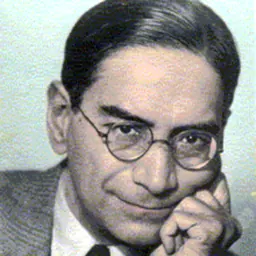
Peter Thomas Kirstein (né Kirschstein; 20 June 1933 – 8 January 2020) was a British computer scientist who played a role in the creation of the Internet. He made the first internetworking connection on the ARPANET in 1973, by providing a link to British academic networks, and was instrumental in defining and implementing TCP/IP alongside Vint Cerf and Bob Kahn.
Kirstein is often recognized as the "father of the European Internet".
Education and early life Kirstein was born on 20 June 1933 in Berlin, Germany, the son of Eleanor (Jacobsohn) and Walter Kirschstein. received a Bachelor of Arts degree from University of Cambridge in 1954, an MSc and PhD in electrical engineering from Stanford University (in 1955 and 1957, respectively)
Career and research He was a member of the staff at CERN from 1959 to 1963. He did research for General Electric at Zurich from 1963 to 1967. He knew Vint Cerf since 1967.
Kirstein was a professor at the University of London Institute of Computer Science (ICS) from 1970 to 1973. After that, he joined the faculty at the University College London in 1973, serving as the first head of the computer science department from 1980 to 1994. He supervised Jon Crowcroft.
Internet development Building on the work of Donald Davies at the National Physical Laboratory in the 1960s, in 1973 Kirstein's research group at University College London became one of only the two international connections on the ARPANET, alongside Norway (NORSAR and NDRE). UCL thereafter provided a gateway between the ARPANET and British academic networks which was the first internetwork for resource sharing.
Research led by Bob Kahn at DARPA and Vint Cerf at Stanford University and later DARPA resulted in the formulation of the Transmission Control Program (TCP), with its specification written by Cerf with Yogen Dalal and Carl Sunshine in December 1974. The following year, testing began through concurrent implementations at Stanford, University College London and BBN. The ARPANET connection to UCL later grew into the trans-Atlantic SATNET. A two-way, followed by a three-way internetworking experiment linking UCL, via SATNET, with nodes in the ARPANET, and with a mobile vehicle in PRNET took place in 1977.
Kirstein and his team members participated from the outset of the Internet Experiment Note meetings, beginning in March 1977. His research group at UCL played a significant role in the very earliest experimental work on what became the TCP/IP. In 1978, Kirstein co-authored with Vint Cerf one of the most significant early technical papers on the internetworking concept. He chaired the International Cooperation Board (ICB), formed by Cerf in 1979, to coordinate activities to develop packet satellite research. UCL adopted TCP/IP in November 1982, ahead of the ARPANET, becoming one of the first nodes on the Internet.
In early 1983, Kirstein chaired the International Collaboration Board, which involved six NATO countries, served on the Networking Panel of the NATO Science Committee (serving as chair in 2001), and served on Advisory Committees for the Australian Research Council, the Canadian Department of Communications, the German GMD, and the Indian Education and Research Network (ERNET) Project. He led the Silk Project, which provides satellite-based Internet access to the Newly Independent States in the Southern Caucasus and Central Asia.
In 2012 Kirstein was inducted into the Internet Hall of Fame by the Internet Society. In 2015 he was awarded the prestigious Marconi Prize.
Don’t just read it —
keep it.
Full-length biographies made to live with: read them, listen on the way to work, watch them tonight.
- E-book
- Audio
- Video
Instant download · yours to keep · every purchase keeps this site free
Important facts
People in Peter T. Kirstein's life
Named in this biography and alive at the same time




Related people
Same field, nearest in time




Contemporaries
People whose lives overlapped Peter T. Kirstein's




Frequently asked questions
Who was Peter T. Kirstein?
British computer scientist (1933–2020)
When was Peter T. Kirstein born?
Peter T. Kirstein was born on 20 June 1933 in Berlin.
When did Peter T. Kirstein die?
Peter T. Kirstein died on 8 January 2020 in London.
What was Peter T. Kirstein's occupation?
Peter T. Kirstein was a computer scientist and engineer.
What nationality was Peter T. Kirstein?
Peter T. Kirstein was British.
Sources & further reading
· Wikipedia: Peter T. Kirstein
Cite this page
APA: Biography.guide. (2026). Peter T. Kirstein. https://biography.guide/peter-t-kirstein/
MLA: "Peter T. Kirstein." Biography.guide, https://biography.guide/peter-t-kirstein/.
Chicago: "Peter T. Kirstein." Biography.guide. https://biography.guide/peter-t-kirstein/.
Data last updated: 2026-09-20 · Spot an error? Report a correction.
Page generated 2026-09-27 05:07 UTC