
Peter Sager
Swiss politician, political scientist and collector
About Peter Sager
Lived 1925 – 2006 (aged 81). Peter Sager was a Swiss political scientist and politician.
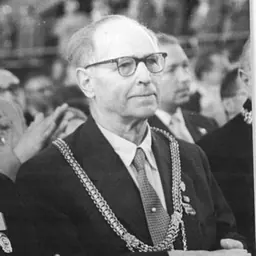
Peter Sager (17 January 1925 – 1 July 2006) was a Swiss political scientist and economist, an expert in Eastern European affairs, as well as a right-leaning conservative and later libertarian politician (BGB, SVP, LPS). He was the founder and former head of the Swiss Library of Eastern Europe and the Swiss Eastern Institute. His political views and anti-communist publications and lectures made him one of the most controversial figures in Switzerland after World War II.
Education and scientific career Sager was born in Bern. Together with his brother Hans he was raised there by their mother Anna Sager (née Abderhalden). His father Franz Sager who was the general manager of the Gurten brewery, died in a car accident in June 1925. After attending primary and secondary schools, Peter Sager spent a year at the Jomini boarding school in Payerne (known today as the Ecole en Guillermaux). Afterwards he attended the trade school of Lausanne where he graduated in 1945. Already in 1943 he had read Hitler's Mein Kampf asking himself how contemporary international politicians could have underestimated the dangers of Nazism. The counter-offensive of the Red Army in World War II later caused him to read works by Lenin and Stalin.
After beginning university studies in Lausanne, he relocated to Bern where he enrolled at the university to study political economy. In the same year he began to work for Berner Student the university students' newspaper, where he eventually became an editor. In 1947 he joined the Zofingia fraternity whose Bern chapter also included Ahmed Huber and Jean Ziegler. His doctoral thesis in 1952 treated Die theoretischen Grundlagen des Stalinismus und ihre Auswirkung auf die Wirtschaftspolitik der Sowjetunion [The theoretical basics of Stalinism and its effects on the economical policy of the Soviet Union]. After that, Sager visited the Soviet Union Program at Harvard University for two years where Alexander Gerschenkron, Merle Fainsod, Zbigniew Brzezinski, Robert Lee Wolff and Isaiah Berlin were teaching.
He briefly returned to Bern, but would leave again for the US in 1956 where he got a scholarship at Harvard's Russian Research Center. Influenced by the events of the Hungarian Revolution of 1956, he came back to Switzerland prematurely to build a political information centre for the research of communism. Sager was committed to anti-communism and used to polemise against movements like the Swiss New Left, which earned him a reputation of "the Cold War in person".
Apart from establishing the Library of Eastern Europe since the late 1940s, Sager in the 1950s also began to collect historical western European prints and maps of Russia. This collection called Rossica Europeana has been held by the Swiss Library of Eastern Europe since 2005.
Peter Sager died in Blonay on 1 July 2006.
Politics In 1945, Peter Sager joined the Party of Farmers, Traders and Independents where his father had already been active. In 1959 and 1979 he ran for a seat in the Swiss National Council for BGB and the conservative Swiss People's Party (SVP) respectively, but was not elected. In 1983 he succeeded to win a seat in the National Council for the SVP of Bern. Sager held this seat until 1991. From 1984 to 1991 he was also a member of the Parliamentary Assembly of the Council of Europe, as well as its vice president, and from 1987 to 1991 he was chairman of the Assembly's board for relations to European non-member states. In 1967, also published an analysis of the Soviet influence in India and Pakistan. Moscow's Hand in India was described by Minoo Masani as having left a mark on India, and a review from Pakistan found that it "represents a painstaking and scholarly effort to examine ... Muslim thought and politics since the time of Sir Syed Ahmed Khan."
In the late 1980s, Sager began to oppose SVP politician Christoph Blocher whom he called "a horrible catastrophe" in a 2005 interview. "He is like a centrifuge. Anything that isn't similar to him or that he doesn't like, he will haul away." The 1992 decision to not join the EEA was called "the probably most incorrect decision regarding external affairs in the 20th century" by Sager. In 1991, Sager left the Swiss People's party in protest and joined the Liberal Party of Switzerland in 2003. He was often severely criticised for his views whereupon he used to retaliate with harsh words and even lawsuits. Sager replied with an essay "Fallstudie einer Diffamierung – Nachrichtenmanipulation durch Nicaragua-Propagandisten in der Schweiz" [Case Study of a Defamation – Manipulation of the News by Nicaragua Propagandists in Switzerland]
Awards Peter Sager received the Ida Somazzi Prize in 1974.
Don’t just read it —
keep it.
Full-length biographies made to live with: read them, listen on the way to work, watch them tonight.
- E-book
- Audio
- Video
Instant download · yours to keep · every purchase keeps this site free
Important facts
People in Peter Sager's life
Named in this biography and alive at the same time

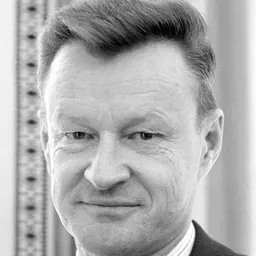

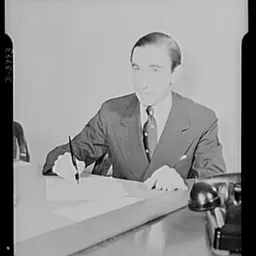
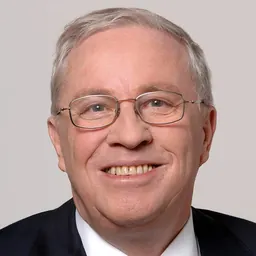
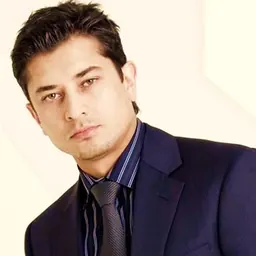


Related people
Same field, nearest in time



Contemporaries
People whose lives overlapped Peter Sager's



Frequently asked questions
Who was Peter Sager?
Swiss politician, political scientist and collector (1925-2006)
When was Peter Sager born?
Peter Sager was born on 17 January 1925 in Bern.
When did Peter Sager die?
Peter Sager died on 1 July 2006 in Blonay.
What was Peter Sager's occupation?
Peter Sager was a political scientist and politician.
What nationality was Peter Sager?
Peter Sager was Swiss.
Sources & further reading
Cite this page
APA: Biography.guide. (2026). Peter Sager. https://biography.guide/peter-sager/
MLA: "Peter Sager." Biography.guide, https://biography.guide/peter-sager/.
Chicago: "Peter Sager." Biography.guide. https://biography.guide/peter-sager/.
Data last updated: 2026-09-26 · Spot an error? Report a correction.
Page generated 2026-09-27 05:15 UTC