
About Alexander Gerschenkron
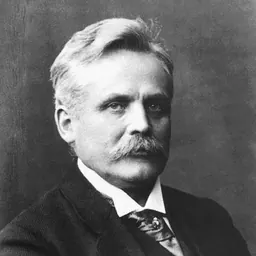
Lived 1904 – 1978 (aged 74). Alexander Gerschenkron was an American and Russian economist, economic historian, university teacher and non-fiction writer.
Alexander Gerschenkron (; 1 October 1904 – 26 October 1978) was an American economic historian and professor at Harvard University trained in the German historical school of economics.
Born into a Jewish family in Odessa, then part of the Russian Empire, now in Ukraine, Gerschenkron fled the country during the Russian Civil War in 1920 to Austria, where he attended the University of Vienna, earning a doctorate in 1928. After the Anschluss in 1938, he emigrated to the United States.
Biography Gerschenkron was born in Odessa in the Russian Empire (present-day Ukraine) into a well-to-do Jewish family from Bessarabia. When he was 16, he and his father left Russia during the period of the Bolshevik Revolution. They eventually settled in Vienna, Austria. There he taught himself languages, including German and Latin. In 1924, he enrolled in the University of Vienna's school of economics, graduating in 1928.
After graduation, Gerschenkron got married and had a child. He found work in Vienna as a representative for a Belgian motorcycle firm. He worked for the firm for three years, but then decided to commit himself to politics, in particular the Social Democrats. However, in 1934 the party ceased to exist after the Austrian Civil War.
In a 2012 research article, the Dutch social historian Marcel van der Linden demonstrates that Gerschenkron was a member of the Social Democratic Workers' Party of Austria, one of the two major political parties in Austria, which has ties to the Austrian Trade Union Federation (ÖGB) and the Austrian Chamber of Labour (AK); and, later, the Communist Party of Austria, both banned between 1933 and 1945 under both the Fatherland Front regime and the Third Reich control of Austria after the 1938 Anschluss. Gerschenkron kept his former political affiliations a secret after he was able to immigrate to the United States.
Research Gerschenkron kept to his Russian roots—in his economics, history and as a critic of Russian literature. His early work concentrated on development in the Soviet Union and Eastern Europe. In a celebrated 1947 article, he found the Gerschenkron effect (changing the base year for an index determines the growth rate of the index). His early work often pursued the statistical tricks of Soviet planners.
The OECD website gives a more detailed description of the Gerschenkron effect:
Economic Backwardness in Historical Perspective In 1951, Gerschenkron wrote an essay Economic Backwardness in Historical Perspective, a cornerstone of his career, and of significance to European economic history. In it, he rejected linear views on economic development, modelled after the English Industrial Revolution, arguing instead that "what may have functioned as a prerequisite and, in a sense, as a 'cause' of industrialization in one country appears as an effect of industrialization in another." The big 'spurts' in growth of industrial output within backward countries result from the search for substitutes for the so-called 'prerequisities' of industrial growth found in the historical experience of advanced countries.
Bread and Democracy in Germany In 1943, Gerschenkron published a book titled Bread and Democracy in Germany. In this study, he analyzes the problem of the relation between democracy and the protection of agricultural products, particularly of grain, in Germany. Gerschenkron understands that the establishment of democracy in Germany depends on numerous factors, and in his book he specifically deals with one aspect of the problem, the position of the Junkers and the agricultural policy in its relation to democracy.
He defines the economic history of the problem as this: In 1879, Germany introduced a new tariff and formulated a definite policy, which protected domestic grain production against overseas competition. This policy worked in favor of the big estate owners, the Junkers, who held important political positions in Prussia. It also worked in favor to a major part of the German peasantry. In 1926, eight years after the Germans were defeated at World War I, the Junkers started to plot against the forces of democracy. They introduced a new era of increased agricultural protection, which once again favored the peasants and Junkers.
Gerschenkron arrives at this conclusion, "that democratic reconstruction of Germany... in insurance of world peace calls for a radical elimination of the Junkers as a social and economic group." He also recommends a radical land reform. To achieve the readjustment of agriculture and to place it on a competitive basis he suggests the introduction of a government trade monopoly of the bulk of agricultural products in Germany. With a monopoly in place, the government could set a price policy, which would force a number of farmers to discontinue grain production for the market and eventually carry out the needed adjustment of high cost agriculture to the international market conditions.
Gerschenkron also warns of the possible difficulties of creating a government monopoly. He believes the management of the monopoly would require "great practical skill and energy". He believes the Germans should include this program of the agricultural adjustment plan in the peace treaties and entrust its execution and supervision to an international economic agency.
Influence Gerschenkron had a profound influence on his students. At Harvard, he led the Economic History Workshop and taught courses on Soviet economics and economic history. In economic history he taught a year-long course required of all graduate economics students. His course required two major dissertation papers and a final exam. He also led evening seminars once a week in which his graduate students would discuss ideas for dissertations and evaluate quantitative techniques.
Many of his students went on to have productive careers, and a good number of them have attained presidency of the Economic History Association. Ten of his students in the mid-1960s prepared a Festschrift in his honor. The book was titled Industrialization in Two Systems and was published in 1966.
Gerschenkron as a scholar Gerschenkron was known as an extremely bright scholar. As one of his former students Deirdre McCloskey put it, "Alexander Gerschenkron was not the best teacher or the best economist or the best historian among these—nor even, I think, the best human being. But he was the best scholar I have known."
Gerschenkron studied many subjects, from history of economics, economics of the Soviet Union, statistics, Greek poetry, and a great deal in between. He also learned many languages. From his studies in Austria, he learned Latin, Greek, French and German. Later in life he would pick up languages with ease—Swedish one week, Bulgarian the next. As an example of his facility with languages, Deirdre McCloskey tells of Gerschenkron's harsh evaluation of a Russian translation: "He wrote a devastating review of a translation from Russian of a book in economics, attacking in detail the author's apparently feeble command of the language. The translator had the temerity to approach Gerschenkron at a conference and say amiably, "I want you to know, Professor Gerschenkron, that I am not angry about your review." Gerschnkron replied, "Angry? Why should you be angry? Ashamed, yes; angry, no."
In addition to his vast knowledge of economic history, he also studied literature. He and his wife wrote an article together on translations of Shakespeare, which was published in a literary journal.
Selected publications (1943). Bread and democracy in Germany, Berkeley and Los Angeles: University of California press. (1945). Economic Relations with the U.S.S.R., New York. with Alexander Erlich (1951), A dollar index of Soviet machinery output, 1927–28 to 1937, Santa Monica, California: Rand Corporation. with Nancy Nimitz (1952), A dollar index of Soviet petroleum output, 1927–28 to 1937, Santa Monica, California: Rand Corporation. with Nancy Nimitz (1953), A dollar index of Soviet iron and steel output 1927/28–1937, Santa Monica, California: Rand Corporation. (1954), A dollar index of Soviet electric power output, Santa Monica, California: Rand Corporation. (1954), Soviet heavy industry: a dollar index of output, 1927/28–1937, Santa Monica, California: Rand Corporation. (1962), Economic Backwardness in Historical Perspective, a Book of Essays, Cambridge, Massachusetts: Belknap Press of Harvard University Press. (1966), Bread and Democracy in Germany, New York: H. Fertig. (1968), Continuity in History, and other essays, Cambridge, Massachusetts: Belknap Press of Harvard University Press. (1970), Europe in the Russian Mirror: Four Lectures in Economic History, London: Cambridge University Press. (1977), An Economic Spurt that Failed: Four Lectures in Austrian History, Princeton, New Jersey: Princeton University Press. (1989), Bread and Democracy in Germany. With a new foreword by Charles S. Maier, Ithaca, New York: Cornell University Press.
Don’t just read it —
keep it.
Full-length biographies made to live with: read them, listen on the way to work, watch them tonight.
- E-book
- Audio
- Video
Instant download · yours to keep · every purchase keeps this site free
Important facts
People in Alexander Gerschenkron's life
Named in this biography and alive at the same time

Related people
Same field, nearest in time



Contemporaries
People whose lives overlapped Alexander Gerschenkron's





Frequently asked questions
Who was Alexander Gerschenkron?
American economist (1904–1978)
When was Alexander Gerschenkron born?
Alexander Gerschenkron was born on 18 September 1904 in Odesa.
When did Alexander Gerschenkron die?
Alexander Gerschenkron died on 26 October 1978 in Cambridge.
What was Alexander Gerschenkron's occupation?
Alexander Gerschenkron was an economist, economic historian, university teacher and non-fiction writer.
What nationality was Alexander Gerschenkron?
Alexander Gerschenkron was American and Russian.
Sources & further reading
· Wikipedia: Alexander Gerschenkron
· DBpedia: Alexander Gerschenkron
Cite this page
APA: Biography.guide. (2026). Alexander Gerschenkron. https://biography.guide/alexander-gerschenkron/
MLA: "Alexander Gerschenkron." Biography.guide, https://biography.guide/alexander-gerschenkron/.
Chicago: "Alexander Gerschenkron." Biography.guide. https://biography.guide/alexander-gerschenkron/.
Data last updated: 2026-09-20 · Spot an error? Report a correction.
Page generated 2026-09-27 05:09 UTC