
About Peter Russell
Lived 1886 – 1966 (aged 79–80). Peter Russell was a fashion designer.
Peter Russell (1886–1966) was a London based English fashion designer and a founder member of the Incorporated Society of London Fashion Designers. Running a major couture house from the 1930s to the early 1950s, he has been described as a: "designer of beautiful, jauntily sophisticated women's suits".
Background
Russell did not reveal much about his early life, although an article in the Sydney Morning Herald of 1953 states that before embarking on a career in fashion he was a horse rancher in Saskatchewan, Canada, a rubber planter in Malaya and a farmer in Norfolk, England. An article in the 1948 edition of Shopping placed his background in rural Norfolk and revealed he had served in the Royal Field Artillery in World War I before being injured. The article also stated that he first developed his design skills while working in Malaysia, initially by assisting the wife of a fellow rubber planter in creating a gown for the government house ball. In 1913 he was back in England, working for the costumiers Henry Reece Ltd, in Marylebone, London. In 1937 he moved again to 2 Carlos Place, Mayfair – one of the most fashionable quarters of London. Russell specialised in sporty suits and simple gowns. He caused something of a stir, especially in Australia, for advocating a return to Edwardian-style dress for men in the early 1950s. It was advice he took himself, wearing stovepipe trousers, red cummerbund and matching carnation for one of his fashion shows in Melbourne.
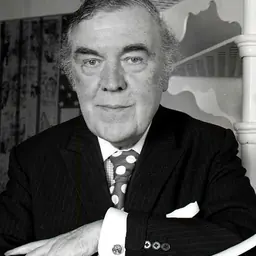
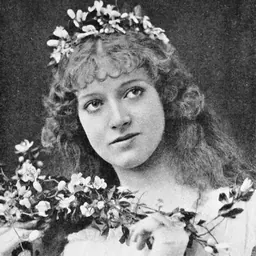
The opera singer Ruth Vincent defected to Norman Hartnell because of Russell's "uneven temper".
Brand hallmarks Russell believed in functional elegance. He was compared to Edward Molyneux for his ability to design elegant and practical clothes. He avoided grand ballgowns, favouring instead separates and suits as well as afternoon dresses and pieces for what he termed "diners out" (these outfits would be suitable for afternoon and cocktail parties as well as theatre visits). He could be dismissive of fashion trends, saying in 1953: "Dior's short hemline is a stunt – most women want simple, elegant clothes with just a touch of intrigue".
IncSoc and wartime activities Russell played a major role in promoting London couturiers. He was among the founder members of the Incorporated Society of London Fashion Designers (IncSoc) in 1942. He supported fashion's role in the war effort, championing utility principles and featuring in morale-boosting promotional photographs issued by the Ministry of Information. Although the couture industry was forced to alter both the quantity and the lavishness of fabrics used, it appears Russell heartily approved of the results of wartime rationing of fabrics. In a letter to the director general of the Board of Trade he suggested that it had made a vast improvement to fashion because it had taught people about discipline in dress and helped them appreciate simplicity.
After the war, Russell continued his involvement with IncSoc and the promotion of British couture. In common with fellow members, one of his outfits was included in a fashion show sequence in the 1949 film Maytime in Mayfair. One of his last commitments, in March 1953, was to be photographed with the so-called "big ten" designers (by this time numbering eleven) for a lavish feature in Life magazine about the preparations for the coronation of Queen Elizabeth.
Move to Australia Russell began his association with Australia in the late 1940s, when he was invited to show his collection at upmarket Melbourne department store Georges, with some lines also being produced in Australia under his supervision by the store. In July 1953, Russell finalised the sale of his business to Michael Donnellan in order to relocate to Melbourne. He was moving from fashion design to a fashion advisory role – working with a clothing firm that made wool and silk fabrics and lingerie.
Russell was in his mid-60s in 1953 and told the Australian press he was looking forward to: "a little time to think and to enjoy life". It was also announced he would settle in the suburb of Ivanhoe, Victoria in a Spanish style villa where he would be in close proximity to both the mills he was advising and also the Lilydale and Melbourne hunts. However, after moving out in August, Russell returned to Britain in November, at which point he seems to have retired.
Russell died in Folkestone in 1966.
Don’t just read it —
keep it.
Full-length biographies made to live with: read them, listen on the way to work, watch them tonight.
- E-book
- Audio
- Video
Instant download · yours to keep · every purchase keeps this site free
Important facts
People in Peter Russell's life
Named in this biography and alive at the same time


Related people
Same field, nearest in time



Contemporaries
People whose lives overlapped Peter Russell's
Frequently asked questions
Who was Peter Russell?
London fashion designer (1886-1966)
When was Peter Russell born?
Peter Russell was born in 1886 in Cawston.
When did Peter Russell die?
Peter Russell died in 1966 in England, Folkestone.
What was Peter Russell's occupation?
Peter Russell was a fashion designer.
Sources & further reading
· DBpedia: Peter Russell (fashion designer)
Cite this page
APA: Biography.guide. (2026). Peter Russell. https://biography.guide/peter-russell-fashion-designer/
MLA: "Peter Russell." Biography.guide, https://biography.guide/peter-russell-fashion-designer/.
Chicago: "Peter Russell." Biography.guide. https://biography.guide/peter-russell-fashion-designer/.
Data last updated: 2026-09-20 · Spot an error? Report a correction.
Page generated 2026-09-27 05:18 UTC