
About Peter Rolfe Vaughan
Lived 1935 – 2008 (aged 73). Peter Rolfe Vaughan was a British civil engineer and engineer.
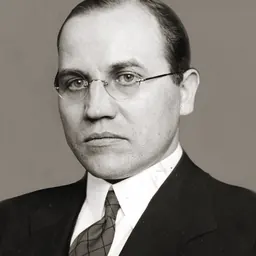
Peter Rolfe Vaughan (born 10 March 1935; died 16 May 2008) was Emeritus Professor of Ground Engineering in the Geotechnics department of Imperial College London.
Biography
Vaughan was born in Limbury near Luton, Bedfordshire, in the UK on 10 March 1935, the son of Ernest Alfred Vaughan, a civil servant, and Clarise Marjory Ward, a school teacher, and was educated at Luton Grammar School before going on to do a BSc at Imperial College. He played rugby for his school, the college and for the Luton Grammar School old boys team.
He graduated in 1956 and went to work for two years for Sandeman Kennard & Partners as an assistant engineer on the design of various dams in the north of England before returning to Imperial to do a diploma course in Soil Mechanics. He received his PhD in 1963 at Imperial College for his research on the instrumentation of earthworks (thesis title Field measurements in earth dams under the supervision of Alan W. Bishop) before going to work in Africa in 1964, where he was supervising engineer on the construction of the embankments of the Kainji Dam in Nigeria.
He continued to mix working in the academic environment of Imperial College with working on engineering projects in the real world for his entire career. He was project engineer for Cow Green Embankment Dam and the Balderhead Dam in the late sixties and lecturer, senior lecturer then reader in the Soil Mechanics Section of Imperial College in the seventies and eighties, becoming Professor of Ground Engineering in 1987 and emeritus professor on his retirement in 1996. During this time he carried out extensive research in subjects such as the properties of weak rocks, stiff clays, residual and other structured soils. He was an internationally recognised expert in the design and deterioration of earthworks and fills, embankment dams and natural or man-made slopes. His expertise also included seepage, residual strength and pore pressure measurement and its interpretation. His academic post at Imperial included supervising more than twenty PhD programmes and publishing some 80 papers on technical subjects. He was also an acclaimed and amusing lecturer, having given numerous lectures to international conferences and the Rankine Lecture to the British Geotechnical Association in 1994. An example of his style is given in an article published in the Guardian on Wednesday 1 February 2006:
"Much seems to depend on words; many people seem to think "reservoir" a rather unpleasant one, and Hattersley admits that he was one. My advice to any reservoir promoter is never say "reservoir", say "lake". Even better, say "wetland habitat". Better still, promote it as a leisure amenity. ("There will be bird watching, cycling, fishing, picnicking, sailing and walking and you can get it all for free if we sometimes sell some of the water to the local water undertaking.") If all else fails, ask for some extra land beside it, cut the grass short, plant 18 little flags and call it a "lateral water hazard"."
Peter Vaughan was an active consultant throughout his career. One of the founding members of Geotechnical Consulting Group he gave specialist advice to consulting firms, contractors, utilities and public authorities on a wide range of problems, such as the reconstruction of Carsington Dam after its failure during construction, and Roadford Dam, where he was a member of the advisory panel. He was involved with a review of dam performance for Ardleigh Dam, Essex, a safety review for Mica Dam, Canada, and the rehabilitation of the three dams of the Cascade of Dauga in Latvia for which he was a member of the advisory panel. He was involved extensively with the rehabilitation of old clay embankments for London Underground Limited.
He travelled widely on both consultancy work and giving lectures to international engineering bodies. His spare time was taken up with fly fishing. He never married and he died of a heart attack at his home in Suffolk on 16 May 2008.
Academic qualifications 1956: BSc (Eng) ACGI, Imperial College, London 1965: PhD, DIC University of London 1991: DSc, University of London
Professional qualifications 1991: Fellow, Royal Academy of Engineering 1978: Fellow, Institution of Civil Engineers 1970–1973, 1977–1980, 1981–1984: British National Committee on Large Dams 1971–1974, 1975–1977: British Geotechnical Society Committee 1975–1977: Geotechnique Advisory Panel 1972–1973: Organising Committee, British Geotechnical Society Symposium on Field Instrumentation 1975–1977: Chairman, Organising Committee, Institution of Civil Engineers Symposium on Clay Fills 1977–1980: Chairman, Organising Sub-Committee, Technical Sessions & Papers, 7th European Conf. Soil Mech. & Foundation
Engineering 1981–1984: ICOLD Sub-Committee Materials – Drafting Guide on Geotextiles in Dams 1986–1988: Working Party on Tropical Residual Soils, Geological Society of London 1989–1997: Technical Committee on Tropical Soils, ISSMFE 1994–2008: Technical Committee on Tailings Dams ISSMFE
Prizes 1956 – Unwin Medal, Imperial College 1959 – Unwin Postgraduate Prize, Imperial College 1962 – Trevithick Premium, Institution of Civil Engineers 1986, 1991, 1998 – Telford Gold Medal, Institution of Civil Engineers 1992, 1997: Telford Premium, Institution of Civil Engineers 1994 – Cooper Hill Memorial Prize, Institution of Civil Engineers 2001 – Geotechnical Research Medal, Institution of Civil Engineers 1964, 1973, 1997 – British Geotechnical Society Prize 1994 – Fellow of the City and Guilds of London Institute
Major published works
Don’t just read it —
keep it.
Full-length biographies made to live with: read them, listen on the way to work, watch them tonight.
- E-book
- Audio
- Video
Instant download · yours to keep · every purchase keeps this site free
Important facts
People in Peter Rolfe Vaughan's life
Named in this biography and alive at the same time

Related people
Same field, nearest in time
Contemporaries
People whose lives overlapped Peter Rolfe Vaughan's



Frequently asked questions
Who was Peter Rolfe Vaughan?
British academic (1935-2008)
When was Peter Rolfe Vaughan born?
Peter Rolfe Vaughan was born on 10 March 1935 in Luton.
When did Peter Rolfe Vaughan die?
Peter Rolfe Vaughan died on 16 May 2008.
What was Peter Rolfe Vaughan's occupation?
Peter Rolfe Vaughan was a civil engineer and engineer.
What nationality was Peter Rolfe Vaughan?
Peter Rolfe Vaughan was British.
Sources & further reading
· Wikipedia: Peter Rolfe Vaughan
· DBpedia: Peter Rolfe Vaughan
Cite this page
APA: Biography.guide. (2026). Peter Rolfe Vaughan. https://biography.guide/peter-rolfe-vaughan/
MLA: "Peter Rolfe Vaughan." Biography.guide, https://biography.guide/peter-rolfe-vaughan/.
Chicago: "Peter Rolfe Vaughan." Biography.guide. https://biography.guide/peter-rolfe-vaughan/.
Data last updated: 2026-09-20 · Spot an error? Report a correction.
Page generated 2026-09-27 05:25 UTC