
About Peter Pitchlynn
Lived 1806 – 1881 (aged 74). Peter Pitchlynn was an American diplomat, traditional leader or chief, lighthorse and tribal chief.
Peter Pitchlynn (, ) (January 30, 1806 – January 17, 1881) was a Choctaw military and political leader. A long-time diplomat between his tribe and the federal government, he served as principal chief of the Choctaw Republic from 1864 to 1866 and surrendered to the Union on behalf of the nation at the end of the Civil War.
Educated both in Choctaw culture and American schools, in 1825 Pitchlynn helped found the Choctaw Academy in Kentucky and later served as its superintendent. He also worked to reduce the sale of alcohol in their territory. After joining his people on the forced removal to Indian Territory in the 1830s, he was appointed by the National Council in 1845 as the Choctaw Delegate (akin to an ambassadorship) to Washington. At the time, the Nation was proposing to be recognized by the US Congress as a territory.
After the war, Pitchlynn returned to Washington, D.C., to represent Choctaw interests and work for concessions from the government for the Choctaw lands sold under pressure to the United States in 1830 during Indian removal. He died in Washington, D.C., and is buried there.
Early life and education Peter Perkins Pitchlynn was born on January 30, 1806, in present-day Noxubee County, Mississippi, which at the time, was part of the Old Choctaw Nation. A mixed blood, he was the first son of Sophia Folsom, a Choctaw woman of partly Anglo-American descent; her mother Natika was Choctaw and her father was Ebenezer Folsom, an Anglo-American trader. Sophia's Choctaw name was Lk-lo-ha-wah (Loved but lost). His father was Major John Pitchlynn, a man of Scots descent. The father was raised from childhood by the Choctaw after the death of his father Isaac, a widower. John Pitchlynn served George Washington as an interpreter for negotiations with the Choctaw. Sophia Folsom and John Pitchlynn had married in 1804.
After he obtained his degree, Pitchlynn returned to his family home in Mississippi, where he became a farmer. The Choctaw were among the Southeast tribes that used enslaved African Americans as workers on their farms.
In 1824, Pitchlynn was made the head of the Lighthorse, the Choctaw Nation's mounted police, and received the rank of colonel. Among other lawkeeping duties, he supervised the removal of whiskey from tribal lands. Portrait of Peter Pitchlynn by George Catlin, 1834 in Fort Gibson, Arkansas.
Marriage and family He soon married Rhoda Folsom, a first cousin. As part of changing practices, they were married by a missionary, Reverend Cyrus Kingsbury. They had a daughter together, Sophia. She never married and continued to live with her father after her mother's death.
Career
Pitchlynn was well educated in both Choctaw and European-American culture. He began working on ways to improve Choctaw life. He worked to ban the sale of alcohol in Choctaw territory. Believing that education was important, he persuaded the National Council to found the Choctaw Academy, located in Blue Springs, Scott County, Kentucky in 1825. It sometimes accepted students of other American Indian tribes as well as Choctaw, such as Omaha and Sioux boys. Pitchlynn's widowed mother, Sophia Folsom Pitchlynn, moved with her son. After her death, she was buried there, and hers is the oldest known grave in Oklahoma.
English author Charles Dickens was touring the United States when he met Pitchlynn on a steamboat on the Ohio River. He described the Choctaw leader at length:
In 1840 the Council appointed Pitchlynn as a teacher and superintendent of the Choctaw Academy. The following year, they decided to relocate the school to the Choctaw Nation (located in Indian Territory). Pitchlynn's correspondence shows they were also discussing the need for a girls' school. Despite wanting to avoid the war, the Choctaw were not permitted to remain neutral. Following an invasion of Choctaw territory in May 1861 by Texan forces,
He was elected Principal Chief of the Choctaws on October 6, 1864. On June 19, 1865, Chief Pitchlynn surrendered the military to Union troops occupying Doaksville, Choctaw Nation, and signed the terms of surrender himself. The Choctaws laid down their arms, and the Union took control of the territory until a formal peace treaty was signed the following spring.
The Reconstruction treaty was drawn up by the United States. Overseen by U.S. special commissioner Ely S. Parker, the Southern Treaty Commission crafted the 1866 Treaty with the Choctaw and Chickasaw. The Choctaw delegation included Allen Wright, Alfred Wade, James Riley, John Page, and Campbell LeFlore, alongside Pitchlynn himself, in addition to the Chickasaw delegates. The treaty had 51 articles and was proclaimed in July 1866.
While in Washington in 1866 to reestablish diplomatic relations with the United States, as well as stave off government-sponsored attempts to colonize Indian Territory, Pitchlynn met with Queen Emma of Hawaii, introduced her to his family and conducted diplomatic cultural exchange. This remains, to date, the only instance of bilateral relations between the Choctaw Republic and the Hawaiian Kingdom.
Pitchlynn remained chief until 1866, when he was succeeded by Allen Wright. Afterwards, Pitchlynn returned to Washington, DC as the Choctaw delegate, where he worked to press Choctaw claims for lands in Mississippi sold under pressure to the United States in 1830. He had been collecting information on this issue since the 1850s from officials involved in the Treaty of Dancing Rabbit Creek,
After his death in Washington in 1881, Pitchlynn was buried there in Congressional Cemetery. He was the third Native American to be buried there, after his fellow Choctaw chief Pushmataha and the Apache chief Taza.
Pitchlynn was reported to have told of the origin of the Choctaw: according to the traditions of the Choctaws, the first of their race came from the bosom of a magnificent sea. Even when they first made their appearance upon the earth they were so numerous as to cover the sloping and sandy shore of the ocean ... in the process of time, however, the multitude was visited by sickness ... their journey lay across streams, over hills and mountains, through tangled forests, and over immense prairies ... so pleased were they with all that they saw that they built mounds in all the more beautiful valleys they passed through, so the Master of Life might know that they were not an ungrateful people.
Legacy and honors The Choctaw Nation placed a monument at his gravesite in Congressional Cemetery in his honor. His papers are held by the University of Oklahoma, in the Western Histories Collection.
Don’t just read it —
keep it.
Full-length biographies made to live with: read them, listen on the way to work, watch them tonight.
- E-book
- Audio
- Video
Instant download · yours to keep · every purchase keeps this site free
Important facts
People in Peter Pitchlynn's life
Named in this biography and alive at the same time


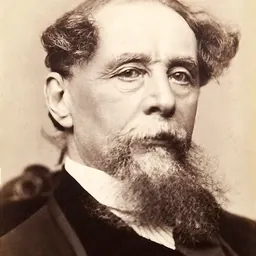



Related people
Same field, nearest in time

Contemporaries
People whose lives overlapped Peter Pitchlynn's





Frequently asked questions
Who was Peter Pitchlynn?
Choctaw chief (1806-1881)
When was Peter Pitchlynn born?
Peter Pitchlynn was born on 30 January 1806 in Noxubee County.
When did Peter Pitchlynn die?
Peter Pitchlynn died on 17 January 1881 in Washington, D.C..
What was Peter Pitchlynn's occupation?
Peter Pitchlynn was a diplomat, traditional leader or chief, lighthorse and tribal chief.
What nationality was Peter Pitchlynn?
Peter Pitchlynn was American.
Sources & further reading
Cite this page
APA: Biography.guide. (2026). Peter Pitchlynn. https://biography.guide/peter-pitchlynn/
MLA: "Peter Pitchlynn." Biography.guide, https://biography.guide/peter-pitchlynn/.
Chicago: "Peter Pitchlynn." Biography.guide. https://biography.guide/peter-pitchlynn/.
Data last updated: 2026-09-20 · Spot an error? Report a correction.
Page generated 2026-09-27 05:19 UTC