
About Peter Lu
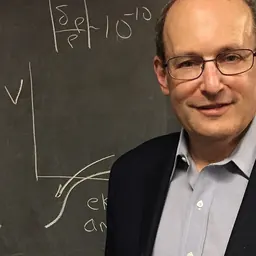
Born 1978. Peter Lu is an American physicist, known for Chinese archaeology, Girih tiles and Islamic architecture.
Peter James Lu, PhD (陸述義) is a post-doctoral research fellow in the Department of Physics and the School of Engineering and Applied Sciences at Harvard University in Cambridge, Massachusetts. He has been recognized for his discoveries of quasicrystal patterns (girih tiles) in medieval Islamic architecture, early precision compound machines in ancient China, and man's first use of diamond in neolithic China.
Early life and education Lu was born in Cleveland, Ohio and grew up in the Philadelphia suburb of West Chester, Pennsylvania. His early childhood interest in rockhounding led to his winning national gold medals in the "Rocks, Minerals, and Fossils" event at four National Science Olympiad tournaments. As an undergraduate physics major, he wrote his fourth-year senior thesis with Prof. Paul J. Steinhardt on the search for natural quasicrystals, later published in Physical Review Letters. Lu graduated summa cum laude and Phi Beta Kappa with an A.B. in physics from Princeton in June, 2000. In September, 2000, he began his graduate studies at Harvard University, receiving an A. M. in physics in 2002. In 2005, Lu presented a set of lectures in Turkmenistan. Since 2007, Lu has served on the national advisory committee of the Science Olympiad. Lu completed his Ph.D. in physics in 2008.
Girih tiles and quasicrystals in medieval Islamic architecture
Lu's most widely publicized work involves his discovery of the girih tiles, a set of fundamental geometric tiles used to create a wide range of patterns in medieval Islamic architecture. In collaboration with Paul Steinhardt, he demonstrated their use to create quasicrystal tilings on the walls of Darb-i Imam shrine (1453 A.D.) in Isfahan, Iran. The finding was considered a significant breakthrough by demonstrating a simple and straightforward method that could have been used by common workers to create extremely complicated patterns using girih tiles, and by identifying a medieval example of quasicrystalline patterns, which were not widely known to or understood by the West until the discovery of Penrose tilings by Roger Penrose in the 1970s. For its timely scientific and political implications, Lu and Steinhardt's work on medieval Islamic architectural tilings received substantial worldwide coverage on the front pages of a number of major newspapers, on the radio, and in magazines; the finding was identified as among the top 100 scientific discoveries of 2007 by Discover magazine. Lu had been introduced earlier to the grooved rings by Prof. Jenny So at the Smithsonian Institution. Lu discovered that these grooves follow the exact mathematical form of the Archimedes spiral, demonstrating the ability of ancient craftsmen to interconvert two types of motion precisely, in order to fashion the jade rings. The close conformity to this mathematical form confirmed that these craftsmen must have had a precision compound machine (as opposed to a simple machine) in 550 BC, predating Archimedes by several centuries; prior to this paper, the earliest compound machines were thought to be of Greek origin (e.g., Archimedes' screw).
Man's first use of diamond Lu continued his interdisciplinary combination of art history and physics with his discovery, with a group of collaborators, of man's first use of diamond, in Neolithic China. Prior to this work, evidence for man's first use of diamond was known primarily from Indian texts dating to the latter half of the first millennium BC, and there was no reported evidence for its use in prehistoric times. In 2005, Lu and collaborators reported strong evidence that the ancient Chinese used diamonds to polish ceremonial stone burial axes as early as 2500 BC, placing the earliest known use of diamond two thousand years before the mineral is known to have been used elsewhere. These stone axes, made predominantly of the mineral corundum (sapphire and ruby in its colorful gem forms) were fashioned as early as 4000 BC, so that they represent the earliest use of the mineral corundum, as well. The finding's media coverage included a front-page article in China's largest English-language newspaper, the China Daily.
Other contributions Lu's interests in geology-related phenomena also include paleontology, which led to collaboration with his college and grad-school roommate Motohiro Yogo and Prof. Charles Marshall. Leveraging vector autoregression analysis upon an established marine fossil record, Lu, Yogo and Marshall found that a "speed limit", which was previously thought to restrict the reemergence of biodiversity following a mass extinction, may be an artifact of the incompleteness of the fossil record. According to paleontologist Douglas Erwin of the National Museum of Natural History in Washington, D.C., "This is the battle line for the next decade in paleontology." resolving a long-standing debate within the soft condensed-matter physics community on the origins of this mechanism. Lu's colloid work has also led to the development of new techniques for observing real-time, three-dimensional behavior of colloidal particles, and freely-moving biological cells, with active target-locking in real-time confocal microscopy. Lu also wrote the opening chapter, on confocal microscopy and nanotechnology, of the Handbook of Microscopy for Nanotechnology, edited by Nan Yao.
Don’t just read it —
keep it.
Full-length biographies made to live with: read them, listen on the way to work, watch them tonight.
- E-book
- Audio
- Video
Instant download · yours to keep · every purchase keeps this site free
Important facts
People in Peter Lu's life
Named in this biography and alive at the same time




Related people
Same field, nearest in time




Contemporaries
People whose lives overlapped Peter Lu's





Frequently asked questions
Who is Peter Lu?
American physicist
When was Peter Lu born?
Peter Lu was born in 1978 in Cleveland.
What is Peter Lu's occupation?
Peter Lu is a physicist.
What is Peter Lu known for?
Peter Lu is known for Chinese archaeology, Girih tiles, Islamic architecture, Quasicrystals and Soft condensed matter.
What nationality is Peter Lu?
Peter Lu is American.
Sources & further reading
Cite this page
APA: Biography.guide. (2026). Peter Lu. https://biography.guide/peter-lu/
MLA: "Peter Lu." Biography.guide, https://biography.guide/peter-lu/.
Chicago: "Peter Lu." Biography.guide. https://biography.guide/peter-lu/.
Data last updated: 2026-09-20 · Spot an error? Report a correction.
Page generated 2026-09-27 04:58 UTC