
Peter Licavoli
American mobster
About Peter Licavoli
Lived 1902 – 1984 (aged 81).
Peter Joseph Licavoli (June 7, 1902 – January 11, 1984), (nicknamed "Horseface" ) was an American organized crime figure in St. Louis, Missouri before moving to Detroit, Michigan. He controlled criminal operations in Detroit and Toledo, Ohio, throughout the Prohibition era.
In the 1930s, Licavoli was convicted of bribing a federal official and spent two years at Leavenworth Penitentiary. He was arrested, tried, or suspected of murder seven times, and released seven times. His brother Dominic married Rosalie Zerilli, the eldest daughter of the Detroit Partnership boss Joseph Zerilli. In 1944, Licavoli left the Toledo-Detroit area for Arizona, living on Grace Ranch near Tucson, Arizona until his death in 1984.
Family Relations Peter Licavoli was born in St. Louis, and his first dealings with the underworld began when he, his brother Thomas Licavoli and his cousin James Licavoli joined the Russo gang. Pete was brought up in a relatively Jewish neighborhood in St. Louis. Along with his family, Licavoli dealt mostly in illegal gambling operations before moving to Detroit later during Prohibition. After their move to the Detroit Area, Yonnie and James would not be as lucky as Pete. Yonnie was arrested for being involved in the murder of a bootlegger in Toledo and James went into hiding and fled to Pittsburgh. Pete was left to continue gaining control in Detroit where he worked extensively with Jewish gangs in Detroit.
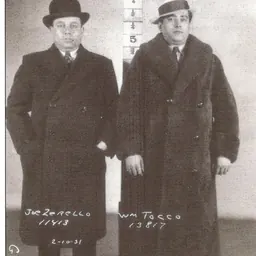
Not much is known of Licavoli’s early involvement in gang-life in St. Louis, but as he moved around the country, his list of known associates would bolster well known gangsters throughout the Midwest and even in New York City. Joseph Massei was a known associate of Licavoli in Detroit. His sister-in-law was married to Sam Zerilli, who along with Joseph Zerilli was a well known Crime Boss in Detroit. Pete was known to be a family man. He was accused of using political influence with US Senator Capehart. In the 40s, he pushed to pass a bill that prevented the deportation of his brother-in-law, Frank Cammarata. While Peter was never convicted, his relations with the Senator and the timing of the bill, were easily inferred to be underhanded dealings.
Licavoli’s cousin who he grew up with, James Licavoli, would go on to become a highly respected crime boss in Cleveland. He was a key figure in the Licavoli-Greene wars, that saw several bombings in Cleveland in the 1970s. However there is little information of any involvement that Pete had with this part of James' life. \
His youngest son, Peter Licavoli Jr. served honorably during a pivotal year of the Vietnam War. Here is the summary of his service based on the documentation Branch: US Army Unit: 864th Engineer Battalion ("Pacemakers") Location: Nha Trang, South Vietnam Timeframe: Served through the 1968 Tet Offensive period Rank: Promoted to Specialist E5 (SP5) Honors: Received the Good Conduct Medal and other citations Discharge: Honorably discharged in November 1968
Dealings in Detroit After moving to Detroit from St. Louis, Pete became established in the Detroit mob. He played a key role during Prohibition and was a part of many of the rum-running that happened during that time. During one of the runs in 1928, he bribed a customs officer to allow his gang to transport whiskey across the border from Canada. He attempted to pay the officer $200 and three bottles of whiskey to allow the rest of his alcohol to pass through the border. Police claimed this to be part of an Italian rum running gang war. These charges were brought after police tracked 100 barrels of whiskey that eventually were sold to Detroit bars and case buyers. He claimed Pete helped recruit employees to “take care of certain trouble”. Holt said Licavoli also forced Ford’s Personnel Director, Harry Bennett’s, car off the road after Bennett fired Licavoli’s recruits.
The three owners of the Gotham Hotel purchased the building with the purpose of transforming it into a luxury hotel for the African-American community of Detroit. Due to widescale discrimination in Detroit throughout the early 20th century, black residents of Detroit were often barred from residency at many of the city’s hotels. The Gotham Hotel succeeded in its goal of being a luxury destination to black citizens, in part to its exceptional location, classy decor, and top-of-the-class amenities. This was the case until November 9, 1962, when “112 officers from the Detroit Police, the IRS and the Michigan State Police descend[ed] on the hotel”. The immediate result of this raid included the arrest of John White and 40 other people involved in the gambling, as well as “160,000 bet slips, $60,000 in cash (the equivalent of $473,000 today, when adjusted for inflation), 33 adding machines, marked playing cards and loaded dice.”
Out of the Game, Arrests, and Death
Peter Licavoli’s career with the mafia was not all booze and money—eventually he faced ramifications for his actions as one of the top bosses of the Detroit underworld. Throughout his career, he amassed 38 criminal charges ranging in severity. Licavoli was suspected of having a part in Detroit’s most sensational underworld crime of 1930 when Jerry Buckley, an American radio commentator, was gunned down in the lobby of the LaSalle Hotel in Detroit. Despite the seriousness of this accusation, Licavoli stood tough in court and eventually the charges were dropped for lack of evidence.
Violence was a recurring pattern in Pete’s career. He was questioned and eventually released regarding two other prohibition era killings of rum-running Joe Tallman and St. Louis gunman Milford Jones. Authorities credit him with killing at least 15 people between his days as boss of the Purple Gang and 1950, but he was never convicted of a single murder. Despite having 38 charges against him, Pete was only convicted for four of them: bribing a Canadian border guard during his rum-running days; income tax evasion in the 1950s; contempt of Congress for refusing to appear before a racket investigation and selling a stolen painting to an undercover agent. He was indicted for this by a Federal grand jury in September 1956. Licavoli entered a plea of no contest in 1958 and was charged with income tax evasion, resulting in a two and a half year sentence and $10,000 fine. In this trial, Federal Judge Theodore Levin rebutted Licavoli’s lawyer’s description of Pete as a "devoted family man and a diligent, hard-working, self-educated businessman," by pointing out that "Licavoli has been associating himself for 30 years with big-time, full-time, and old-time racketeers."
Licavoli’s criminal career was not limited to the financial sphere. Licavoli also pleaded guilty to conspiracy to bribe a federal customs officer. Judge Edward J. Moinet sentenced him to two years in prison and a $1,000 fine. This was the first crime Licavoli had been convicted of. Licavoli’s guilty plea came after an undercover government agent and one of the former customs officers that Licavoli was accused of bribing provided damaging evidence: Licavoli had paid Shell Miller, a former customs border patrolman, $200 and three bottles of whiskey in 1928 to allow his liquor boats to arrive protected from Canada.
Even with his millions of dollars stored away, Pete couldn’t resist the urge to sell a stolen painting to an undercover FBI agent. It was a small painting with a low value, but Licavoli was a man always looking to move stolen property. He was tried by a federal judge in Tucson and given an 18 month sentence, a small penalty considering the US government had been trying to put him behind bars without success for over 25 years. The subpoena had been signed by Committee Chairman, Senator John L. McClellan, and was served to Licavoli in the Detroit Federal Building on July 28, 1958, while he was on trial in Michigan. The subpoena informed him that any questions were to be directed to the Committee's chief counsel Robert F. Kennedy. The Committee demanded that Licavoli appear before them on the morning of July 31, 1958. A telegram was also sent to Licavoli at his Michigan home, on July 29, 1958, but he refused to take possession of it. Louisell communicated to Kennedy that, as Licavoli was awaiting sentence in Michigan, he "doubted if Mr. Licavoli was going to appear before the committee." Miller testified that Licavoli, Frank "The Bomb" Bommarito, Angelo Meli, and Joe Lehr (a partner in the Star Coverall Supply Company) met in a space he rented to them to open a business that would rent and clean coveralls, uniforms, and shop tools to gas stations, tool shops, and similar businesses. At the time of the ruling Licavoli was already in prison for income-tax evasion and received an additional sentence of six months for contempt of Congress.
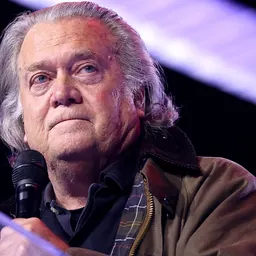
In 2024 Licavoli's case was cited as binding precedent by judges in proceedings concerning the refusal to comply with a Congressional subpoena from the January 6th Committee by both Peter Navarro and Steve Bannon.
Don’t just read it —
keep it.
Full-length biographies made to live with: read them, listen on the way to work, watch them tonight.
- E-book
- Audio
- Video
Instant download · yours to keep · every purchase keeps this site free
Important facts
People in Peter Licavoli's life
Named in this biography and alive at the same time




Contemporaries
People whose lives overlapped Peter Licavoli's



Frequently asked questions
Who was Peter Licavoli?
American mobster (1902–1984)
When was Peter Licavoli born?
Peter Licavoli was born on 7 June 1902.
When did Peter Licavoli die?
Peter Licavoli died on 11 January 1984.
Sources & further reading
Cite this page
APA: Biography.guide. (2026). Peter Licavoli. https://biography.guide/peter-licavoli/
MLA: "Peter Licavoli." Biography.guide, https://biography.guide/peter-licavoli/.
Chicago: "Peter Licavoli." Biography.guide. https://biography.guide/peter-licavoli/.
Data last updated: 2026-09-20 · Spot an error? Report a correction.
Page generated 2026-09-27 05:26 UTC