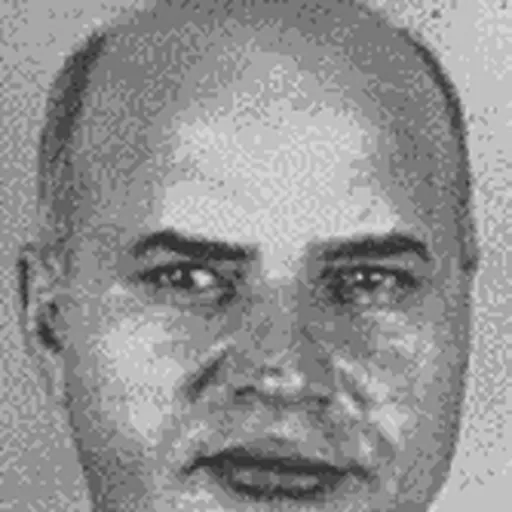
Angelo Meli
American mobster
About Angelo Meli
Lived 1897 – 1969 (aged 72). Angelo Meli was an Italian and American mobster.
Angelo Meli (; February 10, 1897 – December 1, 1969) was an Italian-American mobster who became a consigliere and then leading Chairman of the Detroit Partnership criminal organization of La Cosa Nostra.
Early life Angelo Meli was born on February 10, 1897, in San Cataldo, Sicily, the youngest son of 13 children, born to Vincenzo Meli and Maria Antonia Gugaglio. Meli immigrated to the United States at the age of 17, settling in Scranton, Pennsylvania, to work as a coal miner.
In 1924, Meli married Jennie Dimercurio, In May 1929, Meli became a naturalized citizen at the age of 32 through the US District Court in Brooklyn, New York. Before his death, he had 16 grandchildren.
In 1945, Meli's niece, Marie Antoinette Meli, married attorney Bill Bufalino, a cousin of Northeastern Pennsylvania mob boss Russell Bufalino. In 1950, Meli's son, Vincent, married Pauline Perrone, daughter of Santo Perrone, a Detroit bootlegger.
Criminal career Angelo Meli moved to the city of Detroit in 1915 and soon became affiliated with the Gianola Mob. In 1919, in the wake of the Gianola-Vitale War, 'Singing' Sam Catalanotte, Meli, Chester LaMare, and Leo Cellura started the West Side Mob of Hamtramck, Michigan.
In the early 1920s, backed by former Gianola gang member Sam Catalanotte's liquor and vice rackets, Meli, Cellura, and LaMare opened up the Venice Cafe in Detroit. The West Side Mob excelled in extorting brothels, gambling houses and bootlegging operations. With Meli's assistance, LaMare soon dominated crime in Detroit. It required an effort by state investigators on recommendations from Michigan Governor, Alex Groesbeck, to smash the organization. By 1927 he was able to resume his position as the leader of the Westside Mob.
After Catalanotte's death on February 14, 1930, LaMare and the West Side Mob began raiding Meli-controlled speakeasies, and liquor storage houses. Meli responded by ordering LaMare's murder,
The Crosstown Mafia War (1930-1931) Angelo Meli was believed to be the leader of the dominant wing of warring Detroit gangs in 1930. It is theorized that Chester LaMare sought to eliminate Meli and Zerrilli as rivals by setting up a phony peace meeting at the Vernor Highway Fish Market on May 31. Meli, wary, sent Gaspare Scibilia and Sam Parina in his place and they were shot and killed by LaMare gangsters. Following these murders, LaMare went into hiding.
Following was a slew of other mob-related murders, collectively known as the Crosstown Mafia War. It is believed that both West and East Side Gangs of Detroit, including that of Angelo Meli, were involved in these killings. According to deputy chief of detectives Robert A. MacPherson, Zerilli claimed that Meli gangsters were not engaging in this warfare, but merely seeking to kill LaMare. Nick Dellabonte—who, alongside Frank Salimone, was charged with the murder of patrolman Clause Lanstra on June 1, 1930—was the brother-in-law of Angelo Meli. Dellabonte admitted to hiding from police in Meli's home for the month following the murders. On October 27, 1930, police raided Meli's Capitol Coal Co. seeking Meli for questioning and discovered machine gun shipments. It was also discovered that Meli had been armoring his automobiles in Detroit. Seven of Meli's men were subpoenaed by police, but he was still in hiding at the time.
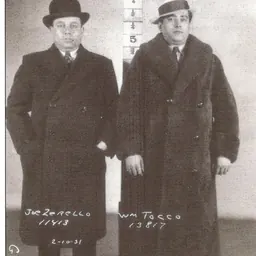
After the establishment of the Partnership Once the Detroit Partnership was established, Meli became the first and longest serving consigliere. He was considered to be one of the five members of the Ruling Council of the Partnership, along with Joseph Zerilli, Peter Licavoli, Black Bill Tocco, and John Priziola. He was a major figure in illegal weapons smuggling and in settling labor disputes. Smuggling liquor across the border from Canada was also a very lucrative practice for Meli and the Partnership. Meli's involvement in labor racketeering helped establish Jimmy Hoffa's rise in the Teamsters Union. He suffered only one conviction; on charges of carrying a concealed weapon. Meli had extensive legitimate business holdings in Michigan area, including a motel, a farm, a trucking company, a gas station, and two different music stores. He also had holdings in a warehouse and a cold storage facility. Over time, as Meli's health declined, he began to spend less time working with the Partnership, and spent more time at his residence in Fort Lauderdale, Florida.
Death Meli died at his Fort Lauderdale residence on December 1, 1969. On December 6, 1969, he was buried in Holy Sepulchre Cemetery in Southfield, Michigan.
Don’t just read it —
keep it.
Full-length biographies made to live with: read them, listen on the way to work, watch them tonight.
- E-book
- Audio
- Video
Instant download · yours to keep · every purchase keeps this site free
Important facts
People in Angelo Meli's life
Named in this biography and alive at the same time




Related people
Same field, nearest in time



Contemporaries
People whose lives overlapped Angelo Meli's



Frequently asked questions
Who was Angelo Meli?
American mobster (1897-1969)
When was Angelo Meli born?
Angelo Meli was born on 10 February 1897 in San Cataldo.
When did Angelo Meli die?
Angelo Meli died on 1 December 1969 in Fort Lauderdale.
What was Angelo Meli's occupation?
Angelo Meli was a mobster.
What nationality was Angelo Meli?
Angelo Meli was Italian and American.
Sources & further reading
Cite this page
APA: Biography.guide. (2026). Angelo Meli. https://biography.guide/angelo-meli/
MLA: "Angelo Meli." Biography.guide, https://biography.guide/angelo-meli/.
Chicago: "Angelo Meli." Biography.guide. https://biography.guide/angelo-meli/.
Data last updated: 2026-09-22 · Spot an error? Report a correction.
Portrait: Wikimedia Commons · author & licence
Page generated 2026-09-27 05:02 UTC