
About Peter Ivers
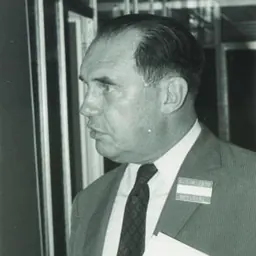
Lived 1946 – 1983 (aged 36). Peter Ivers was an American songwriter, singer, musician and television presenter.
Peter Scott Ivers (born Peter Scott Rose, September 20, 1946 – March 3, 1983) was an American musician, singer, songwriter and television personality. He served as host of the experimental music television show New Wave Theatre. Despite Ivers never having achieved mainstream success, biographer Josh Frank has described him as being connected by "a second degree to every major pop culture event of the last 30 years."
A native of Brookline, Massachusetts, Ivers' primary instrument was the harmonica and at a concert in 1968, Muddy Waters referred to him as "the greatest harp player alive." After migrating to Los Angeles, Ivers was signed by Van Dyke Parks and Lenny Waronker to a $100,000 contract as a solo artist with Warner Bros. Records in the early 1970s. His albums Terminal Love (1974) and Peter Ivers (1976) sold poorly but later earned a cult following. Later in his career, he wrote songs that were recorded by Diana Ross and the Pointer Sisters.
In 1983, Ivers was murdered under mysterious circumstances and the crime remains unsolved.
Life and career Early life Peter Ivers was born in Illinois on September 20, 1946, and spent the first two years of his life in Chicago. His mother Merle Rose was a homemaker; his father Jordan Rose was a physician, and became ill with lung cancer when Peter was two years old. Shortly after Jordan was diagnosed, the family relocated to Arizona in an attempt to help him recover. However, his health declined, and Jordan died in 1949.
Merle quickly remarried to Paul Isenstein, a businessman from the Boston area. She didn't care for his last name, and picked the last name "Ivers" out of the phone book as her new married name (Paul also took the last name, in an attempt to win her affection). Merle was a free spirit and doting mother, who exposed young Peter to a wide variety of music.
From about age four, Peter was raised in Brookline, a suburb of Boston. He attended the Roxbury Latin School and then Harvard University, majoring in classical languages, but chose a career in music. He started playing harmonica with the Boston-based band Street Choir.
Early career Ivers embarked on a solo career in 1969 with the Epic release of his debut, Knight of the Blue Communion, featuring lyrics written by Tim Mayer and sung by Sri Lankan jazz diva Yolande Bavan. In 1971 he replaced Bavan with Asha Puthli on Take It Out On Me, his second album for Epic. The single from this second album, a cover of the Marvin Gaye number, "Ain't That Peculiar", backed by Ivers' original, "Clarence O' Day", was released and briefly entered the Top 100 Singles Billboard charts but the album was shelved by Epic (only finally seeing the light of day in 2009).
In 1970, WNET and WGBH presented Jesus, A Passion Play for Americans, a play produced by Timothy Mayer, featuring his and Ivers' songs from Knight of the Blue Communion. Other important roles were played by Andreas Teuber, Asha Puthli, Steve Kaplan and Laura Esterman. The work was broadcast as part of the NET Playhouse series. As a rock retelling of the story of Jesus, the work was a precursor to well-known examples of that genre, such as Godspell and Jesus Christ Superstar.
In 1974, Ivers signed with Warner Bros. Records, where he recorded two more albums.
Later career In 1975, Ivers wrote the lyrics to the vocal compositions on the Threshold: The Blue Angels Experience film - "Dawn: Eagle Call / The World Is Golden Too", "Noon: Rise Up Call / Wings / Blues Anthem" and "Night: Night Angels / She Won't Let Go". All were sung by Jim Connor.
In 1976, Ivers was asked by David Lynch to write a song for his movie, Eraserhead. Ivers penned "In Heaven (The Lady in the Radiator Song)", which became the most well-known composition from the film. He also scored the Ron Howard film Grand Theft Auto the following year. In 1979 he scored the fifth episode of the first season of B.J. and the Bear.
In 1977, Ivers produced a synth-pop/disco album for Roderick Taylor titled Victory in Rock City.
Ivers' best friend was Harvard classmate Douglas Kenney, founder of the National Lampoon. Ivers played "Beautiful Dreamer" on the harmonica at Kenney's funeral. Ivers was also a close friend of comedian John Belushi, who likewise preceded him in death.
In 1981, Ivers produced the Circus Mort EP featuring Swans front man Michael Gira and avant-garde drummer Jonathan Kane. 1981 also found Ivers tapped by David Jove to host New Wave Theatre on Los Angeles TV station KSCI which was shown irregularly as part of the weekend program Night Flight on the fledgling USA Network. The program was a frantic cacophony of music, theater and comedy, lorded over by Ivers with his manic presentation. Using a method of filming known as "live taped", the show was the first opportunity for many alternative rock musicians to receive nationwide exposure. Notable bands who appeared on the show included The Angry Samoans, Dead Kennedys, 45 Grave, Fear, Suburban Lawns and The Plugz.
Also in 1981 Ivers experienced commercial success having written a song with John Lewis Parker that became an R&B top ten hit for Phyllis Hyman called "Can't We Fall in Love Again?" Ivers formed a songwriting team with Franne Golde, and several of their compositions were picked up by successful artists, like "Little Boy Sweet" recorded by The Pointer Sisters, "All We Really Need" recorded by Marty Balin, "Let's Go Up" recorded by Diana Ross and "Louisiana Sunday Afternoon" and "Give Me Your Heart Tonight"; both recorded by Kimiko Kasai. Ivers also appears in the film Jekyll and Hyde...Together Again (1982) performing his song "Wham It" and had another composition "Light Up My Body" featured in the soundtrack.
In 1983, he performed on the Antilles Records release Swingrass '83.
Death and investigation On March 3, 1983, Peter Ivers was found bludgeoned to death with a hammer in his Los Angeles loft space apartment. The killer was never identified.
Josh Frank and Charlie Buckholtz wrote a book about Ivers' life, art and mysterious death, In Heaven Everything Is Fine: The Unsolved Life of Peter Ivers and the Lost History of New Wave Theatre, published by Simon & Schuster in 2008. On the basis of new information unearthed during the creation of the book, the Los Angeles Police Department's cold case department reopened their investigation into Ivers' death.
In 2023, director Penelope Spheeris hosted a podcast about Ivers, Peter and the Acid King. The series focused on Ivers' murder and his relationship with David Jove, the titular "acid king."
Discography Knight of the Blue Communion (Epic, 1969) Terminal Love (Warner Bros., 1974) Peter Ivers (Warner Bros., 1976; also known as Peter Peter Ivers) Posthumous releases Nirvana Peter (Warner Bros., 1985; compilation of previous Warner recordings with bonus tracks) The Untold Stories (K2B2 Records, 2008) Take It Out on Me (recorded for Epic in 1971; released in 2009 by Wounded Bird Records) Becoming Peter Ivers (RVNG Intl., 2019)
Other appearances Buellgrass – Big Night at Ojai (K2B2 Records, 1983); released on CD as Buellgrass – Across the Tracks John Klemmer – Magic and Movement (Impulse!, 1974)
Don’t just read it —
keep it.
Full-length biographies made to live with: read them, listen on the way to work, watch them tonight.
- E-book
- Audio
- Video
Instant download · yours to keep · every purchase keeps this site free
Important facts
People in Peter Ivers's life
Named in this biography and alive at the same time






Related people
Same field, nearest in time






Contemporaries
People whose lives overlapped Peter Ivers's


Frequently asked questions
Who was Peter Ivers?
American musician (1946-1983)
When was Peter Ivers born?
Peter Ivers was born on 20 September 1946 in Illinois.
When did Peter Ivers die?
Peter Ivers died on 3 March 1983 in Los Angeles.
What was Peter Ivers's occupation?
Peter Ivers was a songwriter, singer, musician and television presenter.
What nationality was Peter Ivers?
Peter Ivers was American.
Sources & further reading
Cite this page
APA: Biography.guide. (2026). Peter Ivers. https://biography.guide/peter-ivers/
MLA: "Peter Ivers." Biography.guide, https://biography.guide/peter-ivers/.
Chicago: "Peter Ivers." Biography.guide. https://biography.guide/peter-ivers/.
Data last updated: 2026-09-20 · Spot an error? Report a correction.
Page generated 2026-09-27 05:22 UTC