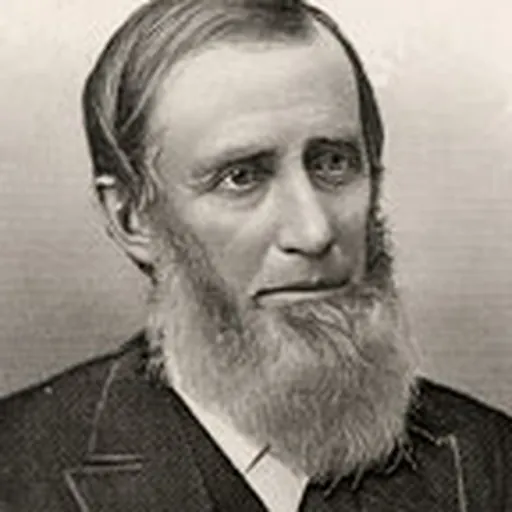
About Peter Hitchcock
Lived 1781 – 1853 (aged 71). Peter Hitchcock was an American politician, lawyer and judge.
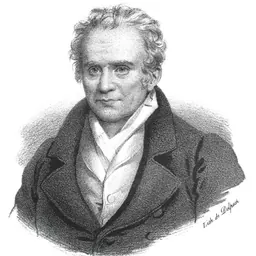
Peter Marshall Hitchcock (October 19, 1781 – March 4, 1853 ) was an attorney, teacher, farmer, soldier, legislator, and jurist. His judicial career included 28 years service on the Ohio Supreme Court, 21 years of them as Chief Justice. (Some sources erroneously give his date of death as March 4, 1854.)
Early life, education and family
Peter Hitchcock was born in Cheshire, Connecticut, the youngest son of Valentine Hitchcock (1741–1809) and Sarah Hotchkiss (1743–1802). His father was a tailor and landowner. Peter taught in a district school during the winter and worked on a farm in the summer to earn the money for his education. He entered college in the sophomore year, pursuing classical studies and was graduated from Yale College in 1801. He studied law with Barzillai Slosson (Yale 1791), of Kent, Connecticut, and was admitted to the bar in 1804 and commenced practice in Cheshire. On December 12, 1805 in Cheshire, he married Nabbe Cook (1784–1867) (sometimes written Nabby Cook).
In 1806, they moved to Burton, Ohio, becoming one of the first families to settle in that township of Geauga County, Ohio in the Western Reserve. They had ten children, five sons and five daughters, all born in Ohio. One son and one daughter died in infancy. Two of the sons also were graduated from Yale. Hitchcock spent the early years improving his farm, establishing his law practice and teaching. Peter Hitchcock was the first teacher at Burton Academy, which eventually became a part of Case Western Reserve University.
Practice of law and early public career
After a few years, the population of the county increased sufficiently to provide him an extensive practice. As an advocate, his style of speech was described as colloquial and logical rather than rhetorical, the more common style of the day. He was always accorded the most profound attention when arguing a case, whether to a jury, a Justice of the Peace or before the judges of the highest courts.
Peter Hitchcock was elected a member of the Ohio House of Representatives in 1810 and elected a member of the Ohio Senate in 1812 serving until 1815. He served as speaker (President) of the Senate in 1815. Hitchcock was nominated for United States Senator in the legislative balloting to replace Thomas Worthington in 1814 and then the full term to replace Joseph Kerr in 1815, failing both times to attract sufficient votes.
Peter Hitchcock was commissioned lieutenant colonel of the Fourth Regiment, Ohio State Militia, in 1814 and then commissioned major general, Fourth Division, Ohio State Militia, in 1816.
Peter Hitchcock was elected as a Democratic-Republican from Ohio's 6th congressional district to the Fifteenth United States Congress. He was not a candidate for renomination in 1818.
Judicial service
The legislature appointed Peter Hitchcock a judge of the Supreme Court of Ohio in 1819 for a seven-year term, and reappointed him to a second term in 1826. Prior to 1831, panels of the Supreme Court traveled over the State in circuit, panels simultaneously holding sessions in different counties of the state. After 1831, it became the practice for the Supreme Court of Ohio to sit en banc at the capital. Judge Peter Hitchcock generally traveled the circuit on horseback or his own Yankee wagon. He would reach a county seat by noon or later, and immediately went to the Clerk's office. All the chancery cases and demurrers, or other papers for the Court, would be in his room and usually settled by the time Court opened the next morning.
His method of preparing to hear a case was to determine the primary question in the case, review the law books, but develop his own line of reasoning. In court, he did not refuse to hear argument, but unless it was quite an important case, or he indicated a desire to hear argument, the members of the Bar were apt to submit directly to his examinations. It was rare that the court's business was not completed in a day.
Partisan maneuvering kept Judge Hitchcock off the court in 1833. Instead he ran and was elected to another term in the Ohio Senate, again serving as speaker. Hitchcock was reappointed to another seven-year term on the court in 1835. In 1842, partisanship again took him off the court until 1845 when he was appointed to another seven-year term. He voluntarily retired in 1852 at the end of his fourth term. Of the twenty-eight years he served on the Supreme Court of Ohio, the last twenty-one of them were as chief justice.
Hitchcock was a Presidential elector in 1844 for Clay/Frelinghuysen.
The honorary degree of Doctor of Laws was conferred on him by Marietta College in 1845 and by Western Reserve College in 1849.
Constitutional convention of 1850
He was elected as a Whig delegate to the Ohio constitutional convention in 1850 called to revise the 1802 constitution. In this capacity he contributed to reorganization of the judicial tribunals of the state, and still continued to discharge his duties on the bench. He was called the "Father of the constitution of 1851."
One of the debates was over granting the power of the veto to the governor. As a good Whig, Judge Peter Hitchcock opposed it:
The convention did not give the governor the veto in the new constitution.
Retired from public life
Peter Hitchcock was the uncle of Seabury Ford, the first Ohio governor from the Western Reserve. Peter Hitchcock died in Painesville, Ohio, while stopped at the home of his eldest son on his way home from Columbus, Ohio to Burton. He was interred in Welton Cemetery, Burton, Ohio.
Don’t just read it —
keep it.
Full-length biographies made to live with: read them, listen on the way to work, watch them tonight.
- E-book
- Audio
- Video
Instant download · yours to keep · every purchase keeps this site free
Important facts
People in Peter Hitchcock's life
Named in this biography and alive at the same time


Related people
Same field, nearest in time



Contemporaries
People whose lives overlapped Peter Hitchcock's

Frequently asked questions
Who was Peter Hitchcock?
American politician (1781-1853)
When was Peter Hitchcock born?
Peter Hitchcock was born on 19 October 1781 in Cheshire.
When did Peter Hitchcock die?
Peter Hitchcock died on 4 March 1853 in Painesville.
What was Peter Hitchcock's occupation?
Peter Hitchcock was a politician, lawyer and judge.
What nationality was Peter Hitchcock?
Peter Hitchcock was American.
Sources & further reading
Cite this page
APA: Biography.guide. (2026). Peter Hitchcock. https://biography.guide/peter-hitchcock/
MLA: "Peter Hitchcock." Biography.guide, https://biography.guide/peter-hitchcock/.
Chicago: "Peter Hitchcock." Biography.guide. https://biography.guide/peter-hitchcock/.
Data last updated: 2026-09-23 · Spot an error? Report a correction.
Portrait: Wikimedia Commons · author & licence
Page generated 2026-09-27 05:05 UTC