
About Peter Frank Stott
Lived 1927 – 1993 (aged 66). Peter Frank Stott was a British civil engineer and civil engineering, known for Institution of Civil Engineers.
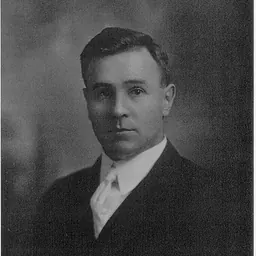
Peter Frank Stott CBE (8 August 1927 – 16 August 1993) was a British civil engineer. Specialising in prestressed concrete, he designed several bridges in Australia. Stott's work on the Hammersmith flyover brought him to the attention of the London County Council where he was appointed deputy chief engineer. He subsequently became chief engineer and was appointed Director of Highways and Transportation upon the creation of the Greater London Council. He became one of the first joint controllers at the council when the planning department became part of his remit. Stott left the council to become Director-General of the National Water Council. He was appointed a Commander of the Order of the British Empire in 1978 and in 1983 became a professor at King's College London. Stott wrote a 1987 report on the use of open level crossings on the rail network that led to a significant change in British Rail policy and served as president of the Institution of Civil Engineers for 1989–90.
Career Stott was born in London on 8 August 1927. He worked as a structural engineer and by the age of 28 was made a partner in the firm of Guy Maunsell. Stott was an expert in the use of prestressed concrete and designed the Kings Avenue Bridges in Canberra, Gladesville Bridge in Sydney, Tasman Bridge near Hobart and the Narrows Bridge in Perth – all in Australia. After he completed the design of the Hammersmith flyover for London County Council (LCC) he was appointed deputy chief engineer by the LCC in 1963. Stott had particular responsibility for the council's road network before becoming chief engineer upon the death of Francis Fuller. Between 1983 and 1989 Stott was Nash Professor of Civil Engineering at King's College London. Stott's report was published in August 1987 and led to a significant change in British Rail policy and the installation of barriers or reduction of train speeds at 75 locations.
Stott was appointed chairman of the Quality Scheme for Ready Mixed Concrete in 1989. He served three terms on the council of the Institution of Civil Engineers and was its president between November 1989 and November 1990. Stott's portrait at the institution shows the Hammersmith Flyover in the background.
Don’t just read it —
keep it.
Full-length biographies made to live with: read them, listen on the way to work, watch them tonight.
- E-book
- Audio
- Video
Instant download · yours to keep · every purchase keeps this site free
Important facts
People in Peter Frank Stott's life
Named in this biography and alive at the same time


Related people
Same field, nearest in time

Contemporaries
People whose lives overlapped Peter Frank Stott's


Frequently asked questions
Who was Peter Frank Stott?
British civil engineer (1927-1993)
When was Peter Frank Stott born?
Peter Frank Stott was born on 8 August 1927 in London.
When did Peter Frank Stott die?
Peter Frank Stott died on 16 August 1993 in Devon.
What was Peter Frank Stott's occupation?
Peter Frank Stott was a civil engineer and civil engineering.
What was Peter Frank Stott known for?
Peter Frank Stott was known for Institution of Civil Engineers.
What nationality was Peter Frank Stott?
Peter Frank Stott was British.
Sources & further reading
· Wikipedia: Peter Frank Stott
Cite this page
APA: Biography.guide. (2026). Peter Frank Stott. https://biography.guide/peter-frank-stott/
MLA: "Peter Frank Stott." Biography.guide, https://biography.guide/peter-frank-stott/.
Chicago: "Peter Frank Stott." Biography.guide. https://biography.guide/peter-frank-stott/.
Data last updated: 2026-09-22 · Spot an error? Report a correction.
Page generated 2026-09-27 05:19 UTC