
About Peter Fenwick
Lived 1935 – 2024 (aged 89). Peter Fenwick was a British physician, scientist, psychologist, psychiatrist, neurophysiologist and neuropsychiatrist, known for Near-death studies.
Peter Brooke Cadogan Fenwick (25 May 1935 – 22 November 2024) was a British neuropsychiatrist and neurophysiologist who is known for his studies of epilepsy and end-of-life phenomena.
Background Fenwick was born in Nairobi in 1935, where his family was living at the time. His English father was working on a coffee farm, and his Australian mother was a doctor. where he studied Natural Science.
Career Fenwick was a senior lecturer at King's College, London, where he worked as a consultant at the Institute of Psychiatry. He was the Consultant Neuropsychologist at both the Maudsley, and John Radcliffe hospitals, and also provided services for Broadmoor Hospital. He worked with the Mental Health Group at the University of Southampton, and held a visiting professorship at the Riken Neurosciences Institute in Japan. an organisation that supports research into end-of-life experiences. He was the President of the British branch of the International Association for Near-Death Studies. The first study from the project was called The AWARE (AWAreness during REsuscitation) study and was published in 2014.
Fenwick was part of the editorial board for a number of journals, including the Journal of Neurology, Neurosurgery, and Psychiatry, the Journal of Consciousness Studies and the Journal of Epilepsy and Behaviour. Since then, he collected and analysed more than 300 examples of near-death experiences.
He was criticised by some in the medical community for arguing that human consciousness can survive bodily death. Fenwick argued that human consciousness may be more than just a function of the brain.
The plain fact is that none of us understands these phenomena. As for the soul and life after death, they are still open questions, though I myself suspect that NDEs are part of the same continuum as mystical experiences.
Fenwick and his wife are co-authors of The Art of Dying, a study of the spiritual needs of near-death patients. The Fenwicks argue that modern medical practices have devalued end-of-life experiences, and call for a more holistic approach to death and dying. In 2003, Fenwick and Sam Parnia appeared in the BBC documentary "The Day I Died". In the documentary Parnia and Fenwick discussed their belief that research from near-death experiences indicates the mind is independent of the brain. According to psychologist and lecturer Susan Blackmore the documentary misled viewers with beliefs that are rejected by the majority of scientists. Blackmore criticized the documentary for biased and "dishonest reporting".
Fenwick and Parnia have claimed that research from NDEs may show the "mind is still there after the brain is dead". The neurologist Michael O'Brien wrote "most people would not find it necessary to postulate such a separation between mind and brain to explain the events," and suggested that further research is likely to provide a physical explanation for near-death experiences. Robert Todd Carroll wrote that Fenwick has made metaphysical assumptions and dismissed possible psychological and physiological explanations for near-death experiences.
Personal life and death Fenwick's interests included hill-walking and fishing. He was married to Elizabeth (née Roberts) Fenwick, who co-authored many of his books.
In 2019, Fenwick published his autobiography, Shining Light on Transcendence: The Unconventional Journey of a Neuroscientist, in which he described transformative meetings and experiences with the philosopher Alain Forget.
Selected bibliography With Elizabeth Fenwick The Art of Dying (Continuum, 2008) Past Lives: An Investigation into Reincarnation Memories (Berkley, 2001) The Hidden Door: Understanding and Controlling Dreams (Berkley Publishing Group, 1999) The Truth in the Light: An Investigation of Over 300 Near-Death Experiences (Berkley Trade, 1997) Living with Epilepsy (Bloomsbury, 1996)
Don’t just read it —
keep it.
Full-length biographies made to live with: read them, listen on the way to work, watch them tonight.
- E-book
- Audio
- Video
Instant download · yours to keep · every purchase keeps this site free
Important facts
People in Peter Fenwick's life
Named in this biography and alive at the same time


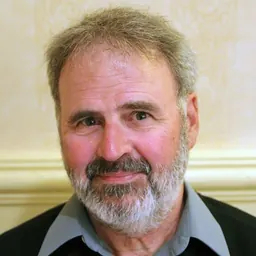




Related people
Same field, nearest in time
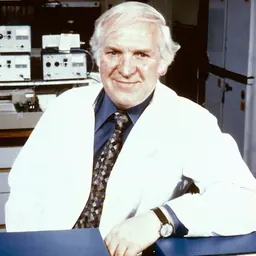
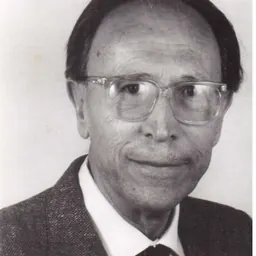

Contemporaries
People whose lives overlapped Peter Fenwick's




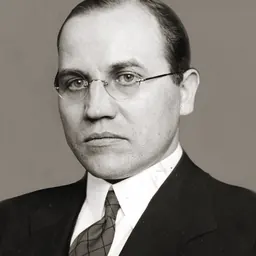

Frequently asked questions
Who was Peter Fenwick?
British neuropsychologist (1935-2024)
When was Peter Fenwick born?
Peter Fenwick was born on 25 May 1935 in Nairobi.
When did Peter Fenwick die?
Peter Fenwick died on 22 November 2024 in London.
What was Peter Fenwick's occupation?
Peter Fenwick was a physician, scientist, psychologist, psychiatrist, neurophysiologist and neuropsychiatrist.
What was Peter Fenwick known for?
Peter Fenwick was known for Near-death studies.
What nationality was Peter Fenwick?
Peter Fenwick was British.
Sources & further reading
· DBpedia: Peter Fenwick (neuropsychologist)
Cite this page
APA: Biography.guide. (2026). Peter Fenwick. https://biography.guide/peter-fenwick-physician/
MLA: "Peter Fenwick." Biography.guide, https://biography.guide/peter-fenwick-physician/.
Chicago: "Peter Fenwick." Biography.guide. https://biography.guide/peter-fenwick-physician/.
Data last updated: 2026-09-20 · Spot an error? Report a correction.
Page generated 2026-09-27 05:10 UTC