
Peter Doherty
Northern Irish footballer
About Peter Doherty
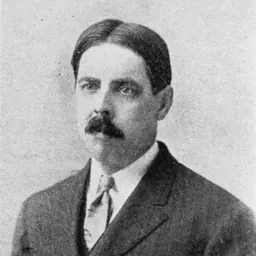
Lived 1913 – 1990 (aged 76). Peter Doherty was a British association football player and association football coach.
Peter Dermot Doherty (5 June 1913 – 6 April 1990) was a Northern Irish international footballer and manager.
An inside-left, he was one of the top players of his time, gaining 16 caps for Ireland (IFA). He played for Coleraine and Glentoran, winning the Irish Cup with Glentoran in 1933, before winning a move to English club Blackpool later in the year. He was sold to Manchester City in February 1936 for a fee of £10,000 and helped the club to win the First Division title for the first time in the 1936–37 season. The outbreak of World War II cost him the chance to play competitive football during his peak years, and he was transferred to Derby County as the war drew to a close. He won the FA Cup with Derby, scoring in the 1946 FA Cup final victory over Charlton Athletic. He moved on to Huddersfield Town later in the year.
In April 1949, he was appointed player-manager of Doncaster Rovers. He was also top-scorer as the club won the Third Division North title during the 1949–50 season. The club then spent the next seven seasons in the Second Division before he resigned in January 1958. He also worked as Northern Ireland's first national team manager from October 1951 to May 1962. He used his position to help Doncaster sign talented Irish players whilst helping his nation qualify for the 1958 FIFA World Cup, where they reached the quarter-finals. He spent 1958 to 1960 as Bristol City manager. He later scouted for Liverpool and was in the first group of 22 players to be inducted into the English Football Hall of Fame.
Playing career
Doherty (left), in his Manchester City days, shaking hands with Jimmy Hampson, of his first club, Blackpool, in the late 1930s. The two were former teammates at Blackpool.
Born in Magherafelt, County Londonderry, Doherty began his career with Glentoran in the Irish League. He worked first as a bricklayer and then as a bus conductor. early in the 1933–34 season Doherty joined English club Blackpool for a £2,000 fee, at the age of 19. Blackpool needed the money urgently, and Doherty was summoned from his lunch to report to Bloomfield Road. The Irishman tried hard to persuade Blackpool directors that he did not wish to leave the club, for he was due to marry a local girl and had just bought a new house in the town. The fee was an exceptionally high transfer fee for the period; it came within £1,000 of the British record. Doherty later described the remainder of his first Manchester City season as "uneventful", but his second was to be anything but.
Manchester City started the 1936–37 season poorly and were in the bottom half of the table until December. However, Doherty was scoring goals regularly. A goal in a 5–3 Christmas day loss to Grimsby Town was his twelfth of the season. Christmas proved to be a turning point for the club, as a win against Middlesbrough the following day was the start of a long unbeaten run. Doherty scored the first goal in a 2–0 win, and City reached the top of the table. During a guest appearance for Port Vale in 1945, he famously went to take a penalty, but instead of shooting he laid it off to a teammate who scored.
After the conclusion of the war, he transferred to Derby County, with whom he won the FA Cup, scoring a goal in the final itself as Derby beat Charlton Athletic 4–1 at Wembley Stadium. In December 1946, Doherty moved to David Steele's Huddersfield Town for a fee of over £9,000 after requesting a transfer. Doherty was unhappy with the directors who opposed his plan to secure his future by taking over the Arboretum Hotel and an earlier dispute over FA Cup final tickets. The "Terriers" boasted a powerful front five of Albert Bateman, Jimmy Glazzard, Alf Whittingham, Doherty and Vic Metcalfe. However, a weak defence saw them struggle in the lower reaches of the First Division throughout the 1946–47 season, 1947–48 and 1948–49 seasons.
Management career Doncaster Rovers He made his final move to Doncaster Rovers in April 1949, where he assumed the role of player-manager. He scored 30 goals from 39 games in the 1949–50 season and led "Donny" to promotion as champions of the Third Division North. At the tournament itself, Northern Ireland qualified for the knockout stages after finishing second in their group, having beaten Czechoslovakia, lost to Argentina and drew with West Germany. Having finished level on points with Czechoslovakia, they then beat the Czechs 2–1 in a play-off game, with Peter McParland scoring a brace at the Malmö Stadion. They were then eliminated after losing 4–0 against France in the quarter-finals.
Bristol City He also managed Bristol City from 1958 to 1960. The "Robins" finished tenth in the Second Division at the end of the 1958–59 season and were relegated at the end of the 1959–60 campaign.
Preston North End (assistant) From October 1970 to January 1973, he held the position of assistant manager at Preston North End, working alongside Alan Ball Sr who had been appointed Preston's manager during the 1970 close season. In this role, he was immediately successful, with Preston becoming Third Division champions at their first attempt in the 1970–71 season.
Style of management His coaching techniques were revolutionary at the time. He emphasised ball practice, and instead of endless laps of the pitch, Doherty suggested volleyball "to promote jumping, timing and judgement"; basketball "to encourage split-second decision-making and finding space"; and walking football, "to build up calf muscles".
Later life and death After management, Doherty went into business. He returned to football becoming a scout for Coventry City during the 1967-68 season.
In later life he became a scout for Liverpool, helping to unearth such talents as Kevin Keegan. Following his death in 1990, there is a plaque to mark his birthplace in Magherafelt.
Division!!Apps!!Goals!!Apps!!Goals!!Apps!!Goals
1933–34 Second Division
1934–35 Second Division
1935–36 Second Division
82!!28!!5!!1!!87!!29
1935–36 First Division
1936–37 First Division
1937–38 First Division
1938–39 Second Division
119!!74!!11!!5!!130!!79
1945–46
1946–47 First Division
15!!7!!12!!10!!27!!17
1946–47 First Division
1947–48 First Division
1948–49 First Division
83!!33!!4!!3!!87!!36
1949–50 Third Division North
1950–51 Second Division
1951–52 Second Division
1952–53 Second Division
103!!56!!6!!3!!109!!59
402!!198!!38!!22!!440!!220
International statistics
Managerial statistics + Managerial record by team and tenure
Derby County FA Cup: 1945–46
Awards English Football Hall of Fame: inducted 2002 Manchester City Hall of Fame: inducted 2004
As a player-manager Doncaster Rovers Football League Third Division North: 1949–50
Don’t just read it —
keep it.
Full-length biographies made to live with: read them, listen on the way to work, watch them tonight.
- E-book
- Audio
- Video
Instant download · yours to keep · every purchase keeps this site free
Important facts
People in Peter Doherty's life
Named in this biography and alive at the same time





Related people
Same field, nearest in time

Contemporaries
People whose lives overlapped Peter Doherty's




Frequently asked questions
Who was Peter Doherty?
Northern Irish footballer (1913-1990)
When was Peter Doherty born?
Peter Doherty was born on 5 June 1913 in Magherafelt.
When did Peter Doherty die?
Peter Doherty died on 6 April 1990 in Poulton-le-Fylde.
What was Peter Doherty's occupation?
Peter Doherty was an association football player and association football coach.
What nationality was Peter Doherty?
Peter Doherty was British.
Sources & further reading
· DBpedia: Peter Doherty (footballer)
Cite this page
APA: Biography.guide. (2026). Peter Doherty. https://biography.guide/peter-doherty/
MLA: "Peter Doherty." Biography.guide, https://biography.guide/peter-doherty/.
Chicago: "Peter Doherty." Biography.guide. https://biography.guide/peter-doherty/.
Data last updated: 2026-09-20 · Spot an error? Report a correction.
Page generated 2026-09-27 05:01 UTC