
About Peter Cheyney
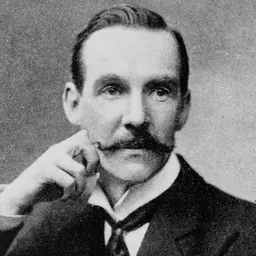
Lived 1896 – 1951 (aged 55). Peter Cheyney was a British writer, novelist, journalist, police officer, crime fiction writer and screenwriter.
Reginald Evelyn Peter Southouse-Cheyney (22 February 1896 – 26 June 1951) was a British crime fiction writer who flourished between 1936 and 1951. Cheyney is perhaps best known for his short stories and novels about agent/detective Lemmy Caution, which, starting in 1953, were adapted into a series of French movies, all starring Eddie Constantine (however, the best known of these – the 1965 science fiction film Alphaville – was not directly based on a Cheyney novel). Another popular creation was the private detective Slim Callaghan who also appeared in a series of novels and subsequent film adaptations.
Although out of print for many years, Cheyney's novels have never been difficult to find second-hand. Several of them have recently been made available as e-books.
Early life Peter Cheyney was born in Whitechapel in 1896, the youngest of five children, and educated at the Mercers' School in the City of London. He began to write skits for the theatre as a teenager, but this ended when the First World War began. In 1915 he enlisted in the British Army as a volunteer, in 1916 was wounded on active service and published two volumes of poetry, Poems of Love and War and To Corona and Other Poems. The next year, 1917, his military service ended.
Starting in the late 1920s, Cheyney worked for the Metropolitan Police as a police reporter and crime investigator. Until he became successful as a crime novelist, he was often quite poor. It is said that he got his start through a bet; when Cheyney remarked that anyone could write a book in the idiom of the American thriller, he was wagered five pounds that he could not. Cheyney sold his first story as the result of this bet.
Career and characters Cheyney wrote his first novel, the Lemmy Caution thriller This Man Is Dangerous in 1936 and followed it with the first Slim Callaghan novel, The Urgent Hangman in 1938. The immediate success of these two novels assured him of a flourishing new career, and Cheyney abandoned his work as a freelance investigator. Sales were brisk; in 1946 alone, 1,524,785 copies of his books were sold worldwide.
He was married three times: in 1919 to the stage actress Dorma Leigh (from whom he was divorced in 1931), in 1934 to Kathleen Nora Walter Taberer, and in 1948 to Lauretta Theresa Singer. He had no children.
List of works
Lemmy Caution This Man Is Dangerous (1936) – filmed as This Man Is Dangerous (France; Jean Sacha, 1953) Poison Ivy (1937) – filmed as La môme vert-de-gris (France; Bernard Borderie, 1953) Dames Don't Care (1937) – filmed as The Women Couldn't Care Less (France; Bernard Borderie, 1954) Can Ladies Kill? (1938) Don't Get Me Wrong (1939) – filmed as Vous pigez (France; Victor Trivas and Jacques Doniol-Valcroze, 1955) You'd Be Surprised (1940) Your Deal, My Lovely (1941) – filmed as Your Turn, Darling (France; Bernard Borderie (1963) Never a Dull Moment (1942) You Can Always Duck (1943) I'll Say She Does! (1945) – filmed as Women Are Like That (France; Bernard Borderie, 1960) G-Man at the Yard (1946)
Slim Callaghan The Urgent Hangman (1938) – filmed as Meet Mr. Callaghan (UK; Charles Saunders, 1954) Dangerous Curves (1939), US title: Callaghan You Can't Keep the Change (1940) It Couldn't Matter Less (1941), US title: Set-up for Murder – filmed as More Whiskey for Callaghan (France; Willy Rozier, 1955) Sorry You've Been Troubled (1942), US title: Farewell to the Admiral - filmed as Your Turn, Callaghan (France; Willy Rozier, 1955) They Never Say When (1944) Uneasy Terms (1946) – filmed under the same title in 1948 Calling Mr. Callaghan (1953) – collected short stories
Dark Series A loose series grouping together several different protagonists: Dark Duet (1942), also as The Counterspy Murders The Stars Are Dark (1943), also as The London Spy Murders The Dark Street (1944), also as The Dark Street Murders Sinister Errand (1945), also as Sinister Murders – filmed as Diplomatic Courier (US; Henry Hathaway, 1952) Dark Hero (1946), also as The Case of the Dark Hero Dark Interlude (1947), also as The Terrible Night Dark Wanton (1948), also as Case of the Dark Wanton You Can Call It a Day (1949), also as The Man Nobody Saw Dark Bahama (1950), also as I'll Bring Her Back Lady, Behave! (1950), also as Lady Beware Ladies Won't Wait (1951), also as Cocktails and the Killer
Other novels Another Little Drink (1940), also as Premeditated Murder and A Trap for Bellamy Night Club (1945), also as Dressed to Kill Dance Without Music (1947). Serialised, News of the World. Try Anything Twice (1948), also as Undressed to Kill One of Those Things (1949), also as Mistress Murder
Short story collections You Can't Hit a Woman (1937) Knave Takes Queen (1939; enlarged edition, 1950) Mr. Caution – Mr. Callaghan (1941) Making Crime Pay (1944), collected stories, articles, radio plays The Curiosity of Etienne MacGregor (1947), also as The Sweetheart of the Razors No Ordinary Cheyney (1948) Velvet Johnnie (1952) The Adventures of Julia (1954), US title: The Killing Game He Walked in Her Sleep (1954), also as MacTavish The Mystery Blues (1954), also as Fast Work
Uncollected short fiction The Snow Lady. Morecambe Guardian, 21 March 1930 (Alonso Mactavish) The Snow Man. Hastings & St Leonards Observer, 27 December 1930 (Alonso Mactavish) Angel Unawares. Sheffield Daily Independent Christmas Budget, 19 December 1936 Bread upon the Waters. Rugby Advertiser, 18 February 1938
Uncollected non-fiction Curse of the Crystal. Belfast Telegraph, 1 January 1931 Suicide Walkers - Are You One?. Sunderland Daily Echo & Shipping Gazette, 14 July 1937
Radio plays The Adventures of Alonzo MacTavish, serial, 1939 The Callaghan Touch, serial, 1941 Knave Takes Queen, 1941 The Key, 1941 The Lady Talks, 1942 Again—Callaghan, 1942 The Perfumed Murder, 1943 Concerto for Crooks, 1943 Parisian Ghost, Saturday Night Theatre, April 1943 The Callaghan Come-Back, serial, 1943 The Adventures of Julia, 1945 Way Out, 1945 Pay-off for Cupid, 1946 Duets for Crooks, 1946
Biographies and memoirs A 1954 biography of Cheyney, Peter Cheyney: Prince of Hokum, was written by Michael Harrison. (London: N. Spearman, 1954.)
Cheyney published a semi-autobiographical volume, Making Crime Pay and after his death at least two biographical essays appeared in posthumous collections. An essay by Viola Garvin, "Peter Cheyney" appears in Velvet Johnnie a posthumous collection of Cheyney's short stories (London: Collins, 1952, pages 7–32). The other essay is anonymous. It appears in the Cheyney collection Calling Mr. Callaghan (London: Todd, 1953, pages 7–16).
Don’t just read it —
keep it.
Full-length biographies made to live with: read them, listen on the way to work, watch them tonight.
- E-book
- Audio
- Video
Instant download · yours to keep · every purchase keeps this site free
Important facts
People in Peter Cheyney's life
Named in this biography and alive at the same time




Related people
Same field, nearest in time






Contemporaries
People whose lives overlapped Peter Cheyney's



Frequently asked questions
Who was Peter Cheyney?
British writer (1896–1951)
When was Peter Cheyney born?
Peter Cheyney was born on 22 February 1896 in London.
When did Peter Cheyney die?
Peter Cheyney died on 26 June 1951 in London.
What was Peter Cheyney's occupation?
Peter Cheyney was a writer, novelist, journalist, police officer, crime fiction writer and screenwriter.
What nationality was Peter Cheyney?
Peter Cheyney was British.
Sources & further reading
Cite this page
APA: Biography.guide. (2026). Peter Cheyney. https://biography.guide/peter-cheyney/
MLA: "Peter Cheyney." Biography.guide, https://biography.guide/peter-cheyney/.
Chicago: "Peter Cheyney." Biography.guide. https://biography.guide/peter-cheyney/.
Data last updated: 2026-09-20 · Spot an error? Report a correction.
Page generated 2026-09-27 04:57 UTC