
Pete Conrad
American astronaut and lunar explorer
About Pete Conrad
Lived 1930 – 1999 (aged 69). Pete Conrad was an American military officer, astronaut, aircraft pilot, racing automobile driver, naval aviator and test pilot.
Charles "Pete" Conrad Jr. (June 2, 1930 – July 8, 1999) was an American NASA astronaut, aeronautical engineer, naval officer, aviator, and test pilot who commanded the Apollo 12 mission, on which he became the third person to walk on the Moon. Conrad was selected for NASA's second astronaut class in 1962.
Conrad was born in Philadelphia, Pennsylvania. Despite having dyslexia, he earned a Bachelor of Science degree in aeronautical engineering from Princeton University—which later made him the first Ivy League astronaut—and joined the U.S. Navy. In 1954, Conrad received his naval aviator wings, served as a fighter pilot and, after graduating from the U.S. Naval Test Pilot School (Class 20), as a project test pilot. In 1959, he was an astronaut candidate for Project Mercury.
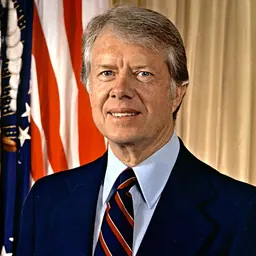
Conrad set an eight-day space endurance record in 1965 along with his Command Pilot Gordon Cooper on his first spaceflight, Gemini 5. Later, Conrad commanded Gemini 11 in 1966, and Apollo 12 in 1969. After Apollo, he commanded Skylab 2, the first crewed Skylab mission, in 1973. On the mission, he and his crewmates repaired significant launch damage to the Skylab space station. For this, President Jimmy Carter awarded him the Congressional Space Medal of Honor in 1978.
After Conrad retired from NASA and the Navy in 1973, he became a vice president of American Television and Communications Company. He went on to work for McDonnell Douglas, where he served as vice president of marketing, senior vice president of marketing, staff vice president of international business development, and vice president of project development. Conrad died in 1999 from internal injuries sustained in a motorcycle accident, aged 69.
Early life and education Charles Conrad Jr. was born on June 2, 1930, in Philadelphia, the third child and the first son of Charles Conrad Sr. and Frances De Rappelage Conrad ( Vinson), into a well-to-do real estate and banking family.
The Great Depression wiped out the Conrad family's fortune, just as it had those of so many others. In 1942, the family lost their manor home in Philadelphia, and then moved into a small carriage house, paid for by Frances's brother, Egerton Vinson. Eventually, Charles Sr., broken down by financial failures, left his family. He was commissioned an Ensign in the U.S. Navy as a Naval ROTC graduate. and became a fighter pilot. He excelled in Navy flight school, and he served for several years as an aircraft carrier-based fighter pilot in the Navy. Conrad also served as a flight instructor in Navy flight schools along the Gulf of Mexico.
Next, Conrad applied for and was accepted by the United States Naval Test Pilot School at Naval Air Station Patuxent River in Patuxent, Maryland. His classmates were future fellow astronauts Wally Schirra and Jim Lovell. He graduated in 1958, as part of Class 20, and was assigned as a Project Test Pilot.
Then when he was asked to deliver a stool sample to the onsite lab, he placed it in a gift box and tied a red ribbon around it. Eventually, he decided that he had had enough. After dropping his full enema bag on the desk of the clinic's commanding officer, he walked out.
After his NASA episode, Conrad returned to the Navy as a fighter pilot, serving in the Pacific Fleet's second operational F-4 Phantom II squadron, VF-96, on board . Thereafter, when NASA announced its search for a second group of astronauts, Mercury veteran Alan Shepard, who knew Conrad from their time as naval aviators and test pilots, approached Conrad and persuaded him to reapply. This time, Conrad found the medical tests less invasive, and in June 1962 he was selected to join NASA.
NASA career Project Gemini
Conrad joined NASA as part of the second group of astronauts, known as the New Nine, on September 17, 1962. Regarded as one of the best pilots in the group, he was among the first of his group to be assigned a Gemini mission. As pilot of Gemini 5 he, along with his commander Gordon Cooper, set a new space endurance record of eight days. The duration of the Gemini 5 flight was actually 7 days 22 hours and 55 minutes, surpassing the then-current Russian record of five days. Eight days was the time required for the first crewed lunar landing missions. Conrad facetiously referred to the Gemini 5 capsule as a flying garbage can.
Conrad tested many spacecraft systems essential to the Apollo program. He was also one of the smallest of the astronauts, tall, so he found the confinement of the Gemini capsule less onerous than his Commander Gordon Cooper did. He was then named commander of the Gemini 8 backup crew, and later commander of Gemini 11 with pilot Richard Gordon. Gemini 11 docked with an Agena target vehicle immediately after achieving orbit. Such a maneuver was an engineering and flight test similar to what the Apollo Command Module (CM) and Lunar Module (LM) would later be required to do. Also, the Gemini 11 flight holds the distinction of being the highest-apogee crewed Earth orbit ever, reaching an apogee of .
Apollo program
Conrad was assigned in December 1966 to command the backup crew for the first Earth orbital test flight of the complete Apollo spacecraft, including the Lunar Module (LM) into low Earth orbit. Delays in the LM's development pushed this mission to December 1968 as Apollo 8. But when one more delay occurred in readying the first LM for crewed flight, NASA approved and scheduled a lunar orbit mission without the LM as Apollo 8, pushing Conrad's backup mission to Apollo 9 in March 1969. Director of Flight Crew Operations Deke Slayton's practice was to assign a backup crew as the prime crew on the third following mission. If the swap of 8 and 9 had not occurred, Conrad might have commanded Apollo 11, the first mission to land on the Moon.
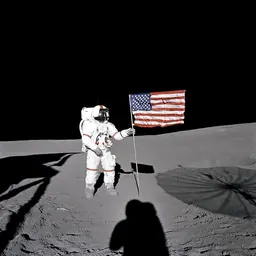
On November 14, 1969, Apollo 12 was launched with Conrad as commander, Dick Gordon as Command Module Pilot, and Alan Bean as Lunar Module Pilot. The launch was the most harrowing of the Apollo program, as a series of lightning strikes just after liftoff temporarily knocked out power and guidance in the Command Module. Five days later, after stepping down from the ladder of the Lunar Module onto a landing pad, Conrad joked about his own small stature by remarking:
He later revealed that he said this in order to win a bet he had made with the Italian journalist Oriana Fallaci for $500 to prove that NASA did not script astronaut comments. Fallaci was convinced that Armstrong's "One small step for man" statement had been written for him and was not his own words.
Conrad's "long one" referred to the jump from the Lunar Module's ladder to a landing pad, whereas Armstrong's "small step" referred to the small step from the landing pad onto the Moon's surface. Conrad's first words on the lunar surface were: Oooh, is that soft and queasy. — Pete Conrad
Skylab
Paul J. Weitz, (left) Charles Conrad Jr. (middle); and Joseph P. Kerwin (right); America's first space station crew would spend 28 days in space Conrad's final mission was as commander of Skylab 2, the first crew to board the Skylab space station. The station had been damaged on its uncrewed launch, when its micrometeoroid shield tore away, taking one of two main solar panels with it and jamming the other one so that it could not deploy. Conrad and his crew repaired the damage on two spacewalks. Conrad managed to pull free the stuck solar panel by sheer brute force, an action of which he was particularly proud. The astronauts also erected a "parasol" solar shield to protect the station from intense solar heating, a function which the lost micrometeoroid shield was supposed to perform. Without the shield, Skylab and its contents would have become unusable. President Jimmy Carter honored Conrad for this in 1978 by awarding him the Congressional Space Medal of Honor.
During his training for Skylab 2, Conrad had to bail out from NASA T-38 N957NA on May 10, 1972. He was returning to Houston from a visit to ILC Industries in Delaware. On approach to Ellington AFB, he was advised that the weather had deteriorated below minimums so he diverted to Hobby. During the night, instrument flight rules (IFR) descent, he suffered a generator failure at 800 feet and broke off the approach. He elected to divert to an airfield with better weather. He ran out of fuel as he reached Bergstrom AFB and was forced to eject at 3,700 feet. He landed about 100 yards from the base operations building and his airplane crashed in an open field about two miles away.
Post-NASA career Conrad undergoes a dental exam by Skylab 2 Science Pilot, Joseph P. Kerwin, M.D. Conrad retired from NASA and the Navy in 1973, and went to work for American Television and Communications Company. He started as the vice president of operations and chief operating officer. Conrad was in charge of the operation of existing systems and the national development of new cable television systems. Today the jet is on permanent static display at Denver International Airport's Terminal C.
In 2006, NASA posthumously awarded him the Ambassador of Exploration Award for his work for the agency and science.
Personal life When you can't be good, be colorful. — –Conrad's personal motto.
In 1989, Conrad's youngest son, Christopher, was diagnosed with a malignant lymphoma. He died in April 1990, at the age of 29.
Conrad was a Cub Scout. His recreational interests included golf, water skiing and auto racing, such as Formula Vee.
Death Conrad died on July 8, 1999, from internal injuries sustained in a motorcycle accident. While traveling with his wife and friends from his Huntington Beach home to Monterey, California, his motorcycle crashed on a turn. Conrad later died in a hospital in Ojai. He was wearing a helmet at the time and was operating within the speed limit. with many Apollo-era astronauts in attendance and a performance of "Amazing Grace" by music legend Willie Nelson.
The Lyndon B. Johnson Space Center in Houston, Texas, has a grove of trees that have been planted to honor the memory of the astronauts who have died. After Conrad's death, NASA planted a tree in his honor. During the dedication ceremony, his Apollo 12 crewmate Alan Bean used his speech to lighten the sombre occasion by injecting a little levity, pretending to "channel" Conrad's instructions from the hereafter. Bean said Conrad wanted NASA to light his tree every Christmas season with coloured lights instead of the white used for everyone else, in keeping with his motto "when you can't be good, be colourful". NASA has honoured this request, and every Christmas since then, all of the trees in the grove have been lit with white lights—except Conrad's tree, which has been lit with red lights.
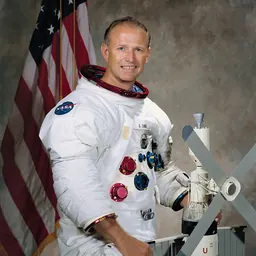
Awards and honors Conrad, Dick Gordon, and Alan Bean pose with their Apollo 12 Saturn V Moon rocket in the background. Two Navy Distinguished Service Medals Two NASA Exceptional Service Medals Harmon Trophy (1974) He was one of ten Gemini astronauts inducted into the International Space Hall of Fame in 1982. Conrad and his fellow Gemini astronauts were inducted into the U.S. Astronaut Hall of Fame in 1993. Conrad was presented an honorary Master of Arts degree from Princeton in 1966; an Honorary Doctor of Laws degree from Lincoln-Wesleyan University in 1970, and an Honorary Doctor of Science degree from Kings College in Wilkes-Barre, Pennsylvania, in 1971. Gerald Carr accepted the 1975 Dr. Robert H. Goddard Memorial Trophy from President Ford, awarded to the Skylab astronauts. They were awarded AIAA's 1974 Haley Astronautics Award.
Conrad was a fellow of the American Astronautical Society; New York Academy of Sciences; American Institute of Aeronautics and Astronautics, and the Society of Experimental Test Pilots. and in an American Express television commercial.
In the 1995 film Apollo 13, Conrad was played by David Andrews; in the 1998 HBO miniseries From the Earth to the Moon, by Peter Scolari and Paul McCrane; and in the 2019 alternate history web television series For All Mankind by Steven Pritchard.
Don’t just read it —
keep it.
Full-length biographies made to live with: read them, listen on the way to work, watch them tonight.
- E-book
- Audio
- Video
Instant download · yours to keep · every purchase keeps this site free
Important facts
People in Pete Conrad's life
Named in this biography and alive at the same time




Related people
Same field, nearest in time

Contemporaries
People whose lives overlapped Pete Conrad's

Frequently asked questions
Who was Pete Conrad?
American astronaut and lunar explorer (1930–1999)
When was Pete Conrad born?
Pete Conrad was born on 2 June 1930 in Philadelphia.
When did Pete Conrad die?
Pete Conrad died on 8 July 1999 in Ojai.
What was Pete Conrad's occupation?
Pete Conrad was a military officer, astronaut, aircraft pilot, racing automobile driver, naval aviator and test pilot.
What nationality was Pete Conrad?
Pete Conrad was American.
Sources & further reading
Cite this page
APA: Biography.guide. (2026). Pete Conrad. https://biography.guide/pete-conrad/
MLA: "Pete Conrad." Biography.guide, https://biography.guide/pete-conrad/.
Chicago: "Pete Conrad." Biography.guide. https://biography.guide/pete-conrad/.
Data last updated: 2026-09-20 · Spot an error? Report a correction.
Page generated 2026-09-27 05:20 UTC