
Perumal Govindaswamy
Singaporean politician
About Perumal Govindaswamy
Lived 1911 – 1978 (aged 66–67).
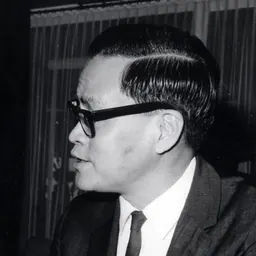
Perumal Govindaswamy (1911 – 4 June 1978) was a Singaporean trade unionist, politician, and a founding member of the People's Action Party, serving as Member of Legislative Assembly and later Member of Parliament for Anson from 1963 till his death in 1978.
Early life and career In 1911, Perumal Govindaswamy was born in India, and in 1927, he migrated to Singapore. He received no formal education.
In 1929, Govindaswamy joined the Postal Service Department (now known as Singapore Post) and soon became involved in the Union of Postal Workers and the Postal and Telecommunication Uniformed Staff Union. In May 1952, Govindaswamy was one of the organisers of a postal union strike, and engaged lawyer Lee Kuan Yew as their negotiator and legal advisor. More than 400 workers began the 13-day strike on 13 May 1952. Lee was able to negotiate a settlement resulting in pay increase and better working conditions.
In the 1968 general elections, Govindaswamy was the only candidate contesting in the constituency of Anson, and was elected unopposed to the 2nd Parliament.
In 1971, rumours alleged that some applicants were able to receive their Housing and Development Board (HDB) flats earlier than others "if they are willing to pay". As the chairman of the committee overseeing allocation of HDB flats, Govindaswamy said such allegations were untrue, and elaborated in his speech at a balloting exercise:
In the 1972 general elections, Govindaswamy won 74.3% of the votes cast and was elected to the 3rd Parliament. The other two candidates were Tay Kim Oh from Workers' Party and Paul C. Kunjuraman from United National Front.
In 1975, during a debate in Parliament about conducting feasibility studies into the Mass Rapid Transit (MRT) system, Minister for Communications Yong Nyuk Lin announced that the cost of the studies was expected to be . Govindaswamy felt that there was no need to waste "good money" on research into the MRT system as the Government was already improving the existing public transport system, and the money could be diverted to other projects. MP for Moulmein Lawrence Sia disagreed with Govindaswamy, and felt that the MRT system should be introduced as soon as possible to cope with the increasing reliance on public transport.
Once again, in the 1976 general elections, as the sole candidate for Anson, Govindaswamy was elected unopposed to the 4th Parliament.
In 1978, Minister for Culture Ong Teng Cheong was addressing criticisms of Radio Television Singapore (RTS). Govindaswamy complained of discrimination by RTS against Indians as not many Indians were hired as staff, and that Tamil listeners were neglected by RTS as football matches were not broadcast in Tamil.
Personal life Together with his wife, Krishnaveni, they had four children, as well as five adopted children.
Govindaswamy lived in the Windsor Park estate, off Upper Thomson Road. In 1971, Govindaswamy was elected as the president of the estate's association. On 12 March 1972, Prime Minister Lee Kuan Yew was accompanied by Govindaswamy to officiate the opening of the estate's clubhouse located at 2 Jupiter Road. In 1974, he was re-elected as president. The clubhouse was demolished in 2000 and a terraced house subdivided into three units was constructed on the site.
On 4 June 1978, after complaining of chest pains and difficulty of breathing, Govindaswamy was sent to Toa Payoh Hospital. He died of a heart attack on the way to the hospital. In a condolence message to his widow, Lee described Govindaswamy as "an old and treasured friend" that was a "responsible, firm and steady leader" who always spoke from his heart, representing the constituents of Anson with sincerity by looking after their interests. On 6 June 1978, Acting Prime Minister and Defence Minister Goh Keng Swee led ministers and MPs at the funeral service held at Mount Vernon Columbarium, paying their last respects.
His wife died on 22 October 1999.
Don’t just read it —
keep it.
Full-length biographies made to live with: read them, listen on the way to work, watch them tonight.
- E-book
- Audio
- Video
Instant download · yours to keep · every purchase keeps this site free
Important facts
People in Perumal Govindaswamy's life
Named in this biography and alive at the same time



Contemporaries
People whose lives overlapped Perumal Govindaswamy's






Frequently asked questions
Who was Perumal Govindaswamy?
Singaporean politician (1911–1978)
When was Perumal Govindaswamy born?
Perumal Govindaswamy was born in 1911.
When did Perumal Govindaswamy die?
Perumal Govindaswamy died on 4 June 1978.
Sources & further reading
· Wikipedia: Perumal Govindaswamy
Cite this page
APA: Biography.guide. (2026). Perumal Govindaswamy. https://biography.guide/perumal-govindaswamy/
MLA: "Perumal Govindaswamy." Biography.guide, https://biography.guide/perumal-govindaswamy/.
Chicago: "Perumal Govindaswamy." Biography.guide. https://biography.guide/perumal-govindaswamy/.
Data last updated: 2026-09-20 · Spot an error? Report a correction.
Page generated 2026-09-27 05:10 UTC