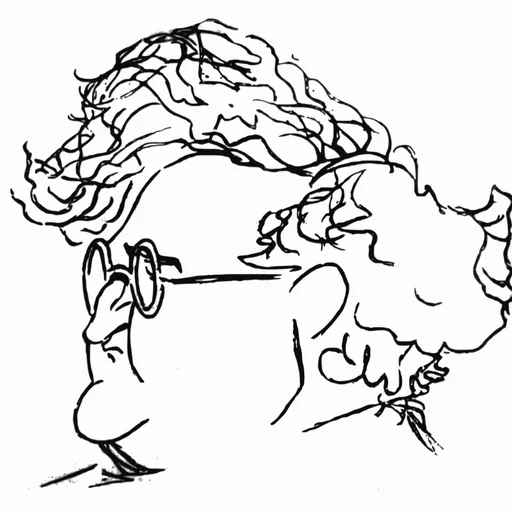
About Perpessicius
Lived 1891 – 1971 (aged 79). Perpessicius was a Romanian literary historian, literary critic, poet, linguist, librarian and translator.
Perpessicius (; pen name of Dumitru S. Panaitescu, also known as Panait Șt. Dumitru, D. P. Perpessicius and Panaitescu-Perpessicius; October 22, 1891 – March 29, 1971) was a Romanian literary historian and critic, poet, essayist and fiction writer. One of the prominent literary chroniclers of the Romanian interwar period, he stood apart in his generation for having thrown his support behind the modernist and avant-garde currents of Romanian literature. As a theorist, Perpessicius merged the tenets of Symbolism with the pragmatic conservative principles of the 19th century Junimea society, but was much-criticized over perceptions that, in the name of aesthetic relativism, he tolerated literary failure. Also known as an anthologist, biographer, museologist, folklorist and book publisher, he was, together with George Călinescu, one of his generation's best-known researchers to have focused on the work of Junimist author and since-acknowledged national poet Mihai Eminescu. Much of Perpessicius' career was dedicated to collecting, structuring and interpreting Eminescu's texts, resulting in an authoritative edition of Eminescu's writings, the 17-volume Opere ("Works").
A veteran of World War I, where he lost use of his right arm, Perpessicius debuted in poetry while recovering in hospital, publishing the critically acclaimed volume Scut și targă ("Shield and Stretcher"). His subsequent "intimist" and Neoclassical tendencies made him part of a distinct current within the local branch of Symbolism. Like other mainstream modernists of his day, Perpessicius also espoused anti-fascism and criticized nationalism in general, attitudes which led him into conflict with the 1930s far right. From 1938 to 1940, he controversially offered a degree of support to the fascist-inspired National Renaissance Front and was promoted by its leader, King Carol II. Sympathetic to the left-wing trend after World War II, he was drawn into cooperation with the Romanian Communist Party. Although subsequently endorsed and acclaimed by the communist regime, he was reluctant to condone its policies and dedicated his final years almost exclusively to literature. A member of the Romanian Academy and founding director of the Museum of Romanian Literature, he was co-editor of Viața Românească magazine, and, in 1957, head of the academy's library.
Name Known initially as Panait S. Dumitru or Panaiot Șt. Dumitru (with an inverted name order and the middle initial standing for his patronymic), the author was given the name Dumitru S. Panaitescu (also Dimitire Panaiot, Panaitescu Șt. Dumitru), while in primary school. To his friends, he was known as Mitică or Mitiș, the pet forms of Dumitru. is Latin for "he who suffers" or "he who was tested". or a direct consequence of losing his writing arm. Others argue that it was merely imposed on him by his writer friends Tudor Arghezi and Gala Galaction. Between 1898 and 1902, he attended the Nr. 4 Primary School, completing his gymnasium-level and secondary education at the Nicolae Bălcescu School (1902–1910). He notably attended lectures on modern Romance-language literature given by Ovid Densusianu, patron of the Symbolist school, which he himself deemed a formative experience. He made his literary debut with poems sent to the Versuri și Proză magazine, edited in Iași by Densusianu's admirers I. M. Rașcu and Alfred Hefter-Hidalgo. One of them, titled Reminiscență ("Reminiscence"), was signed with the pen name D. Pandara.
Perpessicius graduated in 1914, the same year when he married Alice Paleologu. Perpessicus may have also shared Cronicas Germanophile agenda, which, at the time, implied criticism of the Entente Powers. From autumn 1920 to summer 1921, he returned to Brăila, employed by the Normal School as a teacher of Romanian and French. Citing letters the young teacher had sent to his friends, Vianu reports that he missed working in the archives.
Late in 1921, Perpessicius made his return to Bucharest, where, until 1929, he held teaching positions at various high schools and business education establishments. Just before it went bankrupt in early 1923, it was planning a "spoken anthology", during which notes compiled on several authors were supposed to be read for the public: Fondane's own comments on Arghezi, together with those of Perpessicius and Ion Călugăru on traditionalist poets—respectively, Alexandru Vlahuță and George Coșbuc.
Also in 1923, he debuted as a literary chronicler and a regular on Felix Aderca's magazine Spre Ziuă. By 1924, he had articles published in leading Romanian magazines: Ideea Europeană, Mișcarea Literară, Cuget Românesc and Camil Petrescu's Săptămâna Muncii Intelectuale și Artistice.
Having established contacts with the emerging avant-garde during the war years, Perpessicius notably signaled the 1923 debut of its representative, poet Ilarie Voronca. He was, with poet Ion Pillat, editor of Antologia poeților de azi ("The Anthology of Present-Day Poets", 2 vols., 1925 and 1928), often considered a seminal text for the popularization of innovative literature, and featuring ink drawings by Marcel Janco, a co-founder of Dadaism. His critically acclaimed collection of war poems, Scut și targă, was published in 1926. During those years, Perpessicius fell in love with Viorica "Yvoria" Secoșanu, a woman scholar who became his mistress. When she became aware that the critic was happily married, she committed self-immolation in Bellu cemetery, and died in hospital a short while after. These texts included some of his "intimist" poems and translations from French poet Francis Jammes. Contimporanul also published his earlier notes on Vlahuță, recovered from the Insula manuscripts. In 1927, Perpessicius took over as chronicler for Nae Ionescu's Cuvântul (before it became a tribune for fascist causes), and, in 1929, became a teacher at the Matei Basarab High School in Bucharest (a position he held until 1951).
1930s During the 1930s, he published his collected essays and chronicles in several volumes as Mențiuni critice ("Critical Mentions"), most of which were issued by the official publishing house Editura Fundațiilor Regale. In 1934, he signed a contract with the national radio station, entitling him to become its on-air literary chronicler, performing the job until 1938. Working under the direction of Adrian Maniu, a modernist writer and radio broadcaster, Perpessicus devoted special shows to recently deceased authors: the Symbolist-modernist Mateiu Caragiale and the former Poporanist doyen Garabet Ibrăileanu.
He focused part of his subsequent research on Mateiu Caragiale, compiling and transcribing his unpublished notes and diaries. He published a definitive edition of Caragiale's collected works in 1936, After 1933, he also began planning the definitive edition of Eminescu's Opere, a project he discussed first with Editura Națională Ciornei, and later with Editura Fundațiilor Regale director Alexandru Rosetti; the first volume, grouping Eminescu's anthmously published poems, saw print with Rosetti's institution in 1939, being received with much critical acclaim. He published a second volume of his poetry, Itinerar sentimental ("Sentimental Itinerary", 1932). Literary historian Z. Ornea, who likens this "lucid-democratic" text with one issued a year earlier by Viața Românească magazine, notes that both appeals failed to prevent the "totalitarian debauchery" of the subsequent decade, when the Iron Guard emerged as a force.
Perpessicius integrated his condemnation of antisemitism in a radio broadcast of 1934. It reacted against objections that his Antologia... had made a point of adding newly-emancipated Romanian Jews among examples of Romanian literature, reaffirming an earlier rebuttal: "one cannot exclude a poet [...] based only on his nationality paper. The nationality of an artist is of less interest. In the eventuality, it is that of the people whose language he uses in his writing. But what is certain is that the work is the distinguishing sign of art." Alarmed by what he called "a Jewish quota in literature", he gave positive evaluations to newer works by Jewish authors Ury Benador, I. Peltz and his colleague Mihail Sebastian. In reaction to this, Perpessicius seconded his colleague Pompiliu Constantinescu in creating Gruparea Criticilor Literari Români (GCLR, the Group of Romanian Literary Critics), a professional association which aimed to protect its members' reputation and reacted in particular to accusations of modernist "pornography". The GCLR counted among its members Șerban Cioculescu and Vladimir Streinu,
King Carol's dictatorship and World War II Perpessicius controversially remained active in the cultural mainstream after 1938, when authoritarian King Carol II banned political activities and created a corporatist and fascist-inspired regime around the National Renaissance Front, thus countering the threat posed by revolutionary fascism. In this context, he began collaborating on Cezar Petrescu's propaganda outlet for the regime, the newspaper România. The text, together with similar pieces by cultural figures such as Arghezi, Camil Petrescu, Lucian Blaga, George Călinescu, Constantin Daicoviciu, Constantin Rădulescu-Motru, Mihail Sadoveanu and Ionel Teodoreanu, sparked a controversy in the political underground: one adversary of the monarch, psychologist Nicolae Mărgineanu, referred to the authors in question as "scoundrels". According to literary historian Ovidiu Morar, Perpessicius and novelist Zaharia Stancu were also the only literary men to speak out against the marginalization of Felix Aderca, who was also Jewish.
These events were taking place in the first year of World War II, just months before Carol's regime lost credibility for the peaceful cession of Romanian territories to the Soviet Union and Hungary (see Soviet occupation of Bessarabia and Northern Bukovina, Second Vienna Award). This was followed by the proclamation of a new Axis-aligned fascist regime, the National Legionary State, formed as an uneasy partnership between the Iron Guard and Conducător Ion Antonescu. Perpessicius left ironic notes on National Legionary propaganda, recording the Romanian Radio speakers' disjointed and unprofessional praise for the new government, the self-proclaimed purge of Romanian culture by the Guard's Legionary critics, or the rapid fascization of modernist poets such as Ion Barbu (who wrote a special poem for Adolf Hitler). A contemporary anti-fascist and modernist literary historian Eugen Lovinescu deemed it "idiotic". They were collected in a single volume, published by Editura Vremea the following year—months before Lovinescu's death. Also that year, he completed a third volume of Eminescu's Opere, comprising anthumous variants of poems, from Doina to Kamadeva.
Soon after Antonescu was ousted during the August 23 Coup of 1944 and Romania began cooperating with the Allies, Perpessicius made his return to the public arena. For a while in 1944–1945, he joined the Romanian Writers' Society Board, replacing the resigned Zaharia Stancu. In May 1945, he represented ARLUS at the funeral of Mihail Sebastian, who had been killed in a road accident, and contributed one of Sebastian's obituaries in Revista Fundațiilor Regale. Shortly after Lovinescu's death, Perpessicius also sat on the commission granting a memorial award, presented to aspiring authors such as Ștefan Augustin Doinaș. In 1945, he made the last of several sporadic visits to Brăila, where his mother still resided. He received the State Prize for 1954, in recognition for his work in editing Eminescu, and, on June 21, 1955, received full Academy membership, with Camil Petrescu as rapporteur. At around the same time, Perpessicius focused some of his studies on the work of Lazăr Șăineanu, a linguist and folklorist whom specialized criticism of the time had come to ignore.
Despite official endorsement, his relationship with the new authorities had its moments of tension. An unsigned 1953 article in the Communist Party's main daily, Scînteia, accused the author of being indifferent to the Marxist-Leninist view of "class struggle", and noted that the Opere volume's introduction cited "reactionary" critics Titu Maiorescu, Mihail Dragomirescu and Gheorghe Bogdan-Duică without "assuming a critical stance". Some of his own earlier works, like those of the colleagues of his generation, were subjected to official censorship, and several were not given approval for publication. A relaxation of political pressures on the literary environment followed in the late 1950s, when communist leader Gheorghe Gheorghiu-Dej embarked on the path of controlled De-Stalinization, but totalitarianism still had direct consequences on the critic's life and career. Perpessicius' son Dumitru D. Panaitescu, a student at the University of Bucharest during the mid-1950s, was arrested by the Securitate secret police and implicated in the "Dardena trial", becoming a political prisoner of the communist regime. Panaitescu had been found guilty of sedition, for having joined Mihai Stere Dedena and others in organizing a dissident Marxist circle, which sympathized with the Hungarian Revolution of 1956 and stood behind the Bucharest student protest. The same year, at a Writers' Union congress consecrating the rehabilitation of formerly-censored Tudor Arghezi, Perpessicius made negative comments on the impact of Romanian Socialist Realism: "The Arghezi case is, without doubt, one of the most painful cases literature has known over the past ten years". He created the museum itself, and presided over it until his death. Perpessicius returned with a new volume of Opere in 1958, by gathering the printed versions of Mihai Eminescu's original drafts and apocrypha. In 1964–1965, he edited Eminescu's selected works in an Editura pentru literatură edition, followed by a similar edition of Mateiu Caragiale's works.
His 75th birthday of 1966 came at an interval when newly instated communist leader Nicolae Ceaușescu was effecting liberalization measures. It was celebrated nationally, and the authorities granted him the Order of Cultural Merit 1st class. The following year, Perpessicius' Museum was faced with a crisis, having been evicted out of its original quarters and provisionally relocated to an apartment on Șoseaua Kiseleff. The matter was resolved when the director appealed to his friend Arghezi, by then a prominent cultural figure, and who managed to have the MLR relocated to a spacious location once occupied by the defunct Romanian-Russian Museum. He was buried in Bellu cemetery. Two posthumous volumes were published as tribute during the same year: Lecturi intermitente with Editura Dacia, and Eminesciana with Editura Minerva (forwarded by his son, Dumitru D. Panaitescu). The generic group also includes George Călinescu, Șerban Cioculescu, Pompiliu Constantinescu, Eugen Lovinescu, Vladimir Streinu, Tudor Vianu and others. This entire generation of critics stood for the legacy of Junimea, a literary society influential in the second half of the 19th century. They followed in the footsteps of Junimist leader and philosopher Titu Maiorescu, who was known for his rationalist approach, his conservative suspicion of nationalism, his calls for pragmatic Westernization and controlled modernization, his advocacy of professionalization in science and literature, and, in particular, his critique of literary didacticism in favor of "art for art's sake". Lovinescu referred to himself and his colleagues as "the third post-Maiorescian generation", and, in the 1942 homage to Lovinescu, Perpessicius's essay, called "deepest and most convincing" by 21st century literary historian Nicolae Manolescu, focused primarily on Lovinescu's own study of Maiorescu. Cernat also notes that Perpessicius parts with the Junimist tradition of combative, and ideally "masculine" criticism, establishing an ideological alternative: "The utopia of 'Perpessician' criticism is an aesthetic ecumenism purged of sociological, ethical and ethnic intrusions, and likewise of dogmatic, rationalist-positivist, prejudice." Contantinescu referred to his friend as "the only Romanian critic not to have practiced dogmatism" and "our most civilized critic, both spiritually and ethically". while, in Cernat's view, Perpessicius and his friend Ion Pillat stood out for having internalized "the collaboration between 'poet' and 'critic' ".
This tendency toward aesthetic relativism owed inspiration to the theories of French Symbolist Remy de Gourmont, and brought Perpessicius into conflict with Lovinescu, whose more rigid version of Impressionism was based on the views of Émile Faguet. Initially, the elder critic had expressed approval of Repertoriul critic, calling Perpessicius himself "a man of taste, a graceful stylist and an ornate spirit". He declared himself disappointed by Lovinescu having disregarded the post-Symbolist poetry of George Bacovia, and criticized him for deriding the lyricized prose of traditionalist author Mihail Sadoveanu. He commented with irony on Lovinescu's primarily historicist perspective, arguing that it closely resembled what he also criticized in the didacticism of Mihail Dragomirescu and Henric Sanielevici, and that his rival's Sburătorul society aggravated "the dependence on literary schools". He recognized Lovinescu's mentorship in his 1941-1942 essays, joining what literary historian Mircea Iorgulescu defines as "Lovinescu's first posterity" (also grouping, alongside the other authors of the 1942 volume, the younger-aged Sibiu Literary Circle). With Antologia poeților de azi, Perpessicius and Pillat effected what Cernat calls "the critical assimilation of autochthonous Symbolism and modernism", and, citing Șerban Cioculescu, an expansion outside "the traditional realm of Romanian poetry, which had penetrated public consciousness through its cultural and didactic elements." As part of his dislike for historicist definitions, he most often refused to differentiate between the various "-isms" within the current, referring to the avant-garde in general as the "far left" of modernism. This approach partly echoed the pronouncements of his fellow critics, among them Const. T. Emilian, author of the first study on Romania's cutting-edge modernism, a work noted for its ultra-conservative, nationalist and antisemitic conclusions. He did not share Emilian's viewpoint and, in line with his pronouncements against a "Jewish quota", explicitly rejected the belief that avant-garde poetry was subversive, arguing instead that, at its best, the current displayed a modern "virtuosity". In his review of Emilian's polemical study of the avant-garde, Perpessicus spoke of the author's "rigid and timorous" approach to the subject.
Perpessicius was especially sympathetic to poet Tudor Arghezi, a former Symbolist who had created a mixture of radical modernism and traditionalism, and who was hailed as a hero by the avant-garde circles. According to Cernat, the critic was the first-ever professional to declare Arghezi compatible with and comparable to Mihai Eminescu, thus cementing into mainstream verdict what had previously existed only as an isolated avant-garde claim. He was also interested in the work of another avant-garde champion, the suicidal clerk Urmuz, being one of the first to take Urmuz's work seriously, producing an essay which Nicolae Manolescu describes as "the most profound in our country's interwar criticism."
His essays included ample comments on Urmuz's following, discussing his influence on diverse authors, avant-garde as well as mainstream: Arghezi, Geo Bogza, Jacques G. Costin, Adrian Maniu, Tudor Mușatescu, Sașa Pană, Stephan Roll and Ion Vinea. He focuses such pieces on Costin, whom he believed was an important author with "sharp traits" and "great subtlety", different from Urmuz in that he was "good-humored". He believed that Costin's parody of Don Quixote needed only "a mild process of purification" in order to join the "Romanian models" of its genre. Perpessicius also backed Fondane's verdict according to which Minulescu was "the first bell-ringer of Romania's lyrical revolt". His interest also covered Mateiu Caragiale, but his surviving renditions of the latter's texts have been criticized for being selective. This reproach he combined with earlier objections: in his review of Voronca's 1923 collection of Decadent poems, Restriști ("Tribulations"), he first criticized the poet for introducing neologisms or barbarisms to literary Romanian. This kind of "prudent" conclusions, Cernat proposes, made the critic resemble all his colleagues of the moderate mainstream. He believed this change had brought Voronca close to the types of poetry illustrated by classics such as Novalis, Walt Whitman and Eminescu, or by former Dadaist doyen Tristan Tzara in his The Approximate Man, while protesting that the Romanian Writers' Society had failed to honor Voronca with a prize.
Perpessicius was welcoming of other Surrealist productions, among which was a cryptic prose poem by Stephan Roll, Moartea Eleonorei ("Eleonora's Death"). He also enjoyed Ion Vinea's lyrical and marginally-Surrealist novel Paradisul suspinelor ("The Paradise of Sighs"), which he described as "a picturesque theater of reflexive puppets" emerging from the combined "virtuosity" of "poet, psychoanalyst and Surrealist aesthete". he also offered positive reviews to other members of Eliade's generation, among them Mihail Sebastian (in particular for the controversial novel De două mii de ani...) According to one assessment, he was also the only critic of his generation to defend Camil Petrescu's novel Ultima noapte de dragoste, întâia noapte de război, criticized from early on for being sharply divided into two seemingly unrelated sections—in his assessment, this arrangement resonated with a profound message.
Eminescu's exegete Having reportedly developed a passion for Eminescu's poetry while still a student, Perpessicius was part of a generation poised on recovering and popularizing their predecessor. According to Perpessicius' own editor, Ileana Ene, "Our literary history has had the exceptional chance of finding in Perpessicius the ideal editor for a monumental edition of Eminescu's Opere." Early on, while closely following the various editions of collected works by various Romanian authors, the author voiced protests against what he believed was the political establishment's tendency to overlook a national poet: "we have no monograph on the poet, we have no critical edition [...] and we are even further from the prospect of a monument. We nonetheless have a Ministry of the Arts, and we carry on erecting, instead of statues [...], blocks of granite and beams of steel, more perishable than the paper stanzas of [Eminescu's] Floare albastră." Both Iorga and Pompiliu Constantinescu offered special praise to Perpessicius' detailed study of Eminescu's biography on a strictly chronological basis (a chronology mirrored by the sorting of poem variants). Vianu saw the book as a major progress in understanding Eminescu's poetry. Noting that, in all, Perpessicius reviewed and transcribed some 15,000 pages of Eminescu's manuscripts, a prospect others had avoided, Vianu stated: "No one will ever be able to study Eminescu, the history and connections of each of his works, their genesis and echoes in literary historiography and criticism, without using Perpessicius' critical edition as their starting point." This helped highlight the successive periods in Eminescu's work, from his Romanticism of the 1860s to his epic interpretations of Romanian folklore, early Balkan myths and Norse mythology. An entire section of Operes fifth volume sorted Eminescu's random and often unused drafts, collectively titled Moloz ("Debris"), thus allowing readers to differentiate between Eminescu's moments of inspiration and his routine poetic exercises. Perpessicius' research is also credited with having tracked down and compared the various drafts of Luceafărul, a process which, according to Ene, might not have otherwise been attempted. The late article collection Eminesciana, was criticized by some for being overall inferior to Perpessicius' other contributions, a conclusion which, Ene believes, is owed to some of the pieces having been prompted by public events. The author himself saw it as a diary and document of his studies, with "a certain kind of usefulness".
Equidistant positioning and related controversy A controversy surrounding Perpessicius' contributions as chronicler and theorist emerged during his lifetime, centered on perceptions that he was neither polemically engaged nor a proponent of hierarchies, but that he preferred to write equidistantly. Contrary to his contemporaries, Perpessicius believed the work of a critic to be not the imposition of a direction, but the "registry office" and panorama of naturally occurring trends, an idea notably present in the title of his article În tinda unei registraturi ("In the Parlor of a Registry Office"). The text spoke in favor of diversity and against "sectarianism": "I shall weed out [...] any sectarian prejudice and shall strive to comment on any work", because "the critic would do better not to consider novelty a scarecrow." Elsewhere, he cited Thibaudet for having inspired in him "great comprehension" and the ideal of "plurality in tastes". In a 1962 interview with Luceafărul, Perpessicius stated: "young writers [...] should have the habit of reading the critics, but should not obey their assessments blindly. Just as there are writers who request any verdict, no matter how severe, as long as it is sincere, there are those pompous critics, who have never doubted the justness of their verdicts. Our experience from both sides of the barricade has taught us that both are wrong. Albeit mediocre, the middle way is the golden way." Călinescu argued that any negative comment made by his colleague could "seem like praise" by being "sweetened" from one phrase to the next, making reference to his use of euphemisms, "digressions" and "excessive delicacy". He also called Mențiuni critice a "precious bibliographic guide".
Similar judgments were issued from various sides of the cultural spectrum. Although himself a collaborator of Perpessicius, Vladimir Streinu once referred to him as "the flower girl of our literature". Perpessicius' rejection of "sectarianism" was unfavorably reviewed by Cioculescu in a 1928 article for Adevărul, which prompted a reply from Perpessicius. He noted: "Seventy real poets in a quarter of a century is an a priori impossibility. [...] In such conditions, poetry presents itself as a real scourge, like some dangerous pestilence, almost like a social peril. And in such circumstances an anthology as horrifyingly complete as that of Mr. Pillat and Mr. Perpessicius appears to be disastrous. It is made to implant the belief that poets are to be found in a sum of individuals who, perhaps, had they been lacking such 'consecration', would be growing disillusioned and turn back into decent men, brave citizens and diligent clerks". The dispute touched on Perpessicius' own relationship with the avant-garde. In his account of Voronca's departure from the Surrealist group (part of a 1933 letter addressed to Fondane), Roll sarcastically downplayed his former colleague's success, alleging: "Only Perpessicius smothered [Voronca] in slobbery, grandmotherly, kisses; only Perpessicius showered with gifts, produced licks of the tongue, telephone calls and accolades."
These themes of criticism were revisited by newer generation of critics. According to Eugen Simion, in following the Symbolist path of Remy de Gourmont, Perpessicius "gazes without discrimination over a Surrealist poem or a late Romantic work."
Poetry and fiction
War poet Perpessicius' early war poems comprise the larger part of Scut și targă volume. Its other sections of the book were identified by Vianu as political satire directed at the regime changes in Greater Romania. George Călinescu, who notes that their apparently "detached" tone allows glimpses of a "profound emotion", also stresses that the poems are indebted to the school of Arthur Rimbaud. He thus sees a connection between Rimbaud's The Sleeper of the Vale and scenes of "solar putrefaction" he associates with Perpessicius' lines for men killed by firing squads: Verse translation| The individual approach, called by Călinescu "Symbolist and bookish", is present in pieces such as one dedicated to home ownership: Verse translation| The latter influence, he argues, explained how Perpessicius return adoption of elegy as a form of poetic expression, in which "melancholy is without neurosis, but only slightly purple, like a funerary urn." According to literary historian Ioana Pârvulescu, who suspects that Amor academic was Perpessicius' intended homage to Yvoria Secoșanu, the author portrayed himself under the fictional names Mototolea (from mototol, "wuss") and Pentapolin (the shepherd king in Don Quixote).
Legacy Perpessicius' contribution and biography were the subject of several later volumes of critical interpretations, beginning with the 1971 Excurs sentimental Perpessicius ("Perpessicius, a Sentimenal Excursion"), dedicated to his memory by the Museum of Romanian Literature. The posthumous series includes a 1977 volume of Eminescu's prose and exercises in drama, as well as records of his early participation in the development of Romanian theater with Iorgu Caragiale's troupe. His renditions of Mateiu Caragiale's texts, like the similar notebooks kept by Alexandru Rosetti, appear to have been lost forever under mysterious circumstances.
In 2006, Adevărul journalist Christian Levant investigated the Dedena affair, concluding that Panaitescu Jr.'s arrest, like that of other members of his Marxist circle, was made possible by the actions of an informant. In Levant's view, that person was Eugen Florescu, who later made a career in the Communist Party and, after the Revolution, in the nationalist Greater Romania Party, having served in the Senate until 2004.
Don’t just read it —
keep it.
Full-length biographies made to live with: read them, listen on the way to work, watch them tonight.
- E-book
- Audio
- Video
Instant download · yours to keep · every purchase keeps this site free
Important facts
People in Perpessicius's life
Named in this biography and alive at the same time


Related people
Same field, nearest in time

Contemporaries
People whose lives overlapped Perpessicius's


Frequently asked questions
Who was Perpessicius?
Romanian writer (1891–1971)
When was Perpessicius born?
Perpessicius was born on 21 October 1891 in Brăila.
When did Perpessicius die?
Perpessicius died on 29 March 1971 in Bucharest.
What was Perpessicius's occupation?
Perpessicius was a literary historian, literary critic, poet, linguist, librarian and translator.
What nationality was Perpessicius?
Perpessicius was Romanian.
Sources & further reading
Cite this page
APA: Biography.guide. (2026). Perpessicius. https://biography.guide/perpessicius/
MLA: "Perpessicius." Biography.guide, https://biography.guide/perpessicius/.
Chicago: "Perpessicius." Biography.guide. https://biography.guide/perpessicius/.
Data last updated: 2026-09-22 · Spot an error? Report a correction.
Portrait: Wikimedia Commons · author & licence
Page generated 2026-09-27 05:03 UTC