
About Pericle Felici
Lived 1911 – 1982 (aged 70). Pericle Felici was an Italian catholic priest, catholic deacon, theologian and catholic bishop.
Pericle Felici (1 August 1911 – 22 March 1982) was an Italian prelate of the Catholic Church. From 1947 until his death he held various offices in the Roman Curia, including Secretary General of the Second Vatican Council, head of the Pontifical Commission for the Revision of the Code of Canon Law, and from 1977 Prefect of the Supreme Tribunal of the Apostolic Signatura. He became a cardinal in 1967. In 1978, he twice announced to the world from the balcony of St. Peter's Basilica the election of a new pope, John Paul I and John Paul II. At the Council he was identified with the conservatives who sought to maintain Curial control of the proceedings and he was a prominent voice for more conservative and traditionalist views throughout his career.
Biography Felici was born in Segni near Rome
Second Vatican Council
In 1959, when Pope John XXIII named a committee of twelve to plan the Second Vatican Council, Felici was named a member and its secretary. As secretary he served as spokesman, outlining the committee's plans to the media. He described its work as current issues rather than questions of church practice and said journalists would be welcome to report freely: "The Pope wants all opinions, even if contrary to the doctrine, experience and jurisprudence of the Roman curia." Cardinal Roberto Tucci recorded in his diaries that Pope John described Felici as very learned and a hard worker, adding that "he has a narrow mind". and when it was interred in the basilica's crypt.
As Secretary General of the council, he took the required oath on behalf of all Council participants. as well as the results of balloting when voting began in late 1963. In 1962, during its first session, he prevented the distribution of copies of a speech scheduled for delivery by Helder Pessoa Camara, then Auxiliary Bishop of Roman Catholic Archdiocese of Rio de Janeiro, because it criticized the council's failure to address social issues. On 25 November 1963, as the council's second session was nearing its end and factional disputes were breaking into the open, Felici tried to prevent the distribution of a statement on the council's much-contested document on communications signed by 25 bishops, even trying without success to take one from Auxiliary Bishop Josef Maria Reuss of Mainz and then summoning Vatican police. Thomas Merton mocked him as the council's "dean of discipline" when the next year Felici announced that distributing such leaflets was forbidden. Felici was identified as a key member of the Curia, along with such senior officials as Alfredo Ottaviani, head of the Congregation of the Holy Office, and Amleto Cicognani, Secretary of State, who tried to maintain control of the Council in the interests of the Roman Curia and limit the influence of the bishops who constituted the council's membership.
Later appointments
He was also named president of the Pontifical Commission for the Interpretation of the Decrees of the Second Vatican Council. He was also a member of the Vatican commission that reviewed the new catechism produced by the Dutch bishops in 1967 and sought clarifications before allowing it to be translated into other languages.
Beginning on 21 February 1967, he headed the Pontifical Commission for the Revision of the Code of Canon Law, a task completed a few months before his death. Felici circulated a draft to the world's bishops in the spring of 1971 and reported to the Synod of Bishops in November 1971 that it had been overwhelmingly rejected. It was, wrote one journalist, "vigorously and even bitterly criticized by canon lawyers and others" who described it as "overly authoritarian" and complained that it "committed the church to single outdated view of itself at a time when the subject is still a source of considerable disagreement among theologians".
By the time Pope Paul reiterated the Church's opposition to artificial birth control in Humanae vitae in 1968, Felici was recognized as one of the key figures in the Curia who supported Pope Paul VI in his "new hard-line policy". In The New Yorker, Francis X. Murphy found it "depressing" that the pope was "inspired and supported by the same group ... who tried unsuccessfully to thwart the majority of the bishops at the Council"–Ottaviani, Cicognani, Antoniutti, Staffa, and Felici–a group of whom the liberal and controversial theologian Edward Schillebeeckx said: "In my opinion, Pope Paul has become a prisoner of five or six cardinals. Because of their one-sided information, he became convinced of the necessity of a hard line [on birth control]. Everybody knows who these cardinals are. They are really blind. They are the ones who are destroying the Church."
Felici appeared in a more collaborative context in 1970 when he joined Cardinal Johannes Willebrands in announcing somewhat relaxed rules for Catholics who marry non-Catholics.
He was also a member of the Pontifical Commission for the Revision of the Code of Canon Law for the Eastern Rite. At a reception for the new cardinals, Pope Paul asked him what the appointment meant to him and he answered: "A lot of work and loyalty to the boss."
1978 conclaves In 1978, Felici participated in the August and October papal conclaves, where he was considered papabile, that is, a candidate for election, though no candidate appeared particularly strong. Reports said U.S. and Latin American cardinals found Felici too conservative.
Because he was the senior Cardinal Deacon, he made the first public announcement of the conclave's results, announcing the elections of Albino Luciani as Pope John Paul I and of Karol Wojtyła as Pope John Paul II.
His title as cardinal-deacon was changed to cardinal-priest on 30 June 1979.
Synod of Bishops He was a conservative voice at several meetings of the Synod of Bishops. In 1971, though Pope Paul had sought the bishops' opinions on priestly celibacy, he preferred to leave the matter to the pope alone. In 1974, he led the discussion group that chose Latin as its common language and he criticized liberals who represented social and political liberation as a pathway to liberation from sin, which he considered a formulation that reversed the truth and disparaged the role of religion and the Church.
In 1978, Pope John Paul II appointed Felici to the 15-member council of the Secretariat for the Synod of Bishops, in likely anticipation of the planned 1980 synod on the family, given the Signatura's responsibility for marriage annulments. Felici was known as an opponent of proposals to ease the granting of annulments. At that Synod in October 1980, when several bishops called for a study of the Church's ban on artificial forms of birth control or a reconsideration of the way the Church taught it, he said he considered the encyclical that established the ban, Humanae vitae, a "closed" document. (Those criticizing the ban included Cardinal Basil Hume of Westminster, Archbishop John R.) Quinn of San Francisco, president of the United States Conference of Catholic Bishops, and Archbishop Joseph Bernadin of Cincinnati, its former president. In a speech approved by Pope John Paul II, he reported to the Synod that marriage annulments were rapidly increasing and that lower courts were failing to uphold standards and using excuses like "psychological immaturity". He warned that canon law should not be disregarded out of "theological or pastoral concern". (According to the New York Times, annulments granted in the United States rose from 338 in 1968 to 17,190 in 1978.)
He suffered a heart attack in 1980. He collapsed after attending a religious service in Foggia and died there on 22 March 1982. At the time of his death he was a member of several dicasteries, including the Congregation for the Doctrine of the Faith, the Congregation for Bishops, the Sacred Congregation for the Discipline of the Sacraments, and the Congregation for the Causes of Saints.
Selected works Council Digest: The Basic Message of Vatican Council II (1981) Concilio vitam alere: Meditationes super decretis Concilii Vaticani II (1975), with Trento Longaretti Il diario conciliare di monsignor Pericle Felici (2015), edited by Vincenzo Carbone and Agostino Marchetto Magistero e Autorità nella Chiesa (1969)
Don’t just read it —
keep it.
Full-length biographies made to live with: read them, listen on the way to work, watch them tonight.
- E-book
- Audio
- Video
Instant download · yours to keep · every purchase keeps this site free
Important facts
People in Pericle Felici's life
Named in this biography and alive at the same time


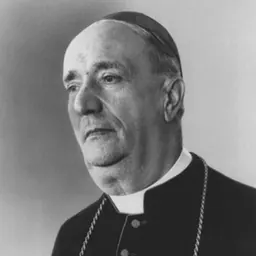


Related people
Same field, nearest in time

Contemporaries
People whose lives overlapped Pericle Felici's






Frequently asked questions
Who was Pericle Felici?
Catholic cardinal (1911–1982)
When was Pericle Felici born?
Pericle Felici was born on 1 August 1911 in Segni.
When did Pericle Felici die?
Pericle Felici died on 22 March 1982 in Foggia.
What was Pericle Felici's occupation?
Pericle Felici was a catholic priest, catholic deacon, theologian and catholic bishop.
What nationality was Pericle Felici?
Pericle Felici was Italian.
Sources & further reading
Cite this page
APA: Biography.guide. (2026). Pericle Felici. https://biography.guide/pericle-felici/
MLA: "Pericle Felici." Biography.guide, https://biography.guide/pericle-felici/.
Chicago: "Pericle Felici." Biography.guide. https://biography.guide/pericle-felici/.
Data last updated: 2026-09-25 · Spot an error? Report a correction.
Page generated 2026-09-27 05:12 UTC