
About Percy William Bunting
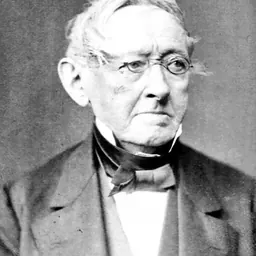
Lived 1836 – 1911 (aged 75). Percy William Bunting was a journalist, barrister, jurist and historian.
Sir Percy William Bunting (1 February 1836 – 22 July 1911) was an English barrister, editor and social reformer.
During his early legal career, Bunting became actively involved in liberal politics and progressive Methodism. He was the editor of The Contemporary Review from 1882 until his death in 1911. His work as a social reformer encompassed a leading role in the National Vigilance Association, addressing juvenile prostitution. Bunting was also involved in religious reform within the Methodist Church, as well as taking an active role in an association of Nonconformist churches and broader ecumenical concerns.
Biography
Early years
Percy William Bunting was born on 1 February 1836 at Radcliffe in Lancashire, the only son of Thomas Percival Bunting and Eliza (née Bealey). His father was a solicitor in Manchester. Percy had three sisters, Mary (born in 1833), Eliza (born in 1838) and Sarah (born in 1841). The children, whose paternal grandfather was the prominent Wesleyan Methodist leader Jabez Bunting, were raised in a devout household.
Percy Bunting was educated at home until 1851, when he became one of the original students at the newly-opened Owen's College in Manchester. He was awarded a scholarship to Pembroke College at the University of Cambridge. In 1859 Bunting was classed as the twentieth 'wrangler', denoting a ranking of those who gained first-class honours in the Mathematical Tripos competition. He graduated that year with a Master of Arts.
Legal practice
In 1862 Bunting was called to the bar at Lincoln's Inn, where he practiced law and acquired a large practice as a conveyancer and at the Chancery bar. He was an "examiner in equity and real property at the London University for some years".
Bunting married Mary Hyett Lidgett on 21 June 1869, the elder sister of Elizabeth Lidgett. The couple had four children: two daughters (Evelyn, born in 1870, and Dora, born in 1877) and two sons (Sidney, born in 1873, and Sheldon, born in 1882).
In 1882 Bunting was appointed editor of The Contemporary Review, a position he occupied until his death in 1911. He conducted the journal with a liberal slant, supportive of social reform. He encouraged writers in the fields of contemporary theology, science, art, literature and politics and enlisted foreign correspondents. Bunting took on the role of treasurer of the mission. In the Wesleyan Conference, where he sat as a lay representative, he served for many years as the lay secretary of the Committee of Privileges. Bunting frequently visited European countries promoting moral purity as a social reform. Bunting remained as Methodist editor of The Review of the Churches until 1896.
Bunting was an advocate of international peace and friendship. He visited Germany in 1907 and 1909 and assisted in the formation of the Anglo-German Friendship Committee in the months before his death.
In the last three years of his life, Bunting's physical powers slowly declined. Sir Percy Bunting died on 22 July 1911 at his home in London, at 11 Endsleigh Gardens in Bloomsbury, aged 75. He was buried at Highgate Cemetery (on the western side).
Publications
Percy W. Bunting, 'Chapter XI: The Land and the Citizen' (in) Samuel E. Keeble (editor) (1906), The Citizen of To-morrow: A Handbook on Social Questions, London: Charles H. Kelly, pages 207-222.
Rev. John Brown Paton, Sir Percy William Bunting & Rev. Alfred Ernest Garvie (editors) (1910), Christ and Civilization: A Survey of the Influence of the Christian Religion Upon the Course of Civilization, London: National Council of Evangelical Free Churches.
Articles by Bunting published in The Contemporary Review include: 'Reminiscences of Cardinal Manning' (1892), 'Nonconformists and the Education Bill' (1902), 'The White Slave Trade' (1902), 'The Journalistic Tour in Germany' (1907), 'Convocation and the Bishop of Hereford' (1911).
Don’t just read it —
keep it.
Full-length biographies made to live with: read them, listen on the way to work, watch them tonight.
- E-book
- Audio
- Video
Instant download · yours to keep · every purchase keeps this site free
Important facts
People in Percy William Bunting's life
Named in this biography and alive at the same time




Related people
Same field, nearest in time

Contemporaries
People whose lives overlapped Percy William Bunting's




Frequently asked questions
Who was Percy William Bunting?
British journalist (1836–1911)
When was Percy William Bunting born?
Percy William Bunting was born on 1 February 1836 in Manchester.
When did Percy William Bunting die?
Percy William Bunting died on 22 July 1911 in London.
What was Percy William Bunting's occupation?
Percy William Bunting was a journalist, barrister, jurist and historian.
Sources & further reading
· Wikipedia: Percy William Bunting
Cite this page
APA: Biography.guide. (2026). Percy William Bunting. https://biography.guide/percy-william-bunting/
MLA: "Percy William Bunting." Biography.guide, https://biography.guide/percy-william-bunting/.
Chicago: "Percy William Bunting." Biography.guide. https://biography.guide/percy-william-bunting/.
Data last updated: 2026-09-20 · Spot an error? Report a correction.
Page generated 2026-09-27 05:33 UTC