
About Pelopidas
Lived 450 BC – 364 BC (aged 85–86). Pelopidas was a politician, military personnel and military leader.
Pelopidas (; ; died 364 BC) was an important Theban statesman and general in Greece, instrumental in establishing the mid-fourth century Theban hegemony.
Biography Athlete and warrior
Pelopidas was a member of a distinguished family and possessed great wealth, which he expended on his friends and on public service while he himself was content to lead the rough life of an athlete. In 384 BC, he served in a Theban contingent sent to the support of the Spartans during the Siege of Mantinea, where he was dangerously wounded by the Arcadians, but was saved by Epaminondas and Agesipolis.
Pelopidas, after receiving seven wounds in front, sank down upon a great heap of friends and enemies who lay dead together; but Epaminondas, although he thought him lifeless, stood forth to defend his body and his arms, and fought desperately, single-handed against many, determined to die rather than leave Pelopidas lying there. And now he too was in a sorry plight, having been wounded in the breast with a spear and in the arm with a sword, when Agesipolis the Spartan king came to his aid from the other wing, and when all hope was lost, saved them both.
Plutarch says that this incident firmly cemented their friendship, and Pelopidas would be Epaminondas's partner in politics for the next 20 years.
Boeotarch
In this and 12 subsequent years, he was elected boeotarch, or warleader, and around 375 BC, he routed a much larger Spartan force at the Battle of Tegyra (near Orchomenus). This victory he owed mainly to the valour of the Sacred Band, an elite corps of 300 seasoned soldiers. At the Battle of Leuctra (371 BC), he contributed greatly to the success of Epaminondas's new tactics by the rapidity with which he made the Sacred Band close with the Spartans. At Leuctra, Epaminondas, a brilliant and intuitive general, used the oblique order for the first time. After the battle at Leuctra, Thebes began to replace Sparta as the leading city of Greece.
In 370 BC, he accompanied his close friend Epaminondas as boeotarch into the Peloponnese, where, by re-founding as an independent city Messene Sparta's former dependency, they were able to consolidate their success and permanently deprive Sparta of its hegemonic power. On their return, both generals were accused, unsuccessfully, of having retained their command beyond the legal term. In fact, the democrats and some aristocrats of Thebes acknowledged that Pelopidas and Epaminondas were the two most capable and important personalities of their city. Both were trying to establish a state that would unite Greece under the Theban hegemony – what Xenophon called a policy "continuously direct towards securing supremacy in Greece".
Embassy to Persia In 367 BC, Pelopidas went on an embassy to the Persian king Artaxerxes II. Backed by the prestige of his Leuctra victory,
Thessalian campaign and death
The 360s saw Pelopidas leading a military/diplomatic advance by Theban power into Central and Northern Greece.
The next year, Pelopidas was again called upon to interfere in Macedonia, but being deserted by his mercenaries, was compelled to make an agreement with Ptolemy of Aloros. On his return through Thessaly, he was seized by Alexander of Pherae, and two expeditions (the second expedition, the successful one, was led by his friend Epaminondas ) from Thebes were needed to secure his release.
In 364 BC, he received another appeal from the Thessalian towns against Alexander of Pherae. Although an eclipse of the sun prevented his bringing with him more than a handful of troops, he overthrew the tyrant's far superior force on the ridge of Cynoscephalae. However, wishing to slay Alexander with his own hand, he rushed forward too eagerly and was cut down by the tyrant's guards. Plutarch considered him a prime example of a leader who threw away his life through recklessness and anger.
Don’t just read it —
keep it.
Full-length biographies made to live with: read them, listen on the way to work, watch them tonight.
- E-book
- Audio
- Video
Instant download · yours to keep · every purchase keeps this site free
Important facts
People in Pelopidas's life
Named in this biography and alive at the same time
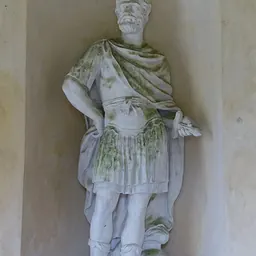

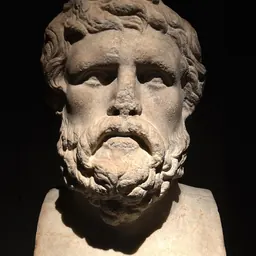
Related people
Same field, nearest in time
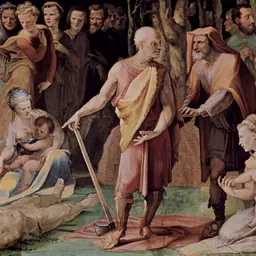
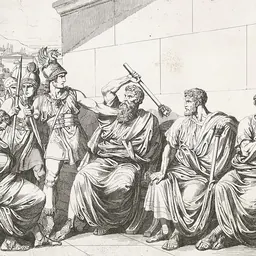
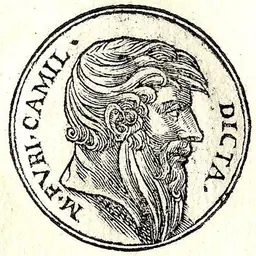
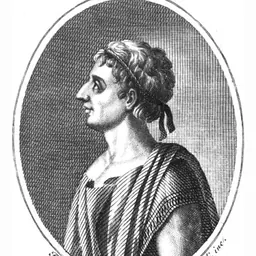
Contemporaries
People whose lives overlapped Pelopidas's

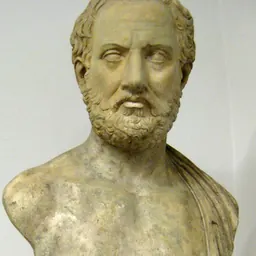
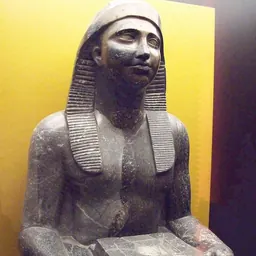
Frequently asked questions
Who was Pelopidas?
Ancient Theban general
When was Pelopidas born?
Pelopidas was born in 450 BC in Thebes.
When did Pelopidas die?
Pelopidas died in 364 BC in Battle of Cynoscephalae.
What was Pelopidas's occupation?
Pelopidas was a politician, military personnel and military leader.
What nationality was Pelopidas?
Pelopidas's recorded nationality: Thebes.
Sources & further reading
Cite this page
APA: Biography.guide. (2026). Pelopidas. https://biography.guide/pelopidas/
MLA: "Pelopidas." Biography.guide, https://biography.guide/pelopidas/.
Chicago: "Pelopidas." Biography.guide. https://biography.guide/pelopidas/.
Data last updated: 2026-09-20 · Spot an error? Report a correction.
Page generated 2026-09-27 05:32 UTC