About Peirol
Lived 1101 – 1300. Peirol was a French troubadour, composer and poet.
Peirol or Peiròl (, ; born c. 1160, /1225, died in the 1220s) was an Auvergnat troubadour who wrote mostly cansos of courtly love in the late twelfth and early thirteenth centuries. Thirty-four surviving poems written in Occitan have been attributed to him; of these, seventeen (sixteen of them love songs) have surviving melodies. and erroneously Pierol.
Biography Not much is known of his life, and any attempt to establish his biography from a reading of his poems is soundly rejected by the most recent scholarship.
Peirol's birth is commonly estimated around 1160. He may have hailed from — and been named after — the village of Pérols in Prondines, Puy-de-Dôme, "at the foot of" (al pe de) the castle of Rochefort-Montagne (Rocafort). Another candidate for his birth town is Pérol in modern Riom-es-Montagnes. His homeland was thus en la contrada del Dalfin: in the county of the Dauphin of Auvergne. He served at the court of Dalfi d'Alvernha, but was in love with his sister Salh (or Sail) de Claustra (which means "fled from the cloister"), the wife of Béraut III de Mercœur, After returning from a pilgrimage to Jerusalem sometime in or after 1222, Peirol may have died in Montpellier in the 1220s.
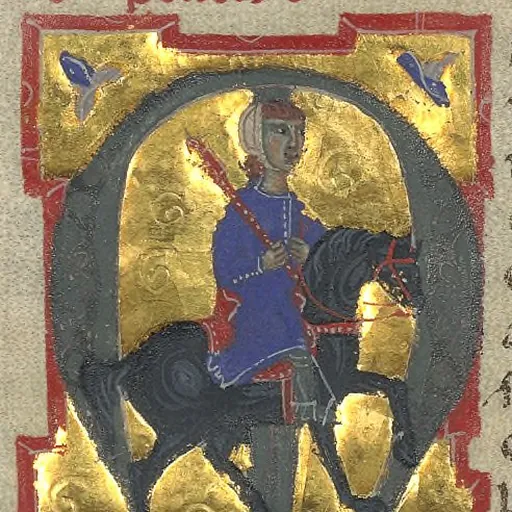
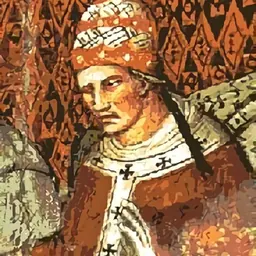
Courtly love A picture of Peirol illustrates his vida in a 13th-century chansonnierPeirol's works are simple and metaphysical; based on familiar concepts of courtliness, they lack originality. They are most characteristic in their abstractness and lack of concrete nouns; the adjectives are rarely sensory (related to sight, touch, etc.) and there are no extended references to nature as found in many troubadours. Among the personal statements in his works, he expresses a preference for the vers over the chansoneta. He wrote in the trobar leu (light poetry) tradition.
To Peirol, the "crafty lover" can "circumvent the foolish watchfulness of the jealous husband." Peirol gave up a nobler woman for a lesser "that I love in joy and peace and am loved in return." Peirol also waded into the discussion concerning whether it was permissible to love in a pure, elevated form at the same time as one sought low, physical love.
One of Peirol's works, "Mainta gens mi malrazona", survives with a melody to which a piano accompaniment was written as "Manta gens me mal razona" by E. Bohm. Among his surviving melodies, Théodore Gérold has ascertained a discord between music and lyric, and although Switten denies this, she admits that they are generally melancholic and not expressive of the mood of the lyrics (if one is conveyed).
A trouvère, Guiot de Dijon, writing in Old French, probably modelled his song after Peirol's love song .
Peirol also tried his hand at the art of the sirventes with the "Ren no val hom joves que no.s perjura", which was widely copied. This poem, which has stark and vivid imagery and even a prosaic reference to merchants, is so unusual for Peirol that its authenticity has been placed in doubt.
Crusading songs Peirol supported the Third Crusade (1189–1192) and wrote a tenso, "Quant amors trobet partit" (When Love discovered that my heart / Had parted from his concerns), encouraging the kings of Europe to make peace and send aid to "the noble and valiant marquess" Conrad of Montferrat, then King of Jerusalem. Though Peirol expresses a desire to accompany his lord, Dalfi d'Alvernha, on the Crusade, he is ultimately convinced by Love not to abandon his lady (domna) by pointing out that "never by your intervention will the Turk and Arab yield up the Tower of David" and giving the counsel: "love and sing often." He placed some of the blame on the Emperor Frederick II in a crusading song — his last poem — entitled "Pus flum Jordan ai vist e.l monimen". He even went so far as to mock the imperial eagle and praise the victorious Sultan of Egypt (Anta y avetz e.l Soudan onramen).
"M'entencio ai tot'en un vers mesa", one of Peirol's cansos and not one of his crusading songs, was used twice around the time of the Eighth Crusade (1270) as the basis for a contrafactum in support of the Crusades. First, Ricaut Bonomel, a Palestinian Templar, wrote a scathing analysis of the future of Christianity in the Holy Land, and a few years after that, Austorc d'Aurillac, composed a sirventes encouraging conversion to Islam. Both later poems were exercises in reverse psychology and attempts to spur further Crusades. exist featuring at least one recording of a Peirol song. Below are some recordings, alphabetically by poem name. (If you have enabled JavaScript, you can reorder the table by clicking any column heading.)
Poem Recorded by Album Year "Ab gran joi mou maintas vetz e comenssa" (as "Ab joi") Graziella Benini, Walter Benvenuti Troubadours, Vol. 3 + Courts, Kings, & Troubadours 1979? "D'eissa la razon qu'ieu suoill" (as "D'elsa la razon") I Ciarlatani Codex Manesse 1996 "D'un sonet vau pensan" Graziella Benini, Walter Benvenuti Troubadours, Vol. 3 + Courts, Kings, & Troubadours 1979? "Mainta gens mi malrazona" (as "Manhta gens mi malrazona") Gérard Zuchetto, et al. Terre de Troubadours(Land of Troubadours) 1998 "Mainta gens mi malrazona" (as "Manhtas gens") Troubadours Art Ensemble Troubadours Art Ensemble – Vol. 2 2001 "M'entencion ai tot' en un vers mesa" (as "M'entensio") Ensemble Jehan de Channey Trouvères et Troubadours 1994 "Per dan que d'amor mi veigna" (as "Per dan") Graziella Benini, Walter Benvenuti Troubadours, Vol. 3 + Courts, Kings, & Troubadours 1979? "Quant Amors trobet partit" Graziella Benini, Walter Benvenuti Troubadours, Vol. 3 + Courts, Kings, & Troubadours 1979?
Don’t just read it —
keep it.
Full-length biographies made to live with: read them, listen on the way to work, watch them tonight.
- E-book
- Audio
- Video
Instant download · yours to keep · every purchase keeps this site free
Important facts
People in Peirol's life
Named in this biography and alive at the same time

Related people
Same field, nearest in time


Contemporaries
People whose lives overlapped Peirol's


Frequently asked questions
Who was Peirol?
troubadour
When was Peirol born?
Peirol was born in 1101.
When did Peirol die?
Peirol died in 1300.
What was Peirol's occupation?
Peirol was a troubadour, composer and poet.
What nationality was Peirol?
Peirol was French.
Sources & further reading
Cite this page
APA: Biography.guide. (2026). Peirol. https://biography.guide/peirol/
MLA: "Peirol." Biography.guide, https://biography.guide/peirol/.
Chicago: "Peirol." Biography.guide. https://biography.guide/peirol/.
Data last updated: 2026-09-20 · Spot an error? Report a correction.
Page generated 2026-09-27 05:09 UTC