
About Peircy Brett
Lived 1709 – 1781 (aged 71–72). Peircy Brett was a British politician and naval officer.
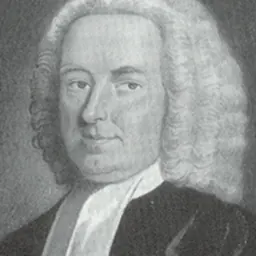
Admiral Sir Peircy Brett (1709 – 14 October 1781) was a Royal Navy officer. As a junior officer he served on George Anson's voyage around the world and commanded the landing party which sacked and burned the town of Paita in November 1741. During the Jacobite rising Brett saw action on 9 July 1745, when as captain of the fourth-rate he exchanged fire with the French ships Elizabeth and the Du Teillay: the Du Teillay at the time was carrying Charles Edward Stuart to Scotland with supplies and funds to support his cause. Brett also commanded the third-rate at the First Battle of Cape Finisterre in May 1747 during the War of the Austrian Succession. He commanded on the North America and West Indies Station during the Seven Years' War and later became Senior Naval Lord. He was also a Member of Parliament, representing the constituency of Queenborough from 1754 until 1774.
Naval career Early career Born the son of Peircy Brett, a master in the navy, Brett joined the Royal Navy as a volunteer in around 1725. Promoted to lieutenant on 6 December 1734, he was appointed to the fourth-rate . His promotion to captain was not confirmed until 29 December 1744 when a new Admiralty Board was convened which included Anson himself as a voting member. The Du Teillay at the time was carrying Charles Edward Stuart to Scotland with supplies and funds to support his cause. He transferred to the command of the third-rate in 1747 and commanded her at the First Battle of Cape Finisterre in May 1747 during the War of the Austrian Succession. In 1752 Brett commanded the Royal Yacht Royal Caroline for a voyage conveying King George II to Germany, for which he was awarded a knighthood. He was appointed captain responsible for all Royal yachts in 1754, and elected as MP for Queensborough in the same year. in the Chatham ministry under Sir Edward Hawke in December 1766, holding office until 28 February 1770. He was promoted to vice admiral on 18 October 1770 and, having resigned his constituency of Queensborough in 1774, he was promoted to full admiral on 29 January 1778. He lived at the Clock House in Beckenham in Kent; he died on 14 October 1781 and was buried at St George's Church, Beckenham.
Family Brett married Henrietta Colby; the couple had two sons who died in infancy, and a daughter.
Don’t just read it —
keep it.
Full-length biographies made to live with: read them, listen on the way to work, watch them tonight.
- E-book
- Audio
- Video
Instant download · yours to keep · every purchase keeps this site free
Important facts
People in Peircy Brett's life
Named in this biography and alive at the same time
Related people
Same field, nearest in time




Contemporaries
People whose lives overlapped Peircy Brett's





Frequently asked questions
Who was Peircy Brett?
Royal Navy admiral (1709-1781)
When was Peircy Brett born?
Peircy Brett was born in 1709.
When did Peircy Brett die?
Peircy Brett died on 14 October 1781.
What was Peircy Brett's occupation?
Peircy Brett was a politician and naval officer.
What nationality was Peircy Brett?
Peircy Brett was British.
Sources & further reading
Cite this page
APA: Biography.guide. (2026). Peircy Brett. https://biography.guide/peircy-brett/
MLA: "Peircy Brett." Biography.guide, https://biography.guide/peircy-brett/.
Chicago: "Peircy Brett." Biography.guide. https://biography.guide/peircy-brett/.
Data last updated: 2026-09-20 · Spot an error? Report a correction.
Page generated 2026-09-27 05:31 UTC