
Peggy Cooper Cafritz
American civil rights activist, educator, philanthropist, art collector
About Peggy Cooper Cafritz
Lived 1947 – 2018 (aged 70). Peggy Cooper Cafritz was an American civil rights advocate, teacher, philanthropist, art collector, activist and civil rights activist.
Peggy Cooper Cafritz (born Pearl Alice Cooper; April 7, 1947 – February 18, 2018) was an American art collector, educator, civil rights activist, philanthropist, and socialite.
Early life and education
Family life Born Pearl Alice Cooper, Peggy Cafritz belonged to one of the wealthiest African American families in Mobile, Alabama. She later changed her name legally to her childhood nickname, "Peggy." The Cooper family gained their wealth through Peggy's father, Algernon Johnson Cooper Sr., who owned insurance and mortuary businesses across the state. Her father and her mother, nee Gladys Mouton, were socially acquainted with famous jazz musician Duke Ellington, namesake of the Duke Ellington School of the Arts, which Cafritz would go on to co-found.
Elementary school Cafritz was raised Catholic in the segregated Jim Crow South. As a child, she attended a Catholic elementary school for Black children.
In sixth grade, Cafritz had the opportunity to meet Martin Luther King Jr. With her father, she attended a talk King gave while promoting his book Stride Toward Freedom: The Montgomery Story. Afterward, Dr. King came to her family's home and signed a copy of his book for her, saying "that I should aspire to be a quiet, strategic leader like my dad."
At age 10, Cafritz was sent to a Catholic summer camp in Michigan, where she was the only Black camper. Her father sent here there knowingly, believing it was important for her to get to know the white world. There she was the only camper put into a cabin alone, and she faced racist pranks, such as when other campers would tell her her mother had to come to visit, only for her to encounter another camper's Black maid. When she called home crying, her father told her she needed to learn how to deal with such racism, because she would encounter it her all her life. She was sent again the following year.
High school After her father tried to enroll his eldest son in a whites-only Jesuit high school, Cafritz and her siblings were banned from attending their local Catholic high schools. Instead, she was sent to boarding school at the predominantly white Saint Mary's Academy in Indiana.
The summer after graduating from high school, Cafritz and her friends decided to test the Civil Rights Act of 1964, which had recently been passed. They visited Mobile restaurants and, if the restaurant refused to serve them, they would report it to the Justice Department. When Cafritz and her friends buzzed for service at a drive-in restaurant, several white teenage boys approached their car, spat on them, threw soda through their car window, and jumped on the trunk and hood of the car, rocking it back and forth. Two police officers watched from nearby but did nothing. Cafritz and her friends were scared to drive away, afraid they would end up in prison if one of the boys on the car were injured, so they stayed inside the car until the boys left. Cafritz never spent another summer in Mobile.
Whille at GW, she helped create the Black Student Union (then called the Black Peoples Union) and worked successfully for the integration of fraternities and sororities.
After Cafritz's father died by suicide during her first year in law school, Cafritz took out a loan to keep her youngest brother in boarding school. She said her father's suicide stemmed from financial difficulties.
In addition to working at Post-Newsweek, she also worked throughout the 1970s as a documentary producer for the D.C. television station WTOP (now WUSA) and as an arts reviewer at D.C.'s PBS affiliate, WETA. Over the course of this work, she earned both Emmy and Peabody awards. It was modeled after New York City's High School of Performing Arts.
Ellington alumni include Dave Chappelle, Denyce Graves, Hank Willis Thomas, and Meshell Ndegeocello.
Ellington continued to be important to Cafritz for the rest of her life, and she took on several roles within the school and its fundraising organization, the Ellington Fund.
Contributions to the Art World Cafritz began her art collection in college by purchasing several pieces of African art brought back from the continent by members of Howard University's Student Nonviolent Coordinating Committee, some of whom had dropped out of college and supported themselves by reselling art they bought in Africa. Another person from whom she purchased art while still a student was Warren M. Robbins, whose collection of African art would later lead to the creation of the Smithsonian's National Museum of African Art.
Cafritz's relationship with Conrad Cafritz, who was also born into wealth and was a successful real estate developer, conplimented her ability to become a serious art collector. She was critical of the lack of inclusion of and opportunity for Black artists in the mainstream American art world, and her interest in racial equity was linked to her values as an art collector. As she continued to visit museums, and got to know scores of young artists as they graduated from Ellington and fought to begin artistic careers, the more her interest in the arts became enmeshed with her values in the political and social arenas. She got involved in the political side of the arts, and she made it her “purpose that this nation face the absence, the erasure, the impermanence, the non-inclusion of African Americans in our cultural treasure.” In 1968, she became a founding member of the DC Commission on the Arts and Humanities, which she also chaired from 1989 to 1999. In 1989 she became co-chair of the Smithsonian's Cultural Equity Committee. She was the youngest trustee ever appointed to the American Film Institute. She joined the Painting and Sculpture Acquisitions Committee at the Whitney Museum of American Art.
In 2009, a house fire destroyed her home in D.C.'s Kent neighborhood, ravaging the eight-bedroom architectural landmark where she held salons and kept her art collection, one of the largest private collections of African American and African art. Among those 300 works destroyed in the fire were works by Jacob Lawrence and Romare Bearden. She reached a settlement with the District of Columbia Water and Sewer Authority over the fire for their inadequate pressure in the hydrants.
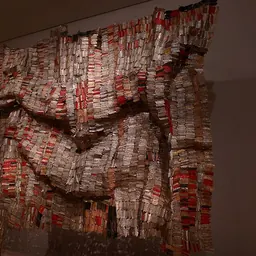
Cafritz moved to Dupont Circle in 2010 and continued to grow her collection. Included in the Cafritz collection is Carrie Mae Weems, El Anatsui, Chris Ofili, Mickalene Thomas, Glenn Ligon, Simone Leigh, Titus Kaphar, LaToya Ruby Frazier, William Villalongo, Tschabalala Self, Nathaniel Mary Quinn and Njideka Akunyili Crosby, whose work is featured on the cover of a 2018 book about Cafritz's collection. Upon her death, she bequeathed more than 250 works by Black artists to the Duke Ellington School of the Arts and over 400 to the Studio Museum in Harlem, marking the largest gift ever made of contemporary art by artists of African descent.
Cafritz was the first collector for many visual artists and has sponsored many projects including Spike Lee's Malcolm X.
Other Positions and Accomplishments In the 1970s, she was the youngest fellow of Woodrow Wilson International Center for Scholars. She was Catholic and he was Jewish. was an AIDS activist and Democratic Party political strategist.
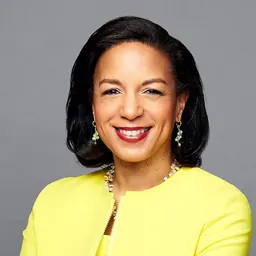
Cafritz had many mentees, unofficial foster children, and several godchildren, including Susan Rice and her brother, John Rice.
Cafritz was a prominent figure in the Washington, D.C., social scene, socializing with cultural and political figures including Quincy Jones, Gloria Steinem, Bill Clinton, Vernon Jordan, and Alma Powell.
Death
Cafritz died in Washington, D.C., on February 18, 2018, from complications from pneumonia after a period of declining health.
Works and publications
Don’t just read it —
keep it.
Full-length biographies made to live with: read them, listen on the way to work, watch them tonight.
- E-book
- Audio
- Video
Instant download · yours to keep · every purchase keeps this site free
Important facts
People in Peggy Cooper Cafritz's life
Named in this biography and alive at the same time




Related people
Same field, nearest in time

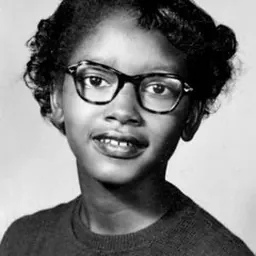

Contemporaries
People whose lives overlapped Peggy Cooper Cafritz's




Frequently asked questions
Who was Peggy Cooper Cafritz?
American civil rights activist, educator, philanthropist, art collector
When was Peggy Cooper Cafritz born?
Peggy Cooper Cafritz was born on 7 April 1947 in Mobile.
When did Peggy Cooper Cafritz die?
Peggy Cooper Cafritz died on 18 February 2018 in Washington, D.C..
What was Peggy Cooper Cafritz's occupation?
Peggy Cooper Cafritz was a civil rights advocate, teacher, philanthropist, art collector, activist and civil rights activist.
What nationality was Peggy Cooper Cafritz?
Peggy Cooper Cafritz was American.
Sources & further reading
· Wikipedia: Peggy Cooper Cafritz
· DBpedia: Peggy Cooper Cafritz
Cite this page
APA: Biography.guide. (2026). Peggy Cooper Cafritz. https://biography.guide/peggy-cooper-cafritz/
MLA: "Peggy Cooper Cafritz." Biography.guide, https://biography.guide/peggy-cooper-cafritz/.
Chicago: "Peggy Cooper Cafritz." Biography.guide. https://biography.guide/peggy-cooper-cafritz/.
Data last updated: 2026-09-20 · Spot an error? Report a correction.
Page generated 2026-09-27 05:32 UTC