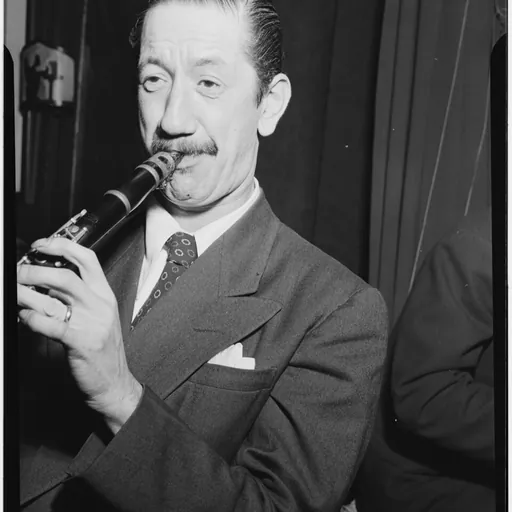
About Pee Wee Russell
Lived 1906 – 1969 (aged 62). Pee Wee Russell was an American clarinetist, jazz musician, recording artist and musician.
Charles Ellsworth "Pee Wee" Russell (March 27, 1906 – February 15, 1969) was an American jazz musician. Early in his career he played clarinet and saxophones, but he eventually focused solely on clarinet.
With a highly individualistic and spontaneous clarinet style that "defied classification",
Early life Pee Wee Russell was born in Maplewood, Missouri, United States, then piano, disliking the scales and chord exercises, and then drums – including all the associated special effects. Then his father sneaked young Ellsworth into a dance at the local Elks Club to a four- or five-piece band led by New Orleans jazz clarinetist Alcide "Yellow" Nunez. Russell was amazed by Nunez's improvisations: "[He] played the melody, then got hot and played jazz. That was something. How did he know where he was or where he was going? Pee Wee now decided that his primary instrument would be the clarinet, and the type of music he would play would be jazz. He approached the clarinetist in the pit band at the local theatre for lessons and bought an Albert system instrument. His teacher was Charlie Merrill, who used to pop out for shots of corn whiskey during lessons.
His family moved to St. Louis, Missouri, in 1920, and that September, Russell was enrolled in the Western Military Academy in Alton, Illinois. He remained enrolled there until October the following year, though he spent most of his time playing clarinet with various dance and jazz bands. He began touring professionally in 1922 and travelled widely with the Allen Brothers tent show and on riverboats St. Paul and J.S. He also played with a Charles Creath band at the Booker T. Washington Theatre, a cultural epicenter for African Americans at the time. Russell's recording debut was in 1924 with Herb Berger's Band in St. Louis on "Fuzzy Wuzzy Bird".
It was bandleader Herbert Berger, whose hotel band Russell had joined after leaving Western Military Academy, who gave him the nickname "Pee Wee".
Career
From his earliest career, Russell's style was distinctive. The notes he played were somewhat unorthodox when compared to his contemporaries, and he was sometimes accused of playing out of tune. By the mid-1920s, Russell was a sought-after jazz clarinetist and worked with Jack Teagarden in pianist Peck Kelly's band in Texas. In 1926, he joined Jean Goldkette's band, and the following year, he left for New York City to join Red Nichols. While with Nichols's band, Russell did frequent freelance recording studio work, on clarinet; soprano, alto, and tenor saxophones; and bass clarinet. In 1932, he recorded with the Rhythmakers in New York City. He worked with various bandleaders (including Louis Prima) before beginning a series of residences at the jazz club Nick's in Greenwich Village, Manhattan, in 1937. He played with Bobby Hackett's big band, and began playing with Eddie Condon, with whom he would continue to work, off and on, for much of the rest of his life
During World War II, he recorded V-Disc sides with Muggsy Spanier and the V-Disc All Stars. His composition "Pee Wee Speaks" with Spanier was released as a V-Disc, as Navy V-Disc 135 and as Army V-Disc 344 in January, 1945.
From the 1940s onwards, Russell's health was often poor, exacerbated by alcoholism – which led to a major medical breakdown in 1951. He had periods when he could not play. Some people considered that his style was different after his breakdown: Philip Larkin characterized it as "a hollow feathery tone framing phrases of an almost Chinese introspection with a tendency to inconclusive garrulity that would have been unheard of in the days when Pee Wee could pack more into a middle eight than any other thirties pick-up player".
He played with Art Hodes, Muggsy Spanier, and occasionally bands under his own name in addition to Condon. George Wein's George Wein & the Newport All-Stars album includes a slow blues by Russell called "The Bend's Blues".
His last gig was with Wein at the inaugural ball for President Richard Nixon on January 21, 1969. Russell died in a hospital in Alexandria, Virginia, less than three weeks later. They met at Nick's, where Mary was working as a hat-check girl.
Around 1948, amid worsening alcoholism and an undiagnosed illness, Russell left Mary and moved first to Chicago and then to San Francisco, where he collapsed and was hospitalized. Doctors there diagnosed pancreatitis and multiple cysts on his liver. After his release he was briefly estranged from Mary, who eventually located him, and the two reconciled and remained married until her death.
Encouraged by Mary, Russell took up painting abstract art as a hobby in his later years. Mary's death in the spring of 1967 had a severe effect on him.
Awards and honors 1987: Inductee in the Big Band and Jazz Hall of Fame
Compositions Pee Wee Russell wrote or co-wrote the following songs: "Pee Wee's Blues", "Pee Wee Speaks", "Oh! No", "Muskeegie Blues", "Three-Two-One Blues", "Stuyvesant Blues", "Pee Wee's Song", "The Bends Blues", "Midnight Blue", "Englewood", "Cutie Pie", "What's the Pitch", "Missy", "This Is It", "Pee Wee's Tune", and "But Why".
Discography As leader/co-leader 1938: Pee Wee Russell and His Rhythmakers (Atlantic, 1952) Original H.R.S recordings 1938–45: Jazz Original (Commodore, 1997) Riunite the Commodore recordings under Pee Wee Russel and Eddie Condon names Also issued as A Legend (Fontana-Mainstream, 1965) 1945.11: At The Copley Terrace (Jazzology, 1996) with Max Kaminsky 1952: Two of Us and Jazz (Rondo-lette, 1958) live at Storyville reissued, with inedits, as Clarinet Strut (Drive Archive, 1994) 1955: Jazz at Storyville, Vol. 1 and 2 (Savoy, 1952) 10" - Reissued as The Individualism of Pee Wee Russell (Savoy Jazz, 1978, 1995) with Ruby Braff 1953–54: We're In the Money (Storyville, 1956) reissued by (Black Lion, 1988) same title 1957: New Orleans Dixieland (Master High Fidelity) reissued as Dixieland U.S.A.(Coronet Records, 1959) 1958.02: Portrait of Pee Wee (Counterpoint, 1958) 3 track in Over the Rainbow (Xanadu, 1982) 1958: Pee Wee Plays Pee Wee (Bell Recs., 1961) entire 1958 session on Over the Rainbow (Xanadu, 1982) 1959.02: Pee Wee Russell Plays (Dot?) reissued as Salute to Newport (Impulse!, 1978) 1959: Newport Jazz Festival All Stars (Atlantic, 1960) with Buck Clayton, Bud Freeman, Vic Dickenson... 1960: The Greatest Dixieland Bands (Hudson?) (With Pee Wee Hunt, only side 1 of the album) 1960: Swingin' with Pee Wee (Swingville) with Buck Clayton; reissued in CD as The Pee Wee Russell Memorial Album (Prestige, 1999) 1961.02: Jazz Reunion (Candid) with Coleman Hawkins 1962.12: New Groove (Columbia, 1963) 1963.04: Ask Me Now! (Impulse!, 1966) 1964.02: Hot Licorice (Honey Dew, 1977) live at Bovi's Tavern 1964.02: Gumbo (Honey Dew, 1977) live at Bovi's Tavern 1966.10: The College Concert (Impulse!) with Henry Red Allen 1967.02: The Spirit of '67 with Oliver Nelson (Impulse!) – Oliver Nelson as arranger
As sideman With Bix Beiderbecke Bix Beiderbecke, Vol. 2: At The Jazz Band Ball 1927–1928 (Columbia, 1990) With Ruby Braff Hi-Fi Salute to Bunny (RCA Victor, 1957) The Ruby Braff Octet with Pee Wee Russell & Bobby Henderson at Newport (Verve, 1957) With Boyce Brown (aka "Brother Brown") Brother Matthew With Eddie Condon's Jazz Band (ABC-Paramount, 1956) lead credits as "Brother Mathew and Eddie Condon's Jazz Band" With Eddie Condon Eddie Condon on Stage (1949 live recording, on side 1 of album released by Saga, 1973) Eddie Condon's Treasury of Jazz (Columbia, 1956) That Toodlin' Town (Warner Bros., 1959) With Jimmy McPartland and Wild Bill Davison Dixieland At Carnegie Hall (25 Top Stars) (Roulette, 1958) With Thelonious Monk Miles & Monk at Newport (Columbia, 1963) With Al Sears Things Ain't What They Used to Be (Swingville, 1961) as part of the Prestige Swing Festival With George Wein George Wein & the Newport All-Stars (Impulse!, 1962) With Various Take Me to the Land of Jazz (Living Era ASV CD, 2001) 24 recordings 1927–1946
Don’t just read it —
keep it.
Full-length biographies made to live with: read them, listen on the way to work, watch them tonight.
- E-book
- Audio
- Video
Instant download · yours to keep · every purchase keeps this site free
Important facts
People in Pee Wee Russell's life
Named in this biography and alive at the same time


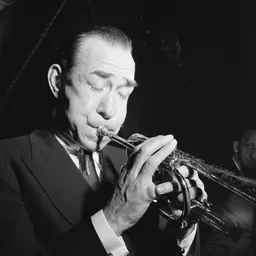

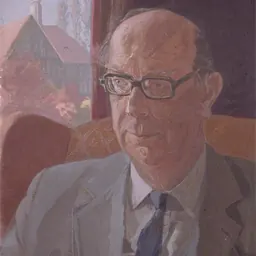
Related people
Same field, nearest in time

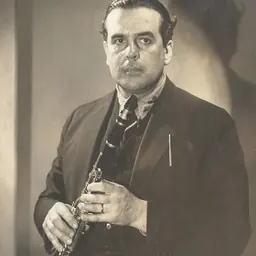



Contemporaries
People whose lives overlapped Pee Wee Russell's


Frequently asked questions
Who was Pee Wee Russell?
American musician (1906–1969)
When was Pee Wee Russell born?
Pee Wee Russell was born on 27 March 1906 in Maplewood.
When did Pee Wee Russell die?
Pee Wee Russell died on 15 February 1969 in Alexandria.
What was Pee Wee Russell's occupation?
Pee Wee Russell was a clarinetist, jazz musician, recording artist and musician.
What nationality was Pee Wee Russell?
Pee Wee Russell was American.
Sources & further reading
Cite this page
APA: Biography.guide. (2026). Pee Wee Russell. https://biography.guide/pee-wee-russell/
MLA: "Pee Wee Russell." Biography.guide, https://biography.guide/pee-wee-russell/.
Chicago: "Pee Wee Russell." Biography.guide. https://biography.guide/pee-wee-russell/.
Data last updated: 2026-09-20 · Spot an error? Report a correction.
Portrait: Wikimedia Commons · author & licence
Page generated 2026-09-27 04:58 UTC