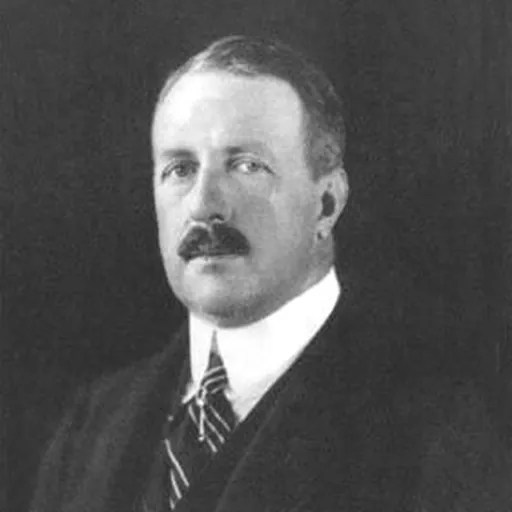
About Pedro de Alcantara, Prince of Grão-Pará
Lived 1875 – 1940 (aged 64). Pedro de Alcantara, Prince of Grão-Pará was a Brazilian politician.
Early life
Pedro was born on 15 October 1875 in the Imperial Palace of Petrópolis. He was the first son of Isabel, Princess Imperial of Brazil and her husband Prince Gaston, Count of Eu. As first son of the heir resumptive, he was Prince of Grão-Pará and second in line to the Brazilian throne.
Pedro was educated by preceptors, headed by the Baron of Ramiz, and lived in the Isabel Palace, in Rio de Janeiro, with his younger brothers until The proclamation of the republic, on 15 November 1889, when he was fourteen years old.
Exile
During the exile in 1890, Pedro moved along with his parents to the outskirts of Versailles. He reached the age of majority in 1893, and without desire to assume the monarchist cause, he left for Vienna, capital of the Austro-Hungarian Empire, to study in the military school at Wiener Neustadt. According to his own mother it was "clear that he must do something and a military career seems to us the only one he should follow". His younger brothers Luís and Antônio followed him at the same military school. Pedro was formed as Lieutenant of the Austro-Hungarian Army at the 4th Regiment of Uhlans and was later Captain on the reserve.
In 1900 Pedro met Countess Elisabeth Dobržensky de Dobrženicz (at this time a baroness), a noblewoman of the Austro-Hungarian Empire, daughter of Johann-Wenzel, Count Dobrzensky von Dobrzenicz (at this time a baron), who came from a former noble family of Bohemia, and Countess Elisabeth Kottulinsky, Baroness von Kottulin und Krzischkowitz. Baron Johann-Wenzel Dobrzensky von Dobrzenicz was elevated to the nobility title of count on 21 February 1906, by Franz Joseph I of Austria, at the request of Princess Isabel, until then his ancestors had been barons. Outraged, Silveira Martins replied: "So, madam, his fate is the convent."
The House of Orléans-Braganza did not prepare itself to the risks of a bloody adventure in the south of Brazil. If, on the one hand, the Prince Imperial had given a revolution that had men and arms a soul, on the other hand, he spared himself the sad end of Custódio José de Melo, Gumercindo Saraiva, and so many others who measured forces against the republic.
Renunciation In 1908 Dom Pedro wanted to marry Countess Elisabeth Dobržensky de Dobrženicz (1875–1951) who, although a noblewoman of the Kingdom of Bohemia, did not belong to a royal or reigning dynasty. Although the constitution of the Brazilian Empire did not require a dynast to marry equally, his mother ruled that the marriage would not be valid dynastically for the Brazilian succession, To solemnize this, Dom Pedro, aged thirty-three, signed the document translated here:
This renunciation was followed by a letter from Isabel to royalists in Brazil:
Nonetheless, a few years before his death Prince Pedro de Alcântara told a Brazilian newspaper: "My resignation was not valid for many reasons: besides, it was not a hereditary resignation."
But years later he had rectified his position:
It is there that I intend to recover the rights of eventual succession to the throne of Brazil, with prejudice to d. Pedro Henrique, my nephew, denying my resignation in 1908. My resignation in 1908 is valid, although many monarchists ... understood that, politically and by the Brazilian laws in force in 1889, it must be ratified by the should the monarchy be restored. In fact, in my family there will never be dissensions or disputes over imperial power.
Death of the Princess Imperial After the death of the Princess Imperial in 1921, the deceased Dom Luiz's son, Prince Pedro Henrique of Orléans-Braganza, assumed the position of claimant to the Brazilian throne and was recognized as such by many of Europe's dynasties.
Return to Brazil Dom Pedro's obituary, published on the Jornal do Brasil on 30 January 1940. The text reads (translated from Portuguese):
Dom Pedro, after the decree exiling the imperial family was rescinded, came to Brazil to make hunting excursions in the Brazilian backlands. Accompanied by his secretary, he made between 1926 and 1927 one of the best-known trips of the time: the "auto-raid" from Bolivia to Rio de Janeiro, traveling four thousand kilometers by car on practically impassable roads. From this expedition there are reports published by Mario Baldi in Brazilian and European illustrated newspapers and magazines. Many photographs were made at the time; The images are part of the collection Mario Baldi, the secretary of culture of Teresópolis, city where the Austrian lived. Another expedition was made by the prince and his secretary, this time with the children of Dom Pedro, in 1936.
On this occasion the expeditionaries visited indigenous villages of the Brazilian backwoods. The magazine A Noite Illustrada published several reports and photographs of Mario Baldi, who did the documentation of the adventure again. Dom Pedro de Alcântara returned to Brazil in the 1930s, establishing himself in the Grão-Pará Palace, in Petrópolis. He became an obligatory figure in local celebrations and achievements, being greatly admired by the warm and friendly manner in which he always addressed his compatriots. In that same city the prince died, at 64 years of age, the victim of a respiratory illness, and was buried in the local cemetery with honors of head of state. In 1990, his remains were transferred along with his wife's to the Imperial Mausoleum in the Cathedral of St. Peter of Alcantara in Petrópolis, where they lie next to the tombs of his parents and grandparents in a simple vault.
Honors Prince Pedro de Alcântara was a recipient of the following Brazilian dynastic orders:
He was a recipient of the following foreign honors:
Issue Pedro and Elisabeth married on 14 November 1908 in Versailles, France, and had 5 children:
Princess Isabelle of Orléans-Braganza (13 August 1911 – 5 July 2003) married Henri, Count of Paris – they are the grandparents of Prince Jean, Duke of Vendôme (born 1965), the current Orleanist pretender to the throne of France. Prince Pedro Gastão of Orléans-Braganza (19 February 1913 – 27 December 2007) married Princess Maria de la Esperanza of Bourbon-Two Sicilies – they are the parents of Princess Maria da Gloria, Duchess of Segorbe, the last Crown Princess of Yugoslavia. Princess Maria Francisca of Orléans-Braganza (8 September 1914 – 15 January 1968) married Duarte Nuno, Duke of Braganza – they are the parents of Duarte Pio, Duke of Braganza, the current pretender to the throne of Portugal. Prince João Maria of Orléans-Braganza (15 October 1916 – 26 June 2005) married Fatima Sherifa Chirine (1923–1990), widow of Prince Hassan Toussoun of Egypt. Princess Teresa of Orléans-Braganza (18 June 1919 – 18 April 2011) married Ernesto António Maria Martorell y Calderó (1921–1985).
After his death, his son Prince Pedro Gastão assumed the headship of the Petrópolis branch of the Imperial House of Brazil.
Ancestry
Don’t just read it —
keep it.
Full-length biographies made to live with: read them, listen on the way to work, watch them tonight.
- E-book
- Audio
- Video
Instant download · yours to keep · every purchase keeps this site free
Important facts
Family & relationships
People in Pedro de Alcantara, Prince of Grão-Pará's life
Named in this biography and alive at the same time

Related people
Same field, nearest in time


Contemporaries
People whose lives overlapped Pedro de Alcantara, Prince of Grão-Pará's
Frequently asked questions
Who was Pedro de Alcantara, Prince of Grão-Pará?
(1875-1940)
When was Pedro de Alcantara, Prince of Grão-Pará born?
Pedro de Alcantara, Prince of Grão-Pará was born on 15 October 1875 in Petrópolis.
When did Pedro de Alcantara, Prince of Grão-Pará die?
Pedro de Alcantara, Prince of Grão-Pará died on 29 January 1940 in Petrópolis.
What was Pedro de Alcantara, Prince of Grão-Pará's occupation?
Pedro de Alcantara, Prince of Grão-Pará was a politician.
What nationality was Pedro de Alcantara, Prince of Grão-Pará?
Pedro de Alcantara, Prince of Grão-Pará was Brazilian.
Sources & further reading
· Wikipedia: Pedro de Alcantara, Prince of Grão-Pará
· DBpedia: Pedro de Alcântara, Prince of Grão-Pará
Cite this page
APA: Biography.guide. (2026). Pedro de Alcantara, Prince of Grão-Pará. https://biography.guide/pedro-de-alcantara-prince-of-grao-para/
MLA: "Pedro de Alcantara, Prince of Grão-Pará." Biography.guide, https://biography.guide/pedro-de-alcantara-prince-of-grao-para/.
Chicago: "Pedro de Alcantara, Prince of Grão-Pará." Biography.guide. https://biography.guide/pedro-de-alcantara-prince-of-grao-para/.
Data last updated: 2026-09-27 · Spot an error? Report a correction.
Portrait: Wikimedia Commons · author & licence
Page generated 2026-10-04 11:57 UTC