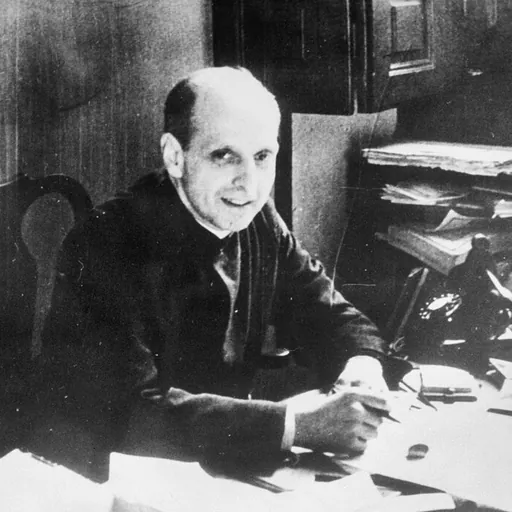
Pedro Arrupe
Twenty-eighth Superior General of the Society of Jesus
About Pedro Arrupe
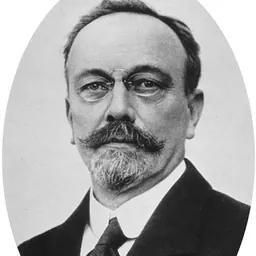
Lived 1907 – 1991 (aged 83). Pedro Arrupe was a Spanish catholic priest, university teacher, writer, regular cleric and catholic theologian.
Pedro Arrupe y Gondra, (14 November 1907 – 5 February 1991) was a Basque Spanish Catholic priest who served as the 28th superior general of the Society of Jesus from 1965 to 1983. He has been called a second founder of the Society, which he led in the implementation of the Second Vatican Council, especially with regard to faith that does justice and preferential option for the poor.
In 1983, paralysis from a stroke caused Arrupe to resign from office. He lived on until 1991, when he died in the local Jesuit infirmary.
Subsequent to these gathered findings, Arrupe decided not continue his medical studies. On 15 January 1927, he joined the Society of Jesus.
He was unable to pursue his studies for the priesthood in Spain because the Jesuits had been expelled by the Spanish Republican government (1931–1939), so he pursued his studies in the Netherlands and Belgium and at Saint Louis University School of Divinity in St. Marys, Kansas, where he was ordained in 1936. Arrupe then completed a doctorate in Medical Ethics.
Assignment in Hiroshima, Japan After his doctorate, Arrupe was sent to work as a missionary in Japan. His early years as missionary were very frustrating for him, with few Japanese converts. The surprise Japanese attack on the U.S. naval base at Pearl Harbor on 7 December 1941, widened the war. On 8 December Arrupe was celebrating Mass when Japanese authorities arrested and imprisoned him, on suspicion he was a spy. He expected to be executed. On Christmas Eve, Arrupe heard people gathering outside his cell door and he presumed he was about to be executed. However, the gathering was of fellow Catholics who had come to sing Christmas carols to him. Arrupe recalled that he burst into tears. Arrupe used his medical skills to help the wounded and the dying. The Jesuit novitiate was converted into a makeshift hospital, where between 150 and 200 people received care. Arrupe recalled, "The chapel, half destroyed, was overflowing with the wounded, who were lying on the floor very near to one another, suffering terribly, twisted with pain."
In 1958, Arrupe was appointed the first Jesuit provincial for Japan, a position he held until being elected Father General in 1965. Prior to being elected Father General, Arrupe visited Latin America, where he saw the region's extreme inequality. The strength of faith among the poor deeply impressed him.
Superior General At the thirty-first General Congregation of the Society of Jesus in 1965, Arrupe was elected twenty-eighth Superior General of the Jesuits, and served in that post until 1983. He was the second Basque to be Father General, the first being the founder Ignatius of Loyola himself. At his election, Moscow Radio spoke of an unusual man who would bring the Society of Jesus to its powers of the past.
After the changes following Vatican II (1962–1965), there was tension within the Society as to how the life of a Jesuit was to be lived. While some religious groups in the Catholic church have limits on the works they take on, the Society of Jesus encourages its members to follow their interest and talents and the needs of the times into a whole range of ministries – as theologians, missionaries, retreat directors, teachers, artists, writers, musicians, counselors, scientists, and pastors – to bring glory to God in all areas of human endeavor. This is in line with the crowning contemplation of Ignatius' Spiritual Exercises through which Jesuits learn to find God in all things (#236). As Arrupe's biographer said of him, he "saw the hand of God in everything."
At the thirty-second General Congregation which convened in 1975, Arrupe's dream of working for the poor was crystallised in the document "Our Mission Today: the Service of Faith and the Promotion of Justice." It stated: "Our faith in Jesus Christ and our mission to proclaim the Gospel demand of us a commitment to promote justice and enter into solidarity with the voiceless and the powerless." Thus, the decree basically defined all the work of the Jesuits as having an essential focus on the promotion of social justice as well as the Catholic faith. Arrupe was keenly aware that in the political climate of the 1970s, the Jesuits’ commitment to working for social justice would bring great hardship and suffering, particularly in those Latin American countries ruled by military juntas.
In a speech to European educators Arrupe made it clear where he stood on matters of faith and justice, saying: "I take very seriously the words of Gandhi, 'I love Christ but I despise Christians because they do not live as Christ lived.' Without a doubt Christian love of neighbor entails a duty to care for the wounds of those that have fallen victim to robbers and are left bleeding by the wayside."
A cause worth dying for
On 20 June 1977 the White Warriors Union death squad threatened to kill all 47 Jesuits serving in El Salvador unless they abandoned their work with the poor and left the country within a month. After consulting with the Jesuit community in El Salvador, Arrupe replied "They may end up as martyrs, but my priests are not going to leave because they are with the people." ) was gunned down whilst celebrating the Eucharist on 24 March 1980. Lay missionary Jean Donovan, Ursuline sister Dorothy Kazel and Maryknoll sisters Maura Clarke and Ita Ford were beaten, raped and murdered by non-uniformed members of the Salvadoran National Guard on 2 December 1980. They joined some 75,000 Salvadorans who were killed during this troubled period. Over the years JRS had served an estimated 40 million refugees. With new respect for the Jesuits, Pope John Paul allowed Dezza to call the thirty-third General Congregation and elect a successor to Arrupe, whose resignation was accepted on 3 September 1983 during the Congregation. He was succeeded by Peter Hans Kolvenbach. During the opening Session of the Congregation, Arrupe was wheeled into the hall, and a prayer which he had written was read aloud:
"More than ever I find myself in the hands of God. This is what I have wanted all my life from my youth. But now there is a difference; the initiative is entirely with God. It is indeed a profound spiritual experience to know and feel myself so totally in God's hands."
His funeral was held in the Church of the Gesu, Rome, on February 9 and was attended by crowds that filled the piazza outside the church. Also in attendance were 10 cardinals, 20 bishops, Giulio Andreotti (the Prime Minister of Italy), as well as other religious and civil dignitaries. His body, first interred in the Jesuit mausoleum at Campo Verano, was brought back into the Church of the Gesù where it currently lies in a side chapel.
Beatification process On 11 July 2018, the Father General of the Society of Jesus, Arturo Sosa, announced the beginning of Arrupe's beatification process by the Diocese of Rome. On 14 November 2018, a website was established with testimonials and archival material on his life. On 14 November 2024, Cardinal-elect Baldassare Reina presided over the diocesan tribunal's termination of its inquiry at the Lateran Palace. The Dicastery for the Causes of Saints will next determine whether Arrupe should be declared Venerable.
Memorials Pedro Arrupe memorial at University of San Francisco, California, United States.
Numerous Jesuit buildings, schools, communities, institutions, and programs have been named after Pedro Arrupe. They include: The Arrupe Center for Community Service & Social Responsibility at Marquette University The Colégio de Pedro Arrupe, a private school in Portugal dedicated to Arrupe which opened in 2009. The Sports hall in Wimbledon College, London. The Pedro Arrupe Center for Business Ethics at Saint Joseph's University in Philadelphia A residence hall at the University of San Francisco Arrupe Hall at Fairfield College Preparatory School, Connecticut The Arrupe House at the University of Scranton The Fr. Pedro Arrupe Campus Ministry Center at Fairfield University The main auditorium at the ITESO, a Jesuit university in Guadalajara, Mexico The middle school of Boston College High School, was named the "Arrupe Division" in 2007. Arrupe Jesuit University – AJU Harare, Zimbabwe A Jesuit Volunteer Corps house in Santa Clara, California, is named Casa Pedro Arrupe A school in the Philippines, the Pedro Arrupe Academy. The neighbourhood partnership program named the Arrupe House at Saint Ignatius High School in Cleveland, Ohio The "Arrupe Scholars" scholarship program at John Carroll University, Cleveland, Ohio A building in Pontifical Xavierian University in Bogotá, Colombia A class taken by Seniors at Creighton Preparatory School in Omaha, Nebraska, called the "Arrupe Experience Service Class" where the students make service trips every other day to local schools The Fr. Pedro Arrupe S.J. Office of Faith and Justice serves the students of Brophy College Preparatory by organizing service trips, immersion experiences, retreats, the annual Summit on Human Dignity, and much more. Arrupe College of Loyola University Chicago's Water Tower Campus is a 2-year college designed to serve underrepresented and underserved students. On their Lake Shore Campus, one of the Jesuit Community Houses is named Arrupe House, but has no direct tie to Arrupe College. Jesuit High School in Portland, Oregon has its History, English and Library building named after Pedro Arrupe. A residence hall at Loyola University Maryland, Baltimore, Maryland. A building in the Saint Louis University, Madrid Campus, called Padre Arrupe Hall The Arrupe Office of Social Formation of the Ateneo de Davao University, Davao City, Philippines A building on the campus of Rockhurst University in Kansas City, Missouri, called Pedro Arrupe, SJ, Hall which opened in 2015 A residence hall at Georgetown University in Washington, D.C., called Pedro Arrupe, S.J. Hall, which was opened in August 2016 Arrupe International Residence at the Ateneo de Manila University, Quezon City, Philippines The Pedro Arrupe Footbridge in Bilbao, Spain links the Guggenheim museum to the University of Deusto. Pedro Arrupe Human Rights Institute, an academic institution attached to the University of Deusto in Bilbao Arrupe Etxea, a civilian foundation initially covering all the social and pastoral activity of the jesuits in Bilbao and, since 2014, also San Sebastián, Vitoria-Gasteiz and Pamplona The Pedro Arrupe Centre, a multipurpose hall, and The Arrupe Building, a block of classrooms, at Jesuit school St. Aloysius' College, in Sydney, Australia Arrupe Hall at Sogang University, Seoul, South Korea Pedro Arrupe Auditorium at Carlos Pereyra School, Torreón, Mexico Arrupe Global Scholars Program, an MD-MPH combined degree program at the Creighton University School of Medicine, for students dedicated to global health Arrupe library at St Joseph's college Tiruchirappalli FACES: Father [Pedro] Arrupe {SJ} Centre for Ecology and Sustainability, at XLRI – Xavier School of Management, Jamshedpur, India, the first B-School in India, founded in 1949 ATCC: Arrupe Tribal Cultural Centre, Bhognadih, Sahebganj Dt, Jharkhand State, India.
Gallery
Don’t just read it —
keep it.
Full-length biographies made to live with: read them, listen on the way to work, watch them tonight.
- E-book
- Audio
- Video
Instant download · yours to keep · every purchase keeps this site free
Important facts
People in Pedro Arrupe's life
Named in this biography and alive at the same time






Related people
Same field, nearest in time


Contemporaries
People whose lives overlapped Pedro Arrupe's


Frequently asked questions
Who was Pedro Arrupe?
Twenty-eighth Superior General of the Society of Jesus (1907-1991)
When was Pedro Arrupe born?
Pedro Arrupe was born on 14 November 1907 in Bilbao.
When did Pedro Arrupe die?
Pedro Arrupe died on 5 February 1991 in Rome.
What was Pedro Arrupe's occupation?
Pedro Arrupe was a catholic priest, university teacher, writer, regular cleric and catholic theologian.
What nationality was Pedro Arrupe?
Pedro Arrupe was Spanish.
Sources & further reading
Cite this page
APA: Biography.guide. (2026). Pedro Arrupe. https://biography.guide/pedro-arrupe/
MLA: "Pedro Arrupe." Biography.guide, https://biography.guide/pedro-arrupe/.
Chicago: "Pedro Arrupe." Biography.guide. https://biography.guide/pedro-arrupe/.
Data last updated: 2026-09-20 · Spot an error? Report a correction.
Page generated 2026-09-27 05:09 UTC