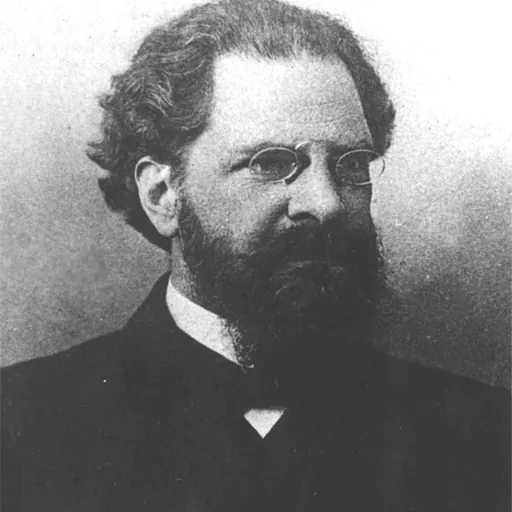
About Pavel Shternberg
Lived 1865 – 1920 (aged 54). Pavel Shternberg was a Russian astronomer.
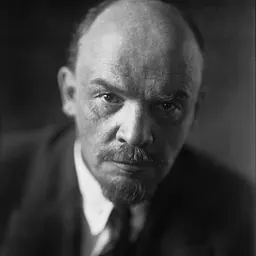
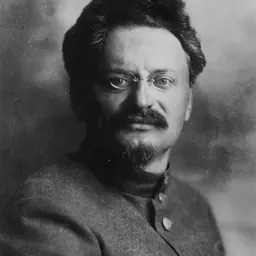
Pavel Karlovich Shternberg (; April 2, [ O.S. March 21] 1865 – February 1, 1920) was a Russian professor, academic, astronomer, and Bolshevik revolutionary of German descent. Shternberg contributed to the abolition of the Tsarist government by Alexander Kerensky during the February Revolution of 1917. He was an acquaintance of two notable revolutionaries, Vladimir Lenin and Leon Trotsky.
Life and career Pavel Shternberg was born in Oryol, one of eleven children of a railway contractor. His father was a German immigrant and a subject of Duchy of Braunschweig who used to be a merchant. He studied mathematics and physics at Moscow University, where he showed exceptional ability in astronomy. His work included processing on the data on Jupiter's Great Red Spot. His significant astronomical contributions include discovery of the planetary perturbations, the measurement of the latitude of the Moscow Astronomical Observatory, and the application of photography to astronomy. The primary subject of his astrophotography was capturing double stars. In 1914, he was appointed a professor of Moscow University. In 1916, he was appointed head of the Moscow Observatory.
Unusually, as well as being one of the leading Russian scientists of his day, Shternberg was an active revolutionary. Varvara Yakovleva, his future wife, who was a teenage mathematics student in a Moscow women's college, is credited with persuading him to join Bolshevik faction of the Russian Social Democratic Labour Party in 1905. During the 1905 revolution, he hid weapons in his laboratory that were used during the armed Moscow rising.
In January 1918, the provincial commissioner and professor of the Higher Courses for Women, Pavel Sternberg, issued a security certificate to the collection of the State Darwin Museum. In March 1918, concurrently, he was appointed a member of the Collegium of the People's Commissariat of Education and head of the Department of Higher Education. In July 1918, he took part in the preparation and holding of the Meeting of University Workers on the Reform of Higher Education.
In November 1919, the car in which he was travelling fell through the ice into a river in Siberia. Despite being rushed back to Moscow for treatment, he died of pleurisy.
Legacy
The Shternberg Astronomical Institute, and the lunar crater Shternberg, are named after him.
Don’t just read it —
keep it.
Full-length biographies made to live with: read them, listen on the way to work, watch them tonight.
- E-book
- Audio
- Video
Instant download · yours to keep · every purchase keeps this site free
Important facts
Family & relationships
People in Pavel Shternberg's life
Named in this biography and alive at the same time


Related people
Same field, nearest in time


Contemporaries
People whose lives overlapped Pavel Shternberg's



Frequently asked questions
Who was Pavel Shternberg?
Russian astronomer
When was Pavel Shternberg born?
Pavel Shternberg was born on 2 April 1865 in Oryol.
When did Pavel Shternberg die?
Pavel Shternberg died on 1 February 1920 in Moscow.
What was Pavel Shternberg's occupation?
Pavel Shternberg was an astronomer.
What nationality was Pavel Shternberg?
Pavel Shternberg was Russian.
Sources & further reading
Cite this page
APA: Biography.guide. (2026). Pavel Shternberg. https://biography.guide/pavel-shternberg/
MLA: "Pavel Shternberg." Biography.guide, https://biography.guide/pavel-shternberg/.
Chicago: "Pavel Shternberg." Biography.guide. https://biography.guide/pavel-shternberg/.
Data last updated: 2026-09-23 · Spot an error? Report a correction.
Portrait: Wikimedia Commons · author & licence
Page generated 2026-09-27 05:05 UTC