
About Paulo Leminski
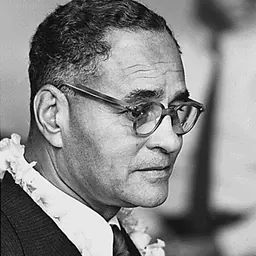
Lived 1944 – 1989 (aged 44). Paulo Leminski was a Brazilian poet, writer, translator, professor, composer and journalist.
Paulo Leminski Filho (; August 24, 1944 – June 7, 1989) was a Brazilian writer, poet, translator, journalist, advertising professional, songwriter, literary critic, biographer, teacher and judoka. He had a remarkable poetry, as he invented his own way of writing, with puns, jokes with popular sayings and the influence of haiku, in addition to abusing slangs and profanity.
Biography Leminski was born in Curitiba, in the Brazilian state of Paraná, in 1944. His father, Paulo Leminski, was of Polish descent, and his mother, Áurea Pereira Mendes, was of Portuguese, Afro-Brazilian and indigenous descent. In 1958, Leminski was sent to the Mosteiro de São Bento in São Paulo, where he stayed for a year. In 1965 he became a history and creative writing teacher, even though he had never finished college.
In 1968 he married for the second time, this time with fellow poet Alice Ruiz.
In 1970 he published in various magazines, such as Qorpo Estranho, Muda Código and Raposa.
Leminski was a polyglot; he knew French, English, Spanish, Japanese, Latin and Greek.
In 1988, after a 20-year marriage, Leminski divorced Alice Ruiz, with whom he was working on his last poetry book, the exquisite La vie en close, which appeared posthumously in 1991.
Leminski died on June 7, 1989, of liver cirrhosis, Gilberto Gil honored one of Leminski's daughters with the song Estrela. Estrela Leminski had published in 2014 an album called Leminskanções with 25 songs composed by her father and one song book, registering around 109 compositions by Leminski.
Leminski had a major Japanese influence through his life and writing, such as Zen Buddhism, haiku, and judo.
Literary works In 1975, his first romance and major work, Catatau, was published. It took 8 years to be completely written.
In 1980, with initiative of friends, Não fosse isso e era menos não fosse tanto e era quase was published. An enthusiast of the culture of Japan, Leminski wrote a biography of the famous 17th-century haiku poet Matsuo Bashō in 1983. He also authored in the 1980s biographies of Leon Trotsky, Cruz e Sousa and Jesus Christ. The biography of Jesus has translations of gospels, and the biography of Matsuo Bashō has translations of his haiku, together with excerpts of his diaries and other haiku written by Eastern and Western authors. In 1985, he publishes Hai Tropikais, in partnership with Alice Ruiz. (1991 ), Winterverno (with João Suplicy, 1994), Metaformose: uma viagem pelo imaginário grego (1994 ), which won the Prêmio Jabuti prize in 1995 in the poetry category in 3rd place, O ex-estranho (1996), Gozo fabuloso (2004) It has sold over 200,000 copies and has been prepared an English translation for publication in 2022.
Don’t just read it —
keep it.
Full-length biographies made to live with: read them, listen on the way to work, watch them tonight.
- E-book
- Audio
- Video
Instant download · yours to keep · every purchase keeps this site free
Important facts
Family & relationships
People in Paulo Leminski's life
Named in this biography and alive at the same time

Related people
Same field, nearest in time




Contemporaries
People whose lives overlapped Paulo Leminski's




Frequently asked questions
Who was Paulo Leminski?
Brazilian poet (1944–1989)
When was Paulo Leminski born?
Paulo Leminski was born on 24 August 1944 in Curitiba.
When did Paulo Leminski die?
Paulo Leminski died on 7 June 1989 in Curitiba.
What was Paulo Leminski's occupation?
Paulo Leminski was a poet, writer, translator, professor, composer and journalist.
What nationality was Paulo Leminski?
Paulo Leminski was Brazilian.
Sources & further reading
Cite this page
APA: Biography.guide. (2026). Paulo Leminski. https://biography.guide/paulo-leminski/
MLA: "Paulo Leminski." Biography.guide, https://biography.guide/paulo-leminski/.
Chicago: "Paulo Leminski." Biography.guide. https://biography.guide/paulo-leminski/.
Data last updated: 2026-09-20 · Spot an error? Report a correction.
Page generated 2026-09-27 05:30 UTC