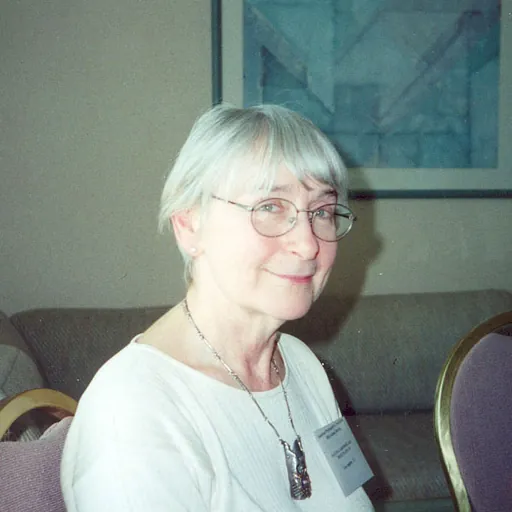
About Paulina Kernberg
Lived 1935 – 2006 (aged 71). Paulina Kernberg was an American and Chilean psychiatrist.
Paulina F. Kernberg (January 10, 1935 – April 12, 2006) was a Chilean-American child psychiatrist, child and adolescent psychoanalyst, professor of psychiatry at Weill Cornell Medicine, and consultant to the Clinton administration. She was internationally recognized for her research on personality disorders in children and adolescents, her pioneering use of play and mirror-based interviews, and her studies on divorce.
Early life and education Kernberg was born in Santiago, Chile, to Isaac and Rebecca (nee Ostray) Fischer. She studied at the University of Chile, where she earned both a Bachelor of Science degree and a Doctor of Medicine. She later married Otto F. Kernberg, a psychoanalyst and professor of psychiatry, with whom she shared a long-standing professional collaboration.
Career After medical school, Kernberg trained in psychiatry at the Menninger Clinic in Topeka, Kansas. She became a U.S. citizen in 1968 and entered psychoanalytic training at the Topeka Institute for Psychoanalysis.
From 1978 until her death, Kernberg was Director of the Residency Program in Child and Adolescent Psychiatry at Payne Whitney Westchester–Weill Cornell Medical Center. She also taught and supervised at the Columbia University Center for Psychoanalytic Training and Research, where she was a training and supervising analyst in both adult and child psychoanalysis.
According to the New York Times, Kernberg’s clinical style was “gentle but rigorous,” and she was especially known for helping children articulate feelings they struggled to express. Her work “demonstrated that personality disorders could be traced to early developmental struggles” and emphasized early treatment as both possible and necessary.
Classification of The Forms of Play
In her clinical research, Kernberg, often in collaboration with Lina Normandin, proposed that children’s play could be systematically classified into distinct forms, each with diagnostic and developmental significance. Form of play !! Description !! Clinical significance
The technique was designed to make observable the child’s processes of self-representation, identification, and differentiation. Kernberg argued that the mirror context elicits behaviors that reveal levels of personality integration, defensive operations, and quality of object relations.
Use of videotape in psychotherapy research Kernberg employed videotape recordings to study both the child and therapist during diagnostic and therapeutic encounters. Careful review of videotaped sessions, combined with structured observational tools, allowed her to explicate subtle affective exchanges, nonverbal cues, and regulatory mechanisms in the therapeutic dyad.
Mother–child relationship and cultural portrayals Kernberg examined the symbolic representation of the mother–child relationship in religious and cultural history. She analyzed depictions such as the Madonna and Child as expressions of universal attachment themes, using these portrayals to deepen psychoanalytic understanding of maternal bonds and their cultural resonance, reflecting the artists' early bonds with their own mothers.
Work on divorce Kernberg was among the first child psychiatrists to study the psychological consequences of divorce on children. She concluded that children frequently experienced divorce as second only to parental death in traumatic impact. Based on these findings, she helped establish one of the first clinical programs for children of divorced families at NewYork-Presbyterian Hospital.
Elián González case In 2000, the United States Department of Justice asked Paulina Kernberg to evaluate Elián González, the Cuban boy at the center of an international custody battle. She assessed González’s psychological state and concluded that reunification with his father was essential for his long-term psychological well-being.
As a consultant to the Clinton administration, Kernberg recommended child-centered strategies to help González reconnect with his father within their cultural Cuban context. Her conclusions generated controversy: while some critics alleged political influence, professional colleagues defended her reliance on developmental and psychoanalytic principles.
Work on defense mechanisms Based on the work of George E. Vaillant on adult development and defenses, Paulina Kernberg contributed to the understanding of defense mechanisms in children. In her chapter “Mechanisms of Defense” in the Comprehensive Textbook of Psychiatry (Kaplan & Sadock, 6th ed.), she outlined the developmental hierarchy of defenses, from primitive mechanisms such as denial, splitting, and projection to more mature defenses such as repression, intellectualization, and sublimation.
Defense mechanisms as observed in play In her chapter on defense mechanisms in the Comprehensive Textbook of Psychiatry (Kaplan & Sadock, 6th ed., 1995), Kernberg emphasized that defenses in children could be identified not only through verbal report but also through systematic observation of play. She argued that play provides a unique window into personality organization, since themes and storylines often reflect the child’s unconscious defenses.
Defense mechanism Observable play theme Clinical significance Denial Child ignores frightening or sad scenarios; abruptly shifts play topic Avoidance of anxiety; persistence indicates immature coping Projection Aggressive impulses attributed to toys or figures (“the bad doll did it”) Externalization of unwanted affects; common in disruptive behaviors Splitting Play characters divided rigidly into “all good” versus “all bad” Marker of primitive object relations; typical in borderline pathology Acting out Impulsive, destructive play without symbolic elaboration Direct expression of drive derivatives; suggests impulse-control difficulties Repression Absence of expected themes (e.g., family, separation) despite known stressors Exclusion of painful content from play narratives Intellectualization Child offers abstract or overly detailed explanations during play Reliance on thought to master conflict; observed in anxious/obsessive children Humor Use of jokes or playful exaggeration in role scenarios Adaptive channeling of conflict; considered a mature defense Sublimation Aggressive energy transformed into constructive play (e.g., building, drawing) Reflects higher ego integration and resilience
Kernberg’s framework linked observable play behavior with the developmental hierarchy of defenses, providing clinicians with a structured method for assessing personality organization in children.
Publications Kernberg authored or co-authored more than 100 publications, including articles, chapters, and books. Selected works include:
Kernberg, P. F. (1980). “Use of videotape in child psychiatry research and training.” Journal of the American Academy of Child Psychiatry, 19(4): 722–736. Kernberg, P. F. (1985). “Reflections on maternal imagery in religion and art.” International Journal of Psychoanalysis, 66: 247–261. Kernberg, P. F. (1990). Personality Disorders in Children and Adolescents. New York: Basic Books. . Kernberg, P. F. (1992). “Childhood precursors of personality disorders.” Journal of the American Academy of Child & Adolescent Psychiatry, 31(3): 391–397. Kernberg, P. F., & Normandin, L. (1994). Clinical Studies of Play and Personality Organization. London: Karnac. . Kernberg, P. F. (1995). “Mechanisms of Defense.” In H. Kaplan & B. Sadock (eds.), Comprehensive Textbook of Psychiatry, 6th ed., pp. 134–141. Baltimore: Williams & Wilkins. Kernberg, P. F. (1996). “Play in clinical assessment and treatment.” Child and Adolescent Psychiatric Clinics of North America, 5(3): 623–638. Kernberg, P. F. (1998). The Mirror Interview: A Diagnostic Tool for Assessing Personality Organization in Children and Adolescents. Hillsdale, NJ: Analytic Press. . Kernberg, P. F. (2000). “The impact of divorce on children.” Child Psychiatry and Human Development, 31(1): 3–14.
Teaching and influence An awardee of the 2006 APM George E. Daniels Merit Award, Kernberg lectured internationally in English, Spanish, and French, and was regarded as an outstanding teacher and supervisor. She received numerous honors and trained generations of child psychiatrists and psychoanalysts, integrating psychoanalytic theory with empirical research.
Legacy Kernberg’s work had lasting influence on child psychiatry and psychoanalysis. She was among the first to argue that personality disorders could be reliably identified in children and adolescents, shaping later research on early diagnosis and treatment. Her structured play and mirror interviews remain important tools in clinical training, and her integration of psychoanalytic concepts with empirical methods helped bridge gaps between psychodynamic and academic psychiatry.
The New York Times obituary noted that her insights “profoundly influenced how clinicians understand divorce, personality disorders, and the role of play in diagnosis and treatment.”
Personal life Kernberg was married to Otto F. Kernberg, a psychoanalyst, until her death. She died of cancer in New York City on April 12, 2006, at the age of 71.
Don’t just read it —
keep it.
Full-length biographies made to live with: read them, listen on the way to work, watch them tonight.
- E-book
- Audio
- Video
Instant download · yours to keep · every purchase keeps this site free
Important facts
People in Paulina Kernberg's life
Named in this biography and alive at the same time


Related people
Same field, nearest in time




Contemporaries
People whose lives overlapped Paulina Kernberg's



Frequently asked questions
Who was Paulina Kernberg?
American psychoanalyst (1935-2006)
When was Paulina Kernberg born?
Paulina Kernberg was born on 10 January 1935 in Santiago.
When did Paulina Kernberg die?
Paulina Kernberg died on 12 April 2006 in New York City.
What was Paulina Kernberg's occupation?
Paulina Kernberg was a psychiatrist.
What nationality was Paulina Kernberg?
Paulina Kernberg was American and Chilean.
Sources & further reading
Cite this page
APA: Biography.guide. (2026). Paulina Kernberg. https://biography.guide/paulina-kernberg/
MLA: "Paulina Kernberg." Biography.guide, https://biography.guide/paulina-kernberg/.
Chicago: "Paulina Kernberg." Biography.guide. https://biography.guide/paulina-kernberg/.
Data last updated: 2026-09-22 · Spot an error? Report a correction.
Portrait: Wikimedia Commons · author & licence
Page generated 2026-09-27 05:02 UTC