
About Paula Gunn Allen
Lived 1939 – 2008 (aged 68). Paula Gunn Allen was an American poet, novelist, writer, literary critic, opinion journalist and editor.
Paula Gunn Allen (October 24, 1939 – May 29, 2008) was an American poet, literary critic, activist, professor, and novelist. Of mixed-race European-American, Arab-American, and Native American descent, she identified with her mother's people, the Laguna Pueblo. Gunn Allen wrote numerous essays, stories and poetry with Native American and feminist themes, and two biographies of Native American women. She edited four collections of Native American traditional stories and contemporary writing.
In addition to her poetry and fiction, in 1986 she published the book, The Sacred Hoop: Recovering the Feminine in American Indian Traditions, in which she posited that Europeans had de-emphasized the role of women in their accounts of Native American cultures because of their own biases, as they were from patriarchal societies. Of mixed Scottish American, Lebanese-American, and Laguna descent, Allen always identified most closely with the Laguna, among whom she spent part of her childhood. She was not enrolled in any Native nation.
She was one of five children born to Ethel Gottlieb Francis, who came from the Keres Pueblo people, and Elias Lee Francis II. Her Lebanese-American father owned a local store, the Cubero Trading Company, and later served as the lieutenant governor of New Mexico from 1967 to 1970. Her parents were both musicians, and her brother, Lee Francis, went on to be a poet, storyteller, and educator.
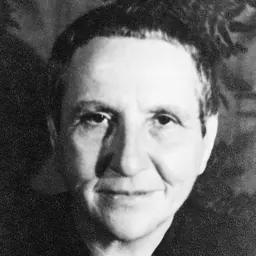
Allen first went to a mission school and graduated in 1957 from a boarding school called the "Sisters of Charity" located in Albuquerque. She first took an interest in writing in high school after discovering the work of Gertrude Stein.
Anthropological writings Based on her own experiences and her study of Indigenous cultures, Paula Gunn Allen wrote The Sacred Hoop: Recovering the Feminine in American Indian Traditions (1986), published on Beacon Press. The book argued that the dominant cultural view of Native American societies is biased and that European explorers and colonizers understood Native Peoples through the patriarchal lens. Gunn described the central role women played in many Native American cultures, including roles in political leadership, which were either downplayed or missed entirely by explorers and scholars from male-dominated European cultures. Allen presented the argument that most Native Americans at the time of European contact were matrifocal and egalitarian with only a small percentage reflecting the European patriarchal pattern. In spite of this, Allen's book and subsequent work has been influential in feminist and women's studies, encouraging other feminist readings of Native American cultures and literature, both by mainstream feminists, or in related streams such as Indigenous feminism.
Literary career Allen is well known as a novelist, poet and short story writer. Her work drew heavily on the Pueblo tales of Grandmother Spider and the Corn Maiden. It is noted for its strong political connotations. Critics have noted that Leslie Marmon Silko, also of Laguna descent, also draws on these traditional tales.
Her novel, The Woman Who Owned The Shadows (1983), features the woman Ephanie Atencio, the mixed-blood daughter of a mixed-blood mother who struggles with social exclusion and the obliteration of self.
As a poet, Allen published a collection of more than 30 years of work: Life Is a Fatal Disease: Collected Poems 1962-1995, judged to be her most successful. Allen's work is often categorized as belonging to the Native American Renaissance, but the author rejects the label.
Awards
1967: Julia Burgess Prize for Poetry, University of Oregon 1978: Creative Writing Award, National Endowment for the Arts 2001: Lifetime Achievement Award, Native Writers' Circle of the Americas
Allen was in two different marriages and divorced both times.
Two of Allen's children preceded her in death, Fuad Ali Allen, and Eugene John Brown. Son Fuad Ali Allen died in 1972 and her other son Eugene John Brown died in 2001. She was survived by two children, Lauralee Brown and Suleiman Allen.
Don’t just read it —
keep it.
Full-length biographies made to live with: read them, listen on the way to work, watch them tonight.
- E-book
- Audio
- Video
Instant download · yours to keep · every purchase keeps this site free
Important facts
People in Paula Gunn Allen's life
Named in this biography and alive at the same time



Related people
Same field, nearest in time

Contemporaries
People whose lives overlapped Paula Gunn Allen's





Frequently asked questions
Who was Paula Gunn Allen?
American writer (1939-2008)
When was Paula Gunn Allen born?
Paula Gunn Allen was born on 24 October 1939 in Albuquerque, Cubero.
When did Paula Gunn Allen die?
Paula Gunn Allen died on 29 May 2008 in Fort Bragg.
What was Paula Gunn Allen's occupation?
Paula Gunn Allen was a poet, novelist, writer, literary critic, opinion journalist and editor.
What nationality was Paula Gunn Allen?
Paula Gunn Allen was American.
Sources & further reading
Cite this page
APA: Biography.guide. (2026). Paula Gunn Allen. https://biography.guide/paula-gunn-allen/
MLA: "Paula Gunn Allen." Biography.guide, https://biography.guide/paula-gunn-allen/.
Chicago: "Paula Gunn Allen." Biography.guide. https://biography.guide/paula-gunn-allen/.
Data last updated: 2026-09-20 · Spot an error? Report a correction.
Page generated 2026-09-27 05:05 UTC