
Paul Werner
Austrian soldier who later fought for Prussia
About Paul Werner
Lived 1707 – 1785 (aged 77). Paul Werner was an Austrian military personnel, military commander and lieutenant general.
Johann Paul von Werner (11 December 1707 – 25 January 1785) was chief of the Prussian Hussar Regiment No. 6 (Brown Hussars); he also received the Prussian Order Pour le Mérite. Initially in Austrian service, he fought against Spain, France, the Ottoman Empire and against Prussia. One of Frederick the Great's trusted diplomats, Hans Karl von Winterfeldt, recruited him into Prussian service in 1750; subsequently, he fought for Prussia against the Austrians in the Seven Years' War and the War of Bavarian Succession. He was wounded once, and taken prisoner several times. The Prussian playwright Gotthold Lessing modeled the character of the sergeant in his Minna von Barnhelm on Werner.
Imperial service Born on 11 December 1707 in Raab, Hungary, Paul von Werner entered Habsburg imperial service in 1723 and became a cornet in the hussar regiment of Franz Leopold von Nádasdy in 1731, a lieutenant in 1733 and Rittmeister (captain of cavalry) in 1734. During his time with the imperial army, he participated in eight campaigns against Spain, eight against France, six against the Turks and four against Prussia. He was taken prisoner during the Battle of Bitonto in 1734, and fought in the Battle of Banja Luka (1737) and the Battle of Grocka (1739).
In August 1741, Field Marshal Count Neipperg sent a petition to the Hofkriegsrat, asking for a promotion for Werner but it was refused. During the War of Austrian Succession, Werner continued as a Rittmeister, first at Battle of Mollwitz (1741) and subsequently in the Battle of Chotusitz (1742).
Dissatisfaction with his lack of career progress extended throughout the war between Austria and Prussia and opened the door for other opportunities. These probably occurred during a spa stay in Karlsbad, where he met Prussian General Hans Karl von Winterfeldt. Winterfeldt fell into conversation with Werner and, during the course of it, learned of Werner's dissatisfaction with his lack of career advancement. Ever the opportunist, Winterfeld reported to King Frederick that Werner, at the beginning of the First Campaign of the Silesian Wars, had made a coup when, with 60 Hussars, he had routed several larger units. Subsequently, Werner entered Prussian service in 1750, where experienced soldiers were accepted regardless of religion. On 3 September 1761, he captured a Swedish position at the village of Uckerland, taking eight guns and 600 prisoners. In 1761, he joined the army of the Prince of Wurttemberg, which was to resume efforts to relieve the besieged fortress of Kolberg but had hardly any supplies. In September 1761, Werner rode from Platens to meet the Russian troops moving westward from Poland. On 12 September, he fought with 2,000 men against the Russians at Treptow on the Riga river. After heavy losses, he was captured by the Russians and imprisoned in Königsberg, where he remained until the end of 1762. When Peter III became Tsar, he freed Werner, but tried to convince him to join the Russian army. Werner returned to Frederick's army in Silesia. There he again became commander of a corps, which first marched from Upper Silesia to Moravia, then joined the army the Duke of Bevern at Peterswalde in Lower Silesia. On 16 August 1762, he and Zieten routed an army of 47,000 commanded by Leopold Joseph von Daun near Reichenbach. He then moved back to Upper Silesia. After the war, Werner became the commander of Naugarten. The play was a characteristic Soldatenstücke (soldier play) popular in the latter half of the 18th century - until today. In one amateur production a young Johann Wolfgang von Goethe played the part of Werner.
Werner died on 25 January 1785 on his Gut Bitschin estate, near Toszek, which he had bought in 1783. He was buried in the Franciscan monastery in Gliwice. His service was immortalized in 1851 on one of the honorary plates on the Equestrian statue of Frederick the Great, erected by the King's great great nephew, Frederick William IV.
Family Werner's parents were the Habsburg lieutenant colonel Johann Paul of Werner and his wife, Marie Katharina von Streit. He married Maria Dorothea Apollonia of Shimonsky on 29 August 1756. Her father was Ludwig Jaroslav of Schimonskym, Lord of Prisowitz and Pojanow. Only one of Werner's five sons survived him: August Albrecht Joseph Ludwig Karl (born 23 January 1763).
Don’t just read it —
keep it.
Full-length biographies made to live with: read them, listen on the way to work, watch them tonight.
- E-book
- Audio
- Video
Instant download · yours to keep · every purchase keeps this site free
Important facts
People in Paul Werner's life
Named in this biography and alive at the same time
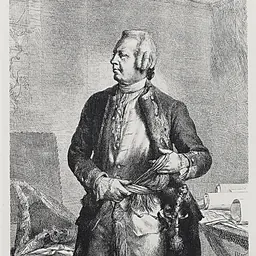

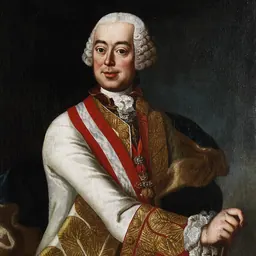
Related people
Same field, nearest in time

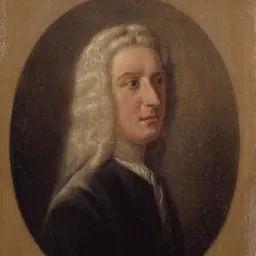

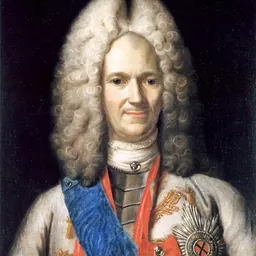

Contemporaries
People whose lives overlapped Paul Werner's




Frequently asked questions
Who was Paul Werner?
Austrian soldier who later fought for Prussia
When was Paul Werner born?
Paul Werner was born on 11 December 1707 in Győr.
When did Paul Werner die?
Paul Werner died on 25 January 1785 in Landkreis Tost-Gleiwitz.
What was Paul Werner's occupation?
Paul Werner was a military personnel, military commander and lieutenant general.
What nationality was Paul Werner?
Paul Werner was Austrian.
Sources & further reading
Cite this page
APA: Biography.guide. (2026). Paul Werner. https://biography.guide/paul-werner/
MLA: "Paul Werner." Biography.guide, https://biography.guide/paul-werner/.
Chicago: "Paul Werner." Biography.guide. https://biography.guide/paul-werner/.
Data last updated: 2026-09-20 · Spot an error? Report a correction.
Page generated 2026-09-27 05:27 UTC